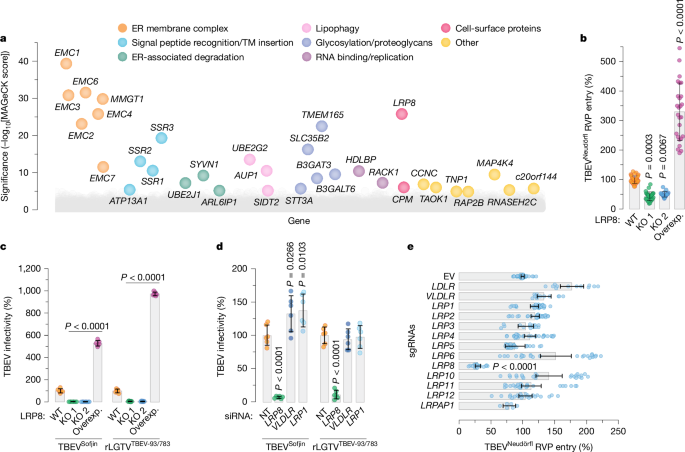
The study identifies LRP8 as a receptor for tick-borne encephalitis virus through genome-wide CRISPR screens and various molecular biology techniques, providing insights into virus entry mechanisms.
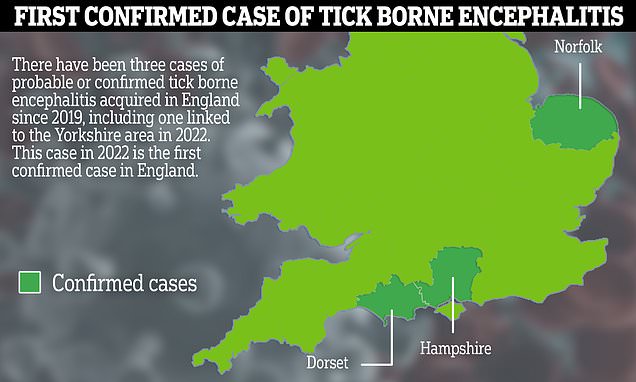
Three cases of tick-borne encephalitis virus (TBEV) have been confirmed in patients in Yorkshire, Norfolk, and on the border of Hampshire and Dorset, with further tests on ticks across the UK finding the disease is now widespread. TBEV, which is spread through tick bites, causes mild flu-like symptoms but can lead to severe infection in the central nervous system. The risk to the general public is low, but health officials have urged walkers to take precautions and seek medical help if they fall ill after being bitten. Vaccines can provide protection, but only for a limited time, and there is no cure.