COVID-19 cases are rising again in the U.S., especially in the West and South Central regions, driven by new variants Stratus and Nimbus. While overall rates are lower than previous peaks, testing and positivity rates suggest more cases than detected. Precautions like vaccination, testing, mask-wearing, and staying home when sick are recommended to prevent severe illness and spread, with vaccine eligibility now more restricted but still crucial for high-risk groups.
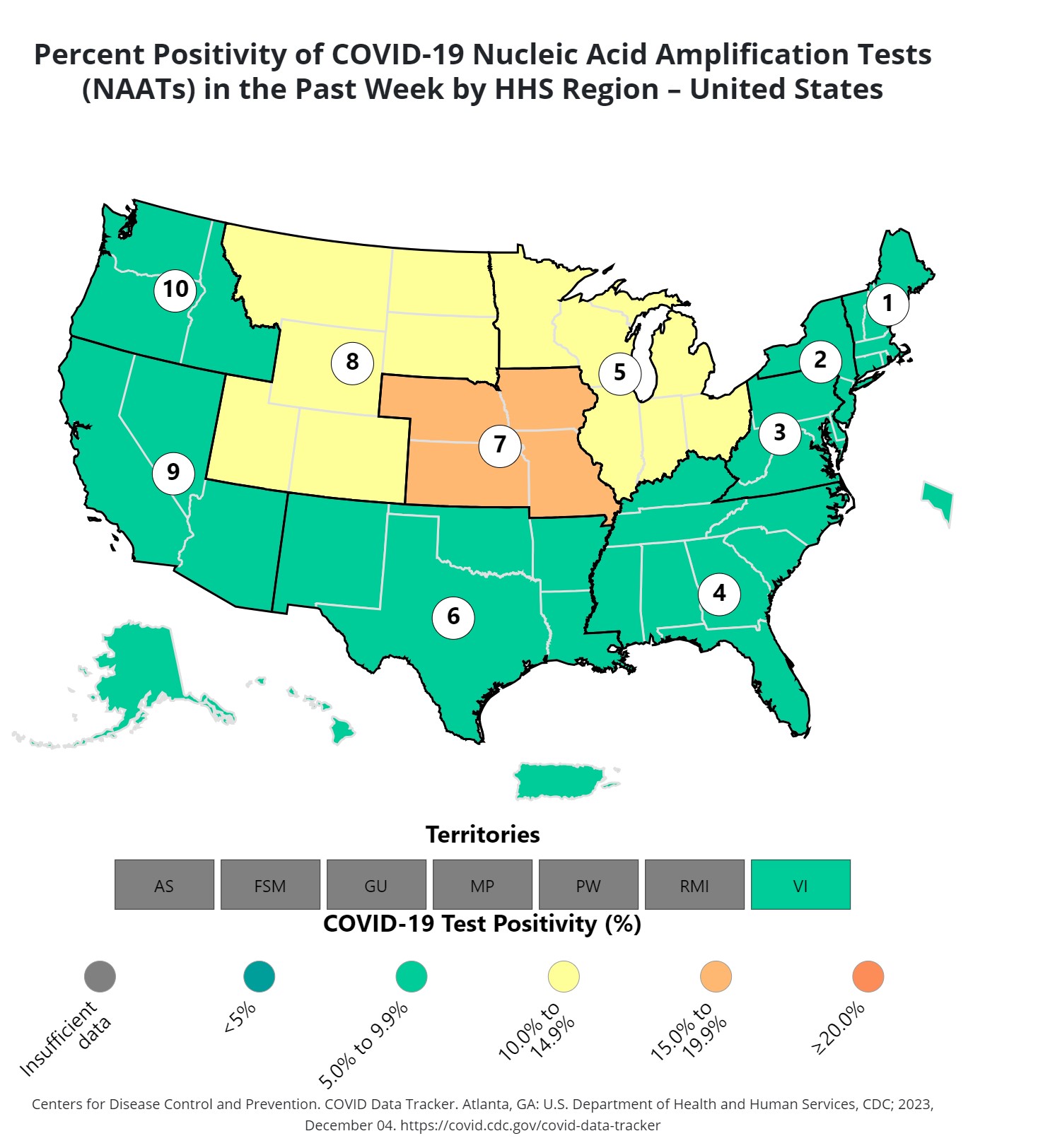
The latest data from the CDC reveals that the Midwest and Great Lakes regions in the United States have the highest prevalence of COVID-19 infections. Three administrative regions, covering 16 states, reported test positivity rates between 12.1% and 16.2%. These regions have consistently shown the highest rates of the virus being detected. The CDC warns that colder weather and the onset of winter could lead to increased hospitalization rates and the spread of respiratory viruses. Some regions are considering reinstating mask mandates to curb the infection's spread.
Maps produced by the CDC show that states in New England, central, northern, and Pacific regions have the highest prevalence of COVID-19 infections, while southern and East Coast states have the lowest positivity rates. The overall positivity rate in the US has slightly declined, indicating a stabilization of infections. However, the CDC warns that cases could increase during the winter months. Hospitalizations have largely stabilized as well, with a decline in total hospitalizations nationwide. The CDC emphasizes the importance of prevention as the respiratory virus season begins.
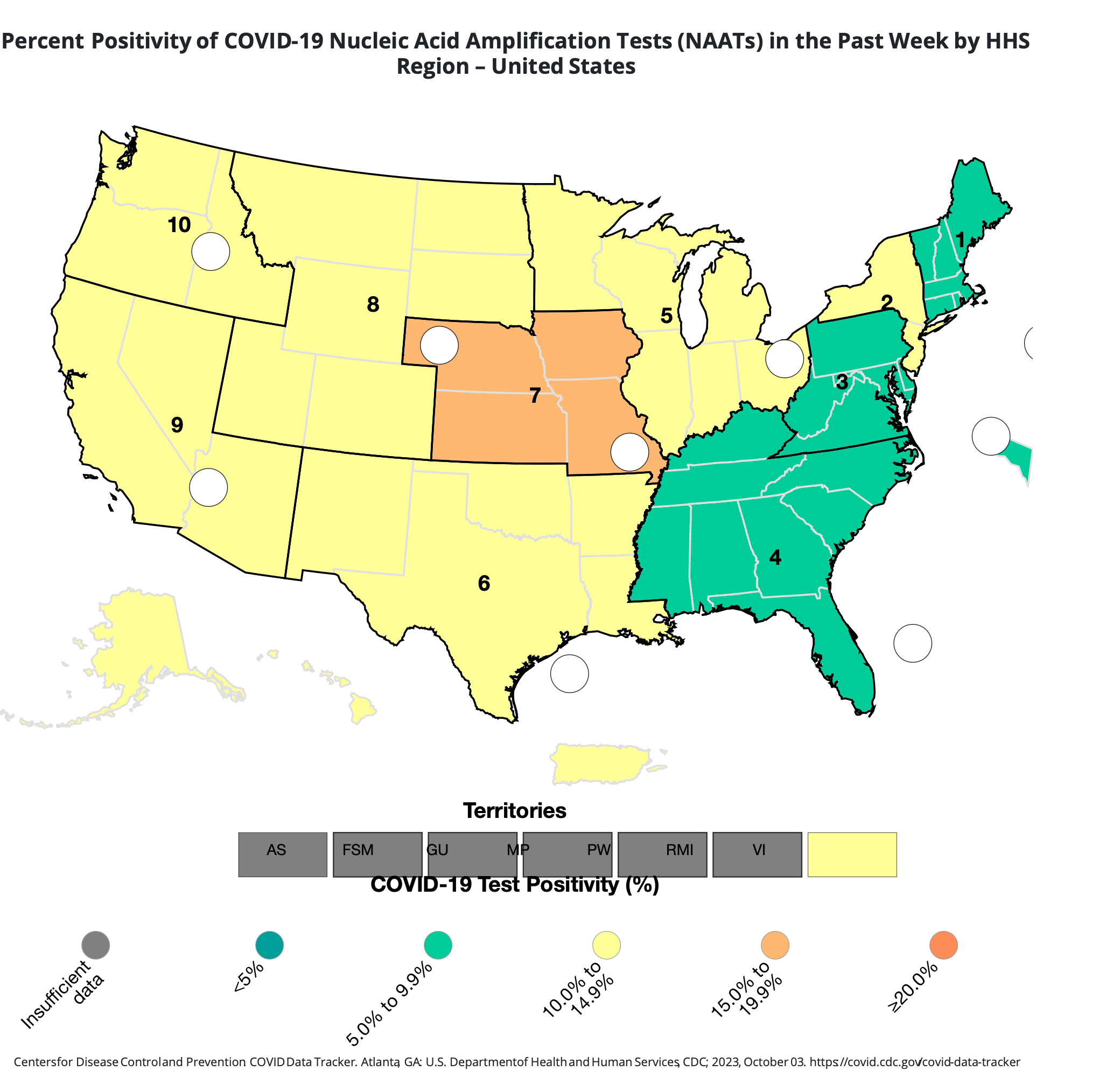
New York, New Jersey, Puerto Rico, and the Virgin Islands had the highest rates of COVID-19 test positivity in the week through September 30, according to the CDC. Washington, Oregon, Idaho, and Alaska followed closely behind. Meanwhile, states like Texas, Oklahoma, New Mexico, Louisiana, and Arkansas, which had higher test positivity over the summer, now have less than 10 percent positivity. Health officials are urging people to get updated COVID-19 vaccines to prevent a winter surge as protection from vaccination or previous infection wanes over time. The CDC recommends different vaccination schedules for children depending on their age and previous vaccination history.
Four Midwestern states, including Nebraska, Missouri, Kansas, and Iowa, had the highest rates of COVID-19 test positivity in the week through September 23, according to the CDC. While the severity of the pandemic has decreased, there are still hundreds of deaths and thousands of hospitalizations each week. Some states have seen a substantial increase in hospital admissions, and the CDC recommends getting vaccinated to prevent further spread. However, the rollout of the new COVID-19 vaccine has faced challenges, including insurance barriers and unexpected coverage denials. The government is addressing these issues to ensure vaccines remain accessible and free for most U.S. residents.
Walgreens has reported the highest Covid-19 test positivity rate since May 2021, with 44.7% of tests coming back positive, up from 41.3% the previous week. The test positivity rate is a rough measure of the virus's prevalence in the community. Despite a decrease in the number of tests conducted at Walgreens locations, the rising test positivity rate suggests a potential surge in Covid-19 cases. Other indicators, such as increasing hospitalizations and presence of the virus in wastewater, also point to a possible summer upswing in cases. The lack of a proactive national Covid-19 surveillance system hinders the ability to implement effective policies and interventions.