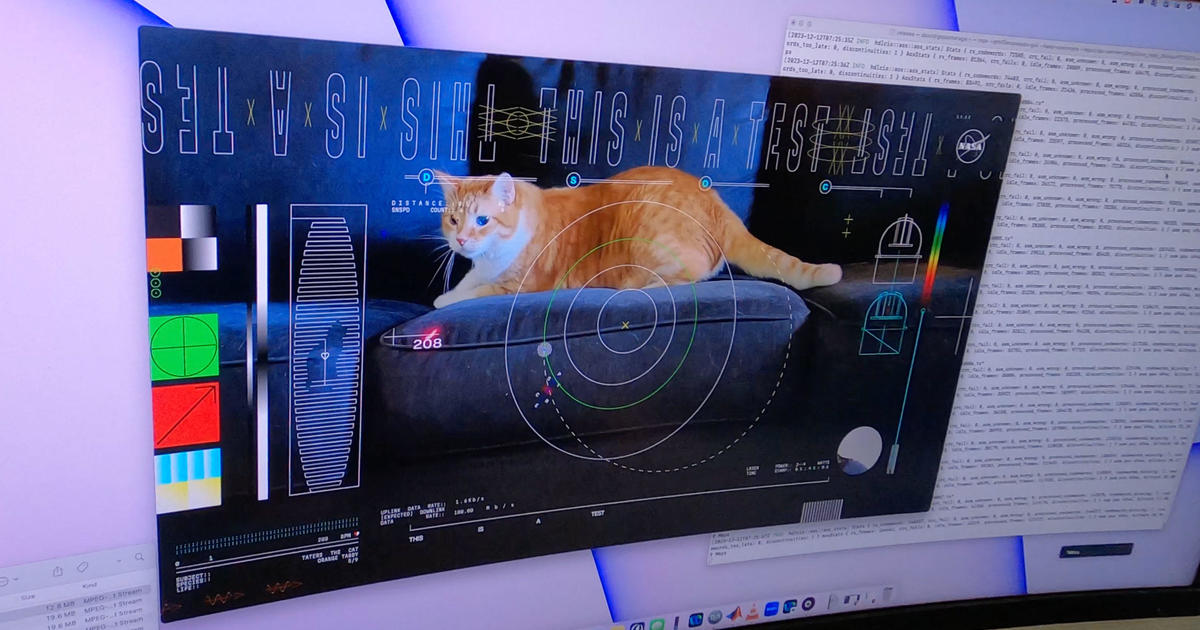
NASA beamed a 15-second cat video featuring Taters the cat 19 million miles into deep space as part of a test for the Deep Space Network's new communication paradigm, Delay/Disruption Tolerant Networking (DTN). This innovative feat aims to address the challenges of maintaining robust communication channels in deep space, marking a significant advancement in space communication technology and paving the way for reliable communication in future deep-space missions.
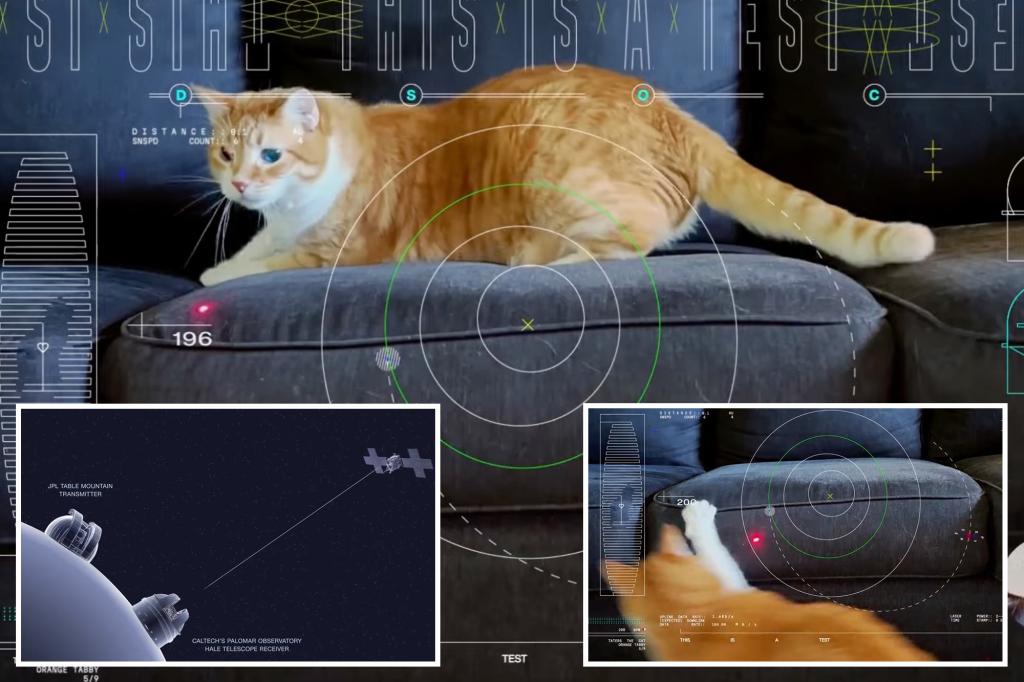
NASA successfully streamed a 15-second video of a cat named Taters chasing a laser from deep space, marking a first-of-its-kind experiment. The video was transmitted from 19 million miles away using NASA's Deep Space Optical Communications experiment, showcasing the potential for future human missions beyond Earth's orbit. The video was beamed to Earth, downloaded at an observatory, and then sent "live" to NASA's Jet Propulsion Laboratory. Despite the vast distance, the video was transmitted faster than most broadband internet connections. Taters' video included graphics and details about the mission, and the choice of a cat was inspired by a 1928 TV test broadcast featuring Felix the Cat.
NASA successfully transmitted a 15-second ultra-high definition video of a cat named Taters from nearly 19 million miles away using its Deep Space Optical Communications technology. The video was uploaded to NASA's Psyche asteroid probe and transmitted via an encoded near-infrared laser to Earth, setting a record for transmission distance. This achievement demonstrates the potential for streaming high-bandwidth video and data from deep space, which could be crucial for future human missions beyond Earth's orbit and pave the way for advancements in space exploration.