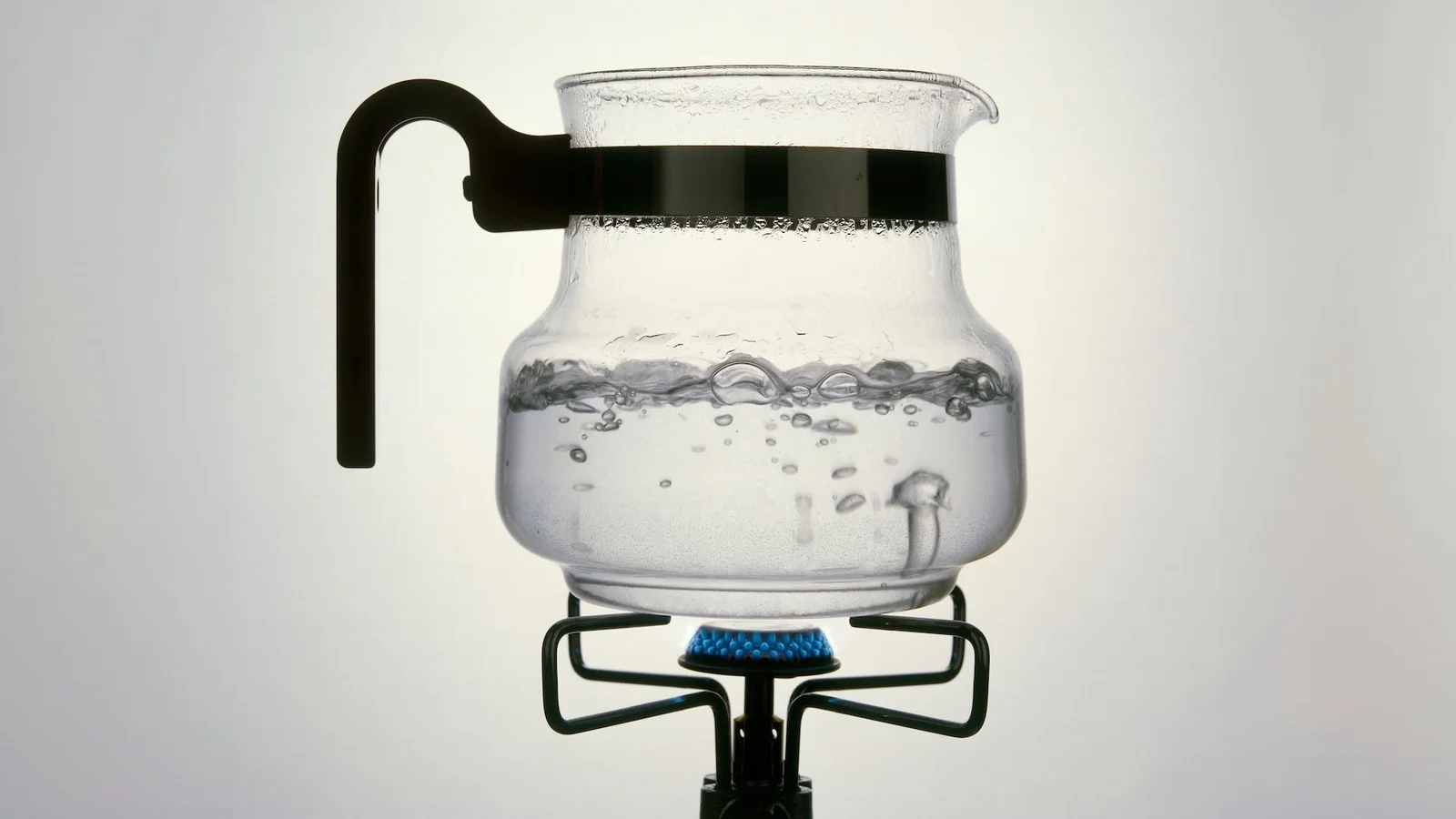
Bubbles form when water reaches its boiling point and a bubble's formation depends on overcoming surface tension; microwave heating often suppresses bubble formation, leading to superheating, which can cause water to explosively boil when disturbed.

Researchers have directly measured the temperature of superheated gold at around 19,000 kelvins using ultrafast X-ray scattering, challenging the long-held belief that the entropy catastrophe limits the superheating of solids, and opening new avenues for studying extreme states of matter.
Physicists have successfully superheated solid gold to over 33,740°F without melting it by using ultra-fast laser heating and real-time X-ray probes, challenging previous assumptions about the maximum temperature solids can withstand before melting, and providing new insights into high-energy states relevant to planetary interiors and fusion research.
Scientists used ultrafast high-intensity lasers and X-ray pulses to superheat gold to 14 times its melting point without melting, challenging previous theories about solid stability and demonstrating a new method for measuring extreme temperatures in hot systems, reaching up to 19,000 Kelvin.
A new study reveals that gold can be heated up to 14 times beyond its traditional melting point without melting, challenging existing models of superheating limits and suggesting that some solids may not have a definitive melting point under ultra-fast heating conditions. This discovery has significant implications for understanding matter behavior in extreme environments like space and nuclear reactors.
Researchers successfully superheated solid gold to over 14 times its melting point for a brief moment, bypassing the entropy catastrophe limit, which could lead to new insights into phase transitions and material production. Using ultrafast laser heating on nanoscale gold films, they achieved this extreme state without the usual structural breakdown, opening possibilities for advanced material manipulation.