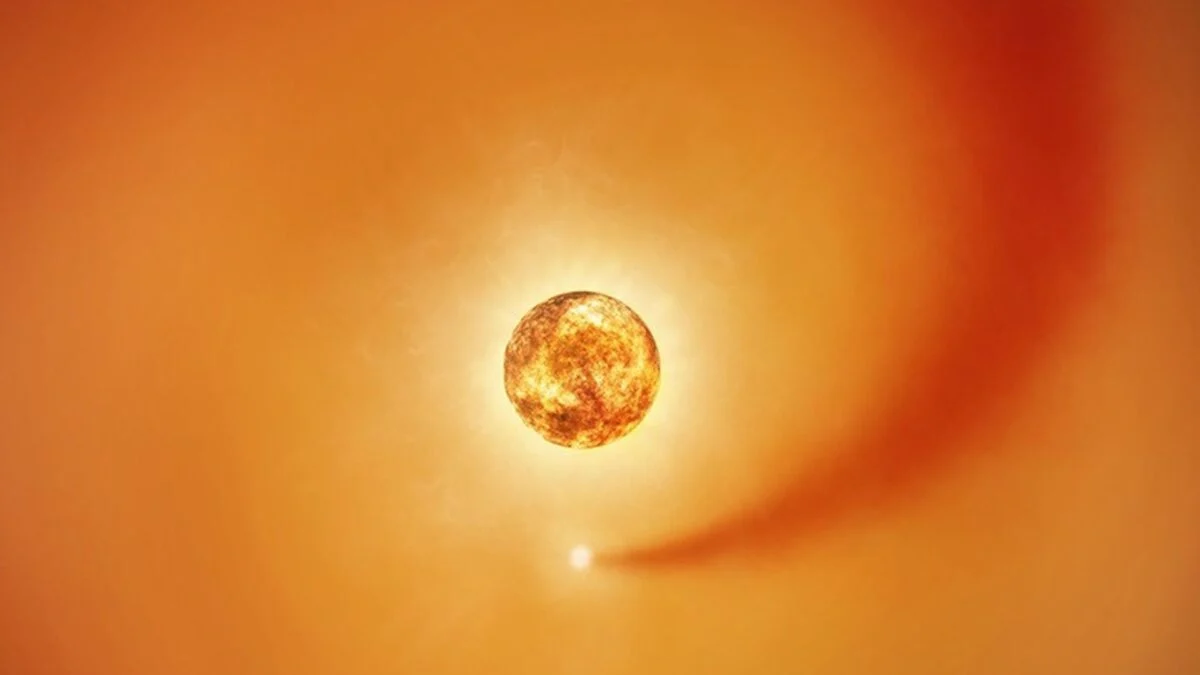
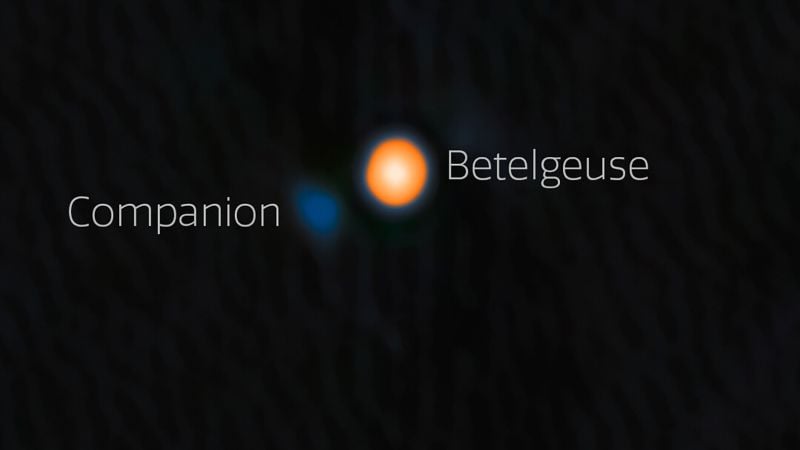
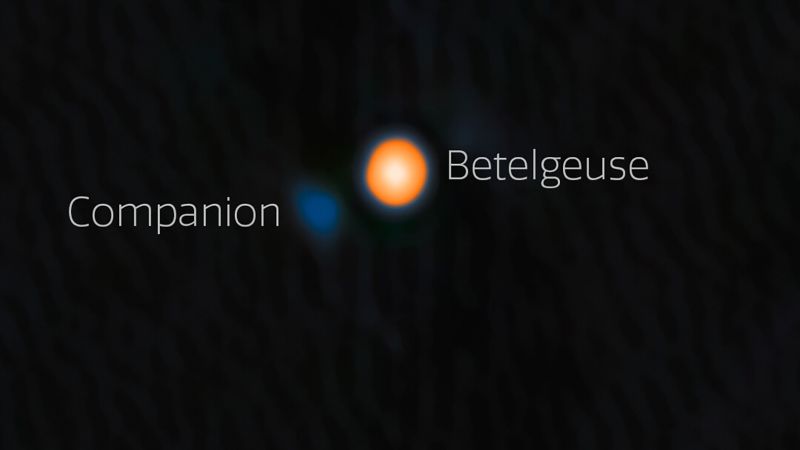
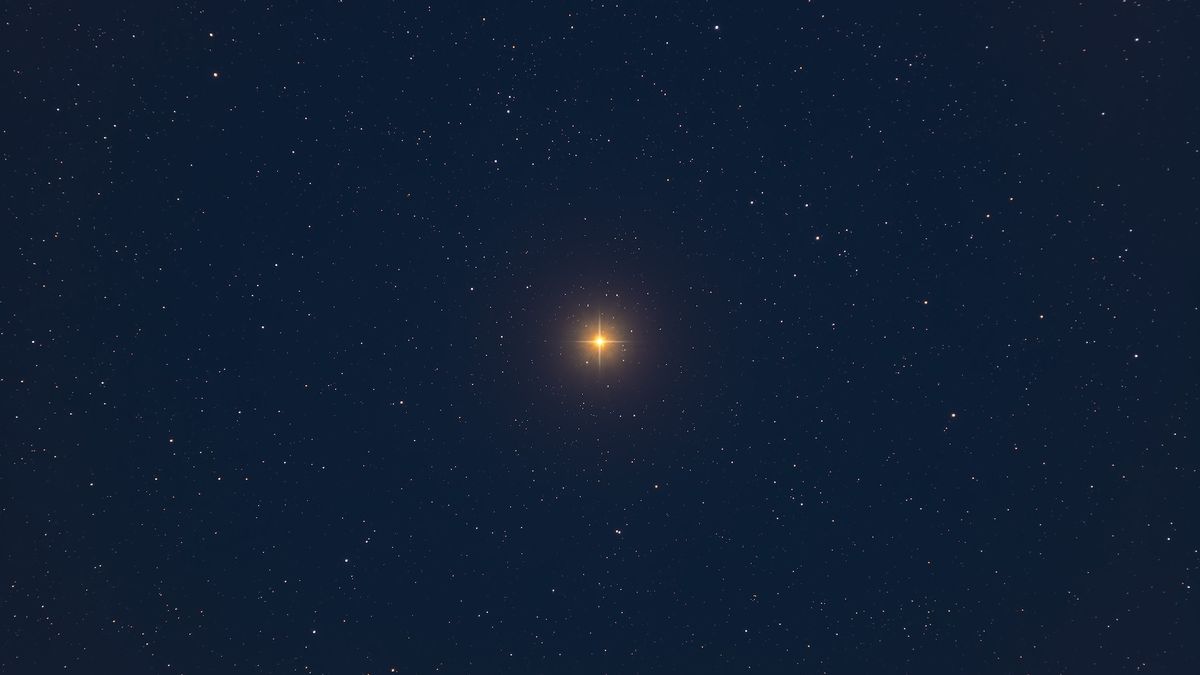
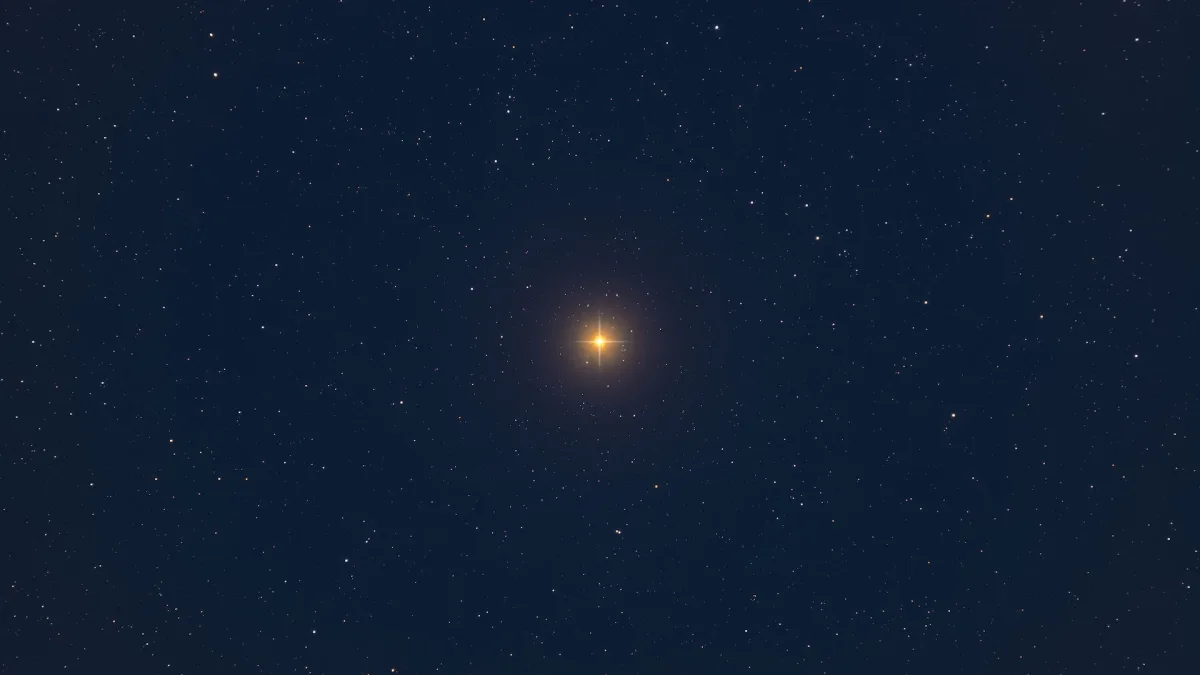
Researchers have found strong evidence that Betelgeuse's unusual dimming patterns are caused by a hidden companion star, Siwarha, which creates a detectable wake as it moves through Betelgeuse's outer atmosphere, confirming long-standing hypotheses about its behavior.
Astronomers have potentially discovered a hidden companion star, named Siwarha, orbiting Betelgeuse, which may explain its six-year brightness cycle and recent dimming events, shedding new light on the star's behavior and evolution.
Astronomers have potentially discovered a hidden companion star, named Siwarha, orbiting Betelgeuse, which may explain its six-year brightness cycle and other mysteries, marking a significant breakthrough in stellar observation.
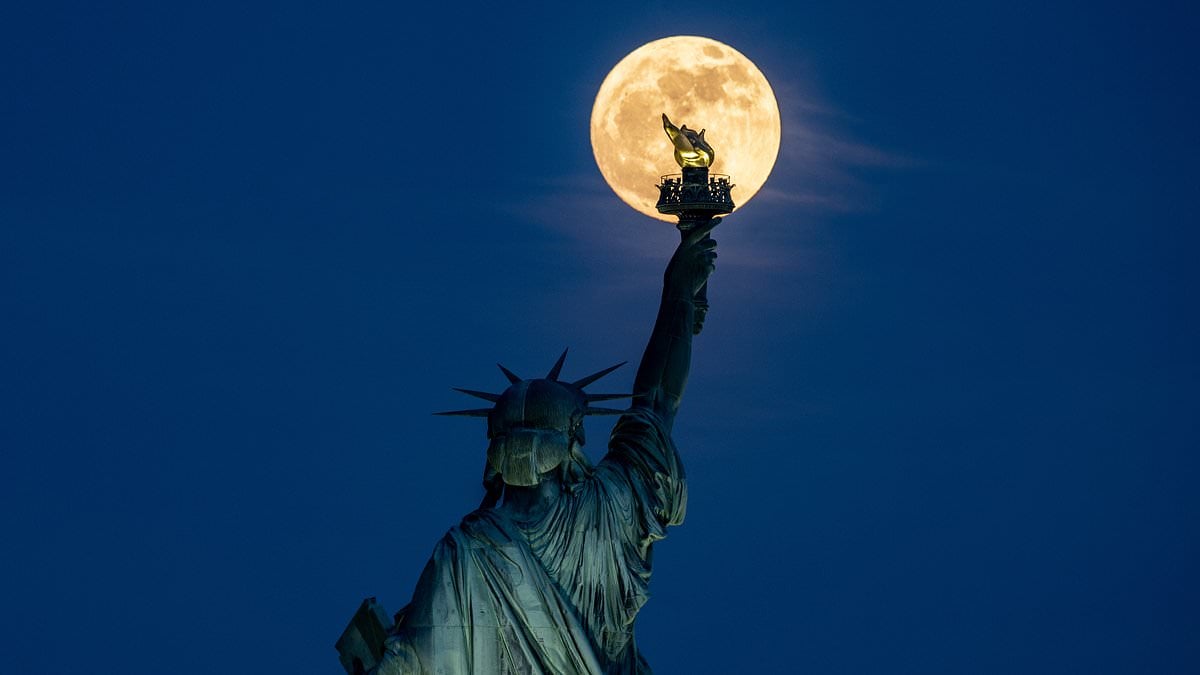
The Flower Moon will rise near the red supergiant star Antares on Thursday night, peaking 50 minutes after sunset. Antares, located 600 light-years away, is nearing the end of its life and will eventually explode as a supernova. The moon will appear full at 9:35am and be visible in the east by 8:35pm ET. This celestial event coincides with the blooming of flowers in May and has historical significance for the Osage Nation.
The mysterious dimming of the supergiant star Betelgeuse in 2019 may have been caused by a burst of dust, specifically silicon monoxide, coming from the star's surface, according to high-resolution photographs taken by astronomers from France's Université Côte d’Azur. The images support the theory that the dimming was due to a sudden cooling of the star's surface, resulting in the formation of a cold spot and the ejection of a cloud of dust. This finding also aligns with a 2021 study suggesting that Betelgeuse released a bubble of gas due to a drop in temperature. The study highlights the ongoing mysteries surrounding supergiant stars and the uncertainties surrounding the potential supernova of another star in our galaxy.
New high-resolution images of the red supergiant star Betelgeuse taken by astronomers from France's Université Côte d'Azur using the MATISSE instrument on the European Southern Observatory's Very Large Telescope Interferometer suggest that the star's dimming event was caused by a burst of dust, specifically silicon monoxide, coming from the star. The images show that while the star as a whole appeared to darken, its photosphere actually brightened during the event, supporting the theory that a sudden cooling of the star's surface led to the formation of a cold spot and the ejection of a dust cloud. This finding also aligns with a 2021 study that proposed Betelgeuse released a bubble of gas due to a drop in temperature. The study highlights the ongoing mysteries surrounding supergiant stars and the uncertainties surrounding the behavior of stars on the verge of going supernova.