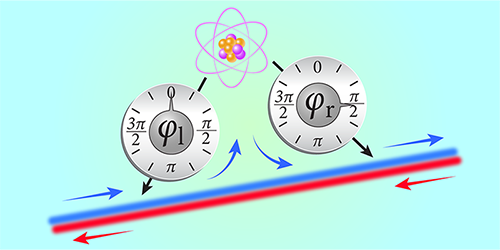
Researchers from the California Institute of Technology have developed a nonreciprocal device, an "artificial atom" made from a superconducting circuit, which can be coupled exclusively to either left- or right-moving signals in a microwave waveguide. This chiral design could be used in quantum networks to enable control over information flow between multiple artificial atoms coupled to a waveguide. The researchers achieved this by using additional superconducting artificial atoms as couplers between the emitter atom and the waveguide, and the relative phase between the modulations of the two couplers yielded the crucial phase difference that either let forward- or backward-propagating light pass through the waveguide.
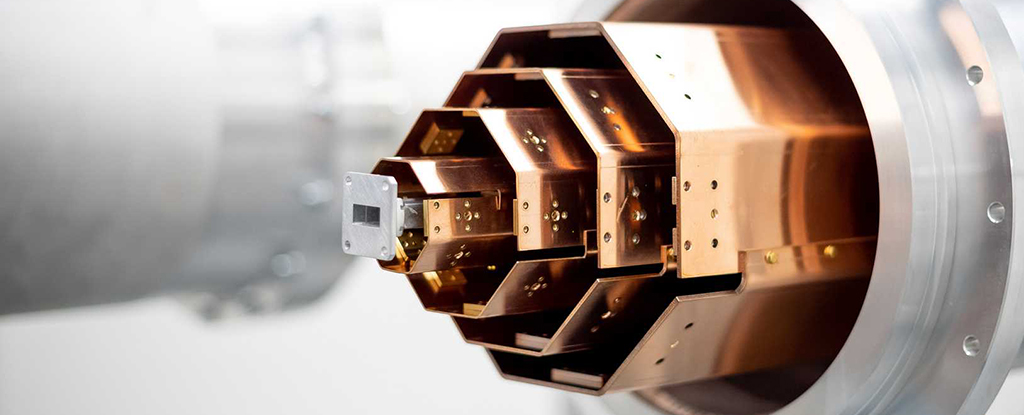
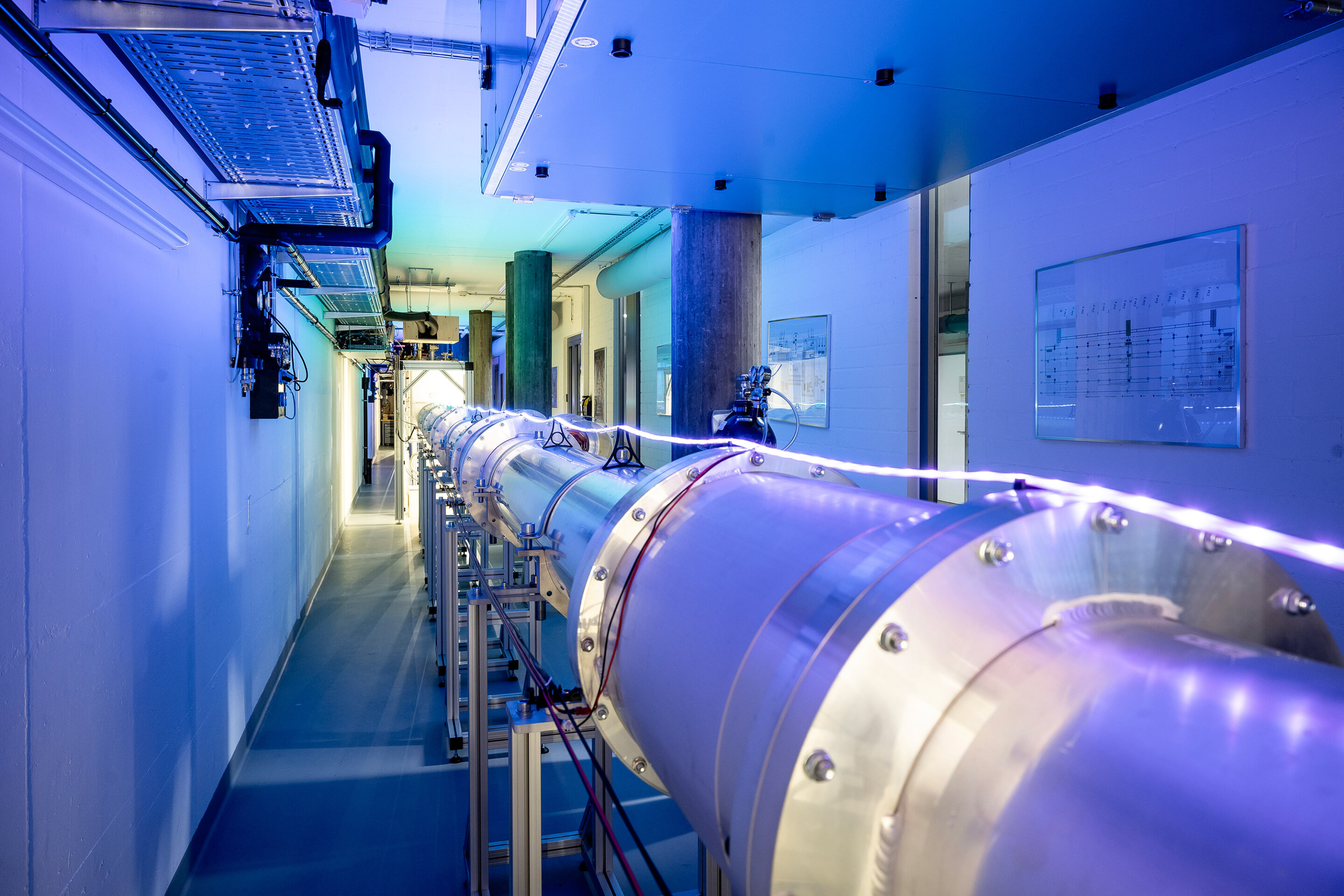
A new experiment using a 30-meter-long tube cooled to close to absolute zero has confirmed the possibility of quantum entanglement, which Albert Einstein was skeptical about. The experiment ran a Bell test using superconducting circuits, which could play a significant role in the development of quantum computers. The experiment is structured in a way that could be used for practical applications, such as secure encrypted communications. The research shows the promise of qubit technology and could eventually find its way into full-scale quantum computers.
Researchers at ETH Zurich have performed a loophole-free Bell test with superconducting circuits, confirming quantum mechanics and disproving Einstein’s local causality concept. The findings open up possibilities in distributed quantum computing and quantum cryptography. The researchers were able to perform the experiment using superconducting circuits for the first time, which are considered promising candidates for building powerful quantum computers. The experiment confirms that superconducting circuits operate according to the laws of quantum mechanics too, even though they are much bigger than microscopic quantum objects such as photons or ions.
Researchers at ETH Zurich have performed a loophole-free Bell test using superconducting circuits, further disproving Albert Einstein's concept of local causality and providing confirmation for quantum mechanics. The experiment also confirms that superconducting circuits operate according to the laws of quantum mechanics and opens up possibilities for practical applications in cryptography and distributed quantum computing. The researchers built an impressive facility containing a 30-meter-long vacuum tube connecting two cryostats containing superconducting circuits, which were entangled and subjected to random measurements to violate Bell's inequality.