Scientists discovered lobster-like crustaceans thriving in a deep subglacial river beneath Antarctica's ice sheet, challenging understanding of isolated ecosystems and raising concerns about climate change impacts on these fragile habitats.
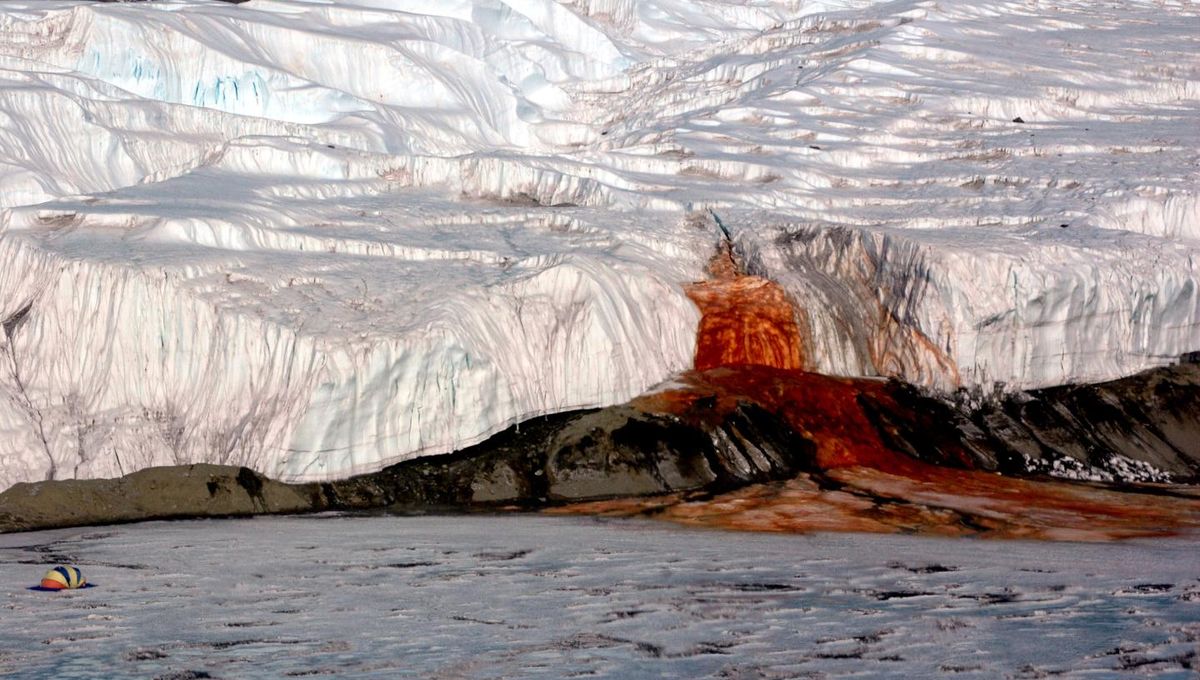
Scientists have finally solved the mystery of why Antarctica's Blood Falls appears to ooze red. Using powerful transmission electron microscopes, researchers discovered an abundance of iron-rich nanospheres in the water, which turn red when oxidized. The water originates from a saltwater lake trapped in the ice for millions of years and is part of a larger underground system of hyper-salty lakes and aquifers. Despite the absence of oxygen, a rare subglacial ecosystem of bacteria thrives in the buried bodies of super salty water, sustaining themselves through cycling iron from the brine. The unique properties of Blood Falls make it a potential site for studying other planets, such as Mars.