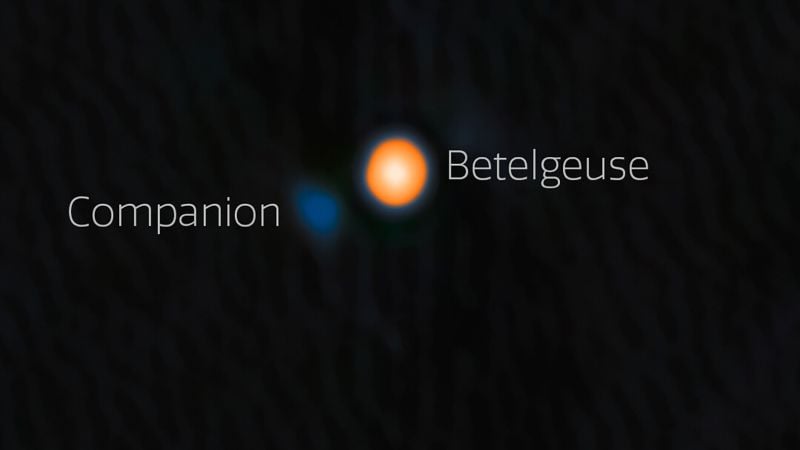
Astronomers have potentially discovered a hidden companion star, named Siwarha, orbiting Betelgeuse, which may explain its six-year brightness cycle and recent dimming events, shedding new light on the star's behavior and evolution.
Astronomers have potentially discovered a hidden companion star, named Siwarha, orbiting Betelgeuse, which may explain its six-year brightness cycle and other mysteries, marking a significant breakthrough in stellar observation.
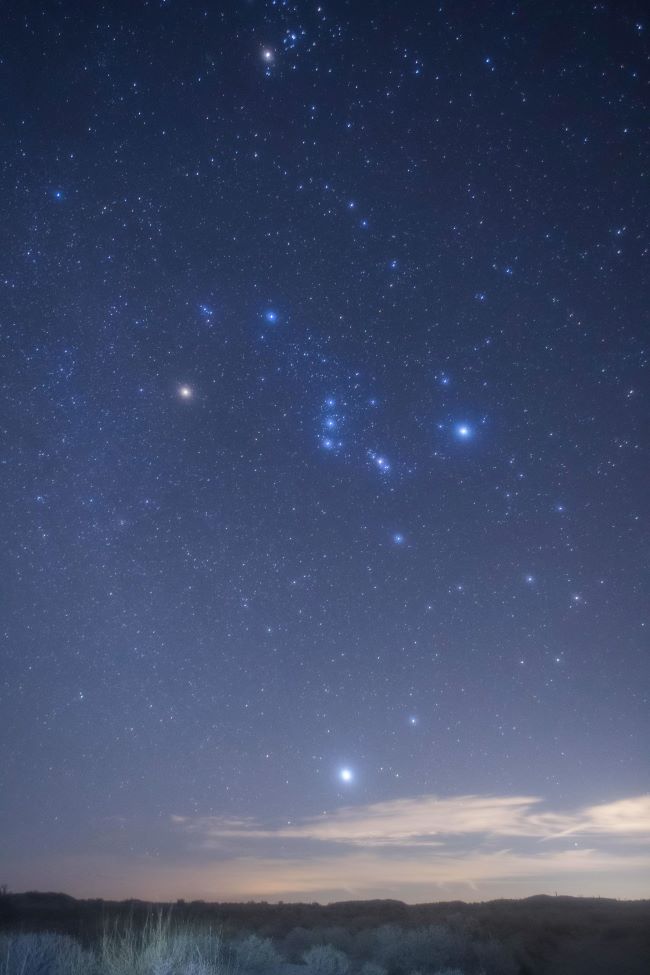
On December 11 or 12, 2023, observers in southern Europe, the Bahamas, southern Florida, and part of Mexico will have the opportunity to witness the star Betelgeuse dim or disappear for several seconds as asteroid Leona passes in front of it. This event presents a unique opportunity for astronomers to study both Betelgeuse and Leona, helping to refine their knowledge of the star's size and shape, as well as map its convective cells. Betelgeuse is known for its variability in brightness and is the nearest red supergiant star to Earth, located approximately 1,000 light-years away.