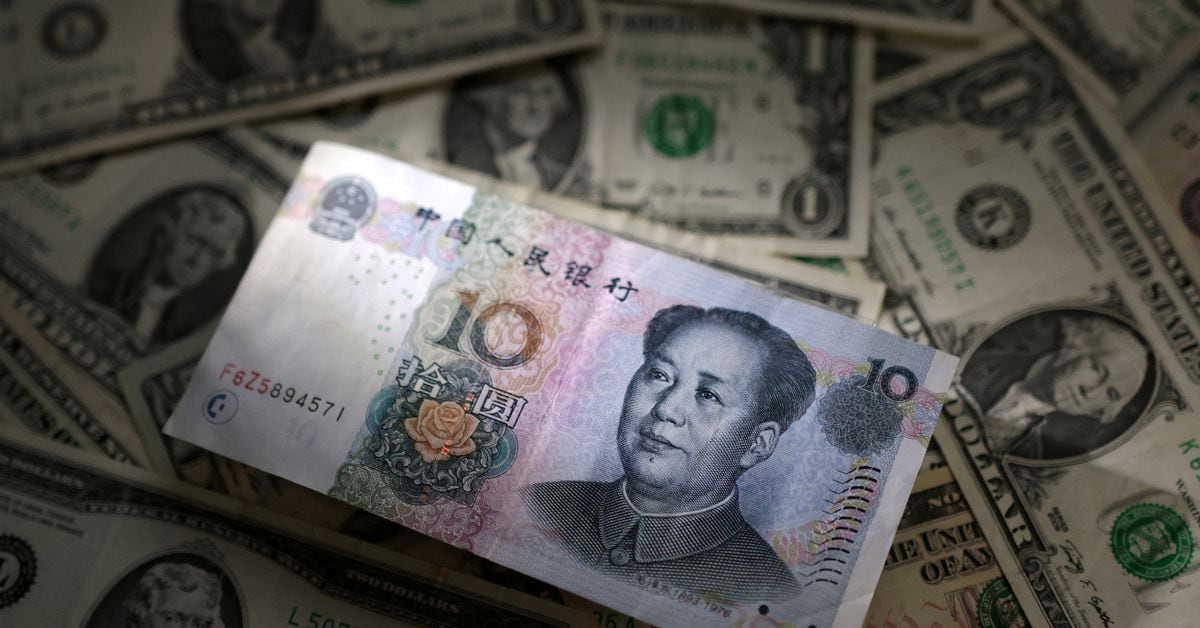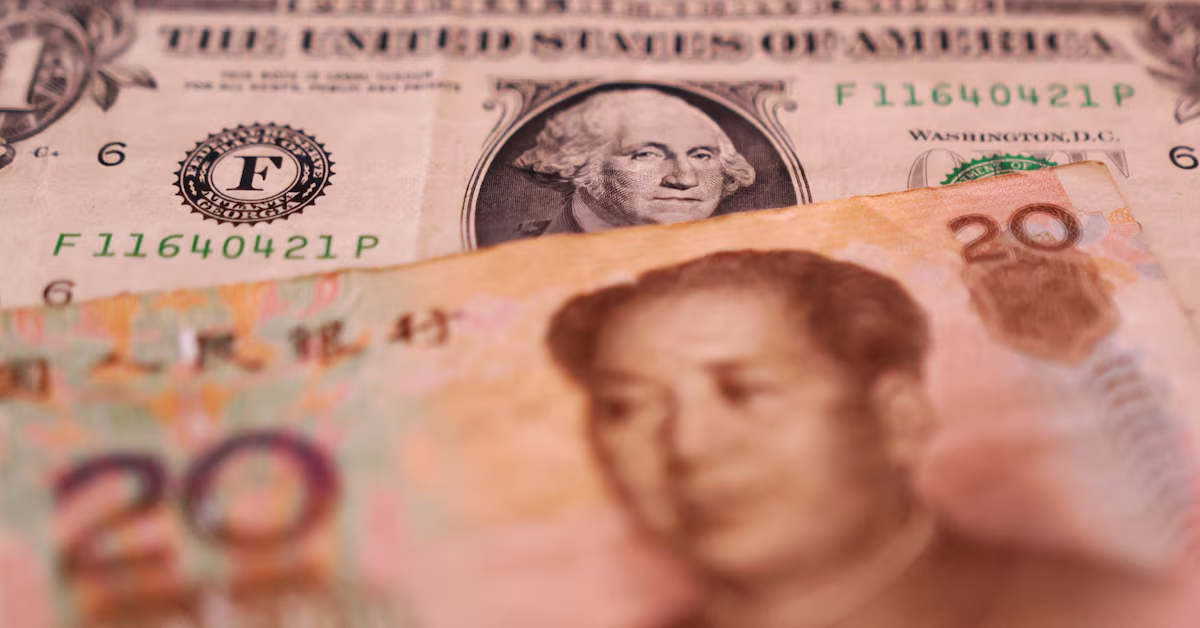
China's major state-owned banks took action to support the yuan by tightening liquidity in the offshore foreign exchange market and actively selling U.S. dollars onshore as equities experienced a significant drop. The move aimed to prevent the yuan from depreciating too rapidly amidst a plunge in China's A shares. Overseas funds have sold approximately $1.6 billion in Chinese equities this year, reflecting weakened investor confidence due to signs of economic slowdown. State banks' actions led to tighter offshore yuan liquidity and increased costs for shorting the currency, while aggressive spot dollar selling defended the 7.2 per dollar level.
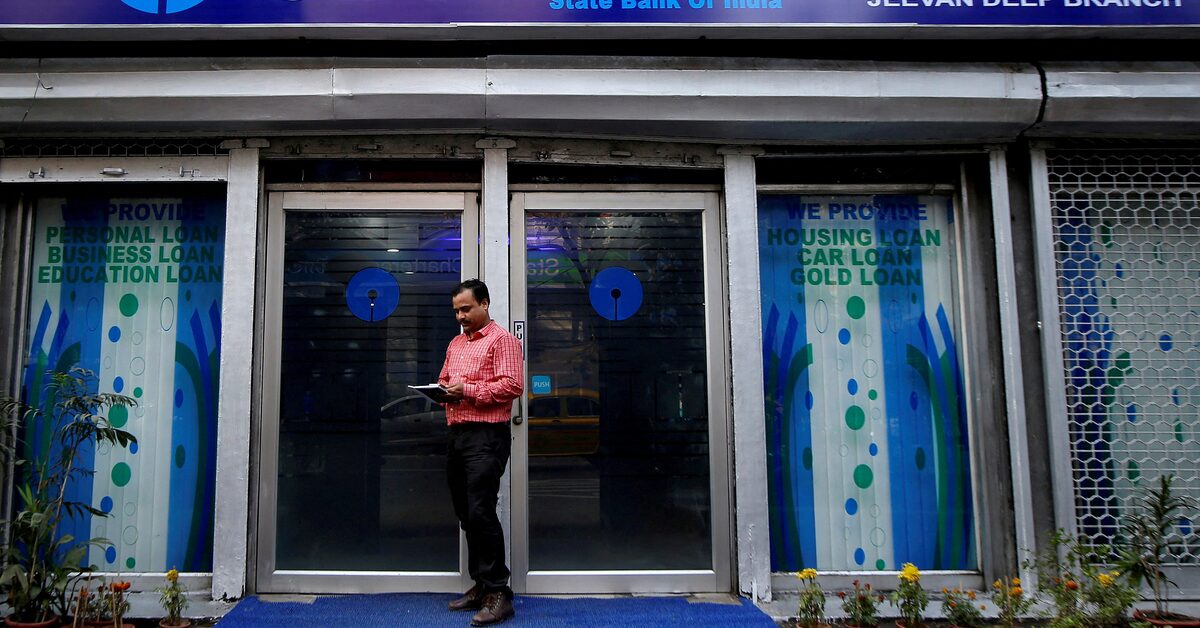
India is considering raising the retirement age for chairmen and managing directors of state-owned banks, with a proposal to increase the age limit for the chairman of State Bank of India (SBI) to 65 years from 63 years, and for managing directors of other state-owned banks to 62 years from 60. The current age limit for state-run bank chiefs is lower than their private sector counterparts, leading to a lack of continuity in strategy. The government is also planning to give a 10-month extension to the present SBI Chairman, Dinesh Khara, who is set to retire in October.
China's major state-owned banks have been actively selling US dollars to buy yuan in both onshore and offshore spot foreign exchange markets in an effort to slow the depreciation of the yuan. This move comes as the yuan has lost about 2.4% against the dollar this month and 6% since the beginning of the year. State banks have been selling dollars during London and New York trading hours to limit falls in the offshore yuan and prevent it from diverging too far from its onshore counterpart. The recent decline in the yuan is attributed to China's widening yield differential with the US, weak economic growth, rising default risks, and the government's slow delivery of stimulus measures. The People's Bank of China (PBOC) has eased monetary policy to support the economy, but this has put more pressure on the yuan. State banks have been repeatedly selling dollars to slow the yuan's decline, and other tactics, such as limiting yuan lending in the offshore Hong Kong market, have also been employed.
China's major state-owned banks have been observed selling dollars to purchase yuan in the offshore spot market in an effort to slow down the decline of the yuan. The country's central bank has also relaxed a cross-border financing rule, making it easier for domestic firms to raise funds from overseas markets and alleviating depreciation pressure on the yuan. Despite a slight rebound, the yuan is still down approximately 4% against the dollar this year, making it one of the worst-performing Asian currencies.
China's self-regulatory body has instructed major state-owned banks to lower dollar deposit interest rates in an attempt to boost the country's weakening yuan. Interest rates offered by Chinese banks on dollar deposits of $50,000 and above will now be capped at 4.3%, with the new rates set to be lowered by as much as 100 basis points from the previous ceiling of 5.3%. The move is expected to encourage Chinese firms, particularly exporters, to settle foreign exchange receipts in yuan.
China's state-owned banks' Hong Kong branches are actively soliciting crypto business, in anticipation of the first phase of the Special Administrative Region's regulatory framework in June. However, opening an account with them is burdensome, and the KYC/AML process is longer than opening a regular business account. Banks prefer that executives and key personnel at the crypto company reside in Hong Kong, and a definite blocker would be if they are mainland Chinese nationals or U.S. citizens.