The U.S. Space Force is adopting new thematic names for its weapons and space systems, inspired by categories like Norse mythology and ghosts, to foster a stronger connection and identity among personnel, with the aim of creating more memorable and popular names for its systems.
Rocket Lab is acquiring Geost to enter the satellite payload market, enhancing its capabilities in national security space solutions with advanced EO/IR payloads, aiming to become a disruptive end-to-end provider for U.S. national security missions.
Rocket Lab aims to get its launch business back on track, reporting a net loss of $40.6 million in the third quarter, with revenue growing 7% to $67.6 million. The company plans to resume Electron launches by November 28th after a mid-September mission failure. Rocket Lab has fully booked its schedule for 2024 with 22 Electron missions. Its space systems unit brought in the majority of revenue, with $46.3 million this quarter, and the company is making progress in developing its next-generation Neutron vehicle. For the fourth quarter, Rocket Lab expects revenue between $65 million and $69 million, with first quarter 2024 revenue projected to climb to between $95 million and $105 million.
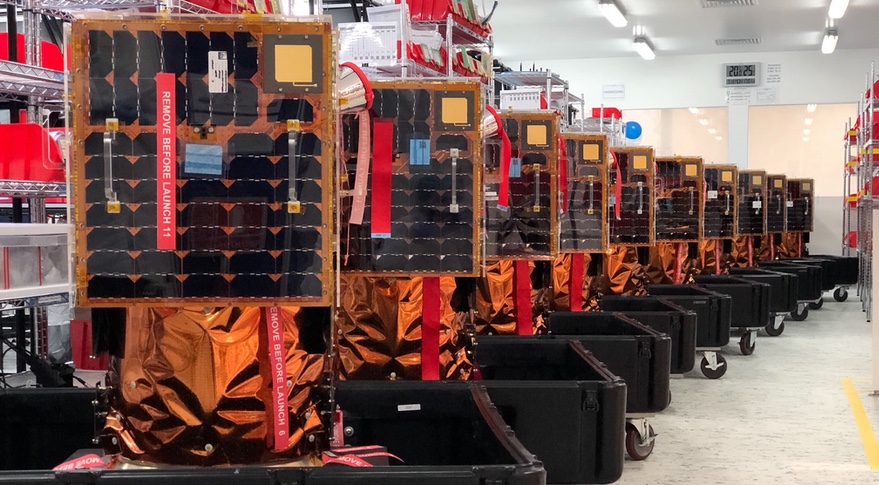
Satellogic, the South American company known for high-resolution multispectral imagery, is selling Earth-observation satellites for $10 million or less. Satellogic is offering delivery in orbit within three months of an order for the company’s dishwasher-size satellites. Satellogic is not subject to U.S. export controls like the International Traffic in Arms Regulations and customers do not need National Oceanic and Atmospheric Administration licenses for Earth imagery since the company is not based in the United States. Satellogic has seen growing demand for satellites, especially among emerging space programs in Africa, Asia, Europe and the Middle East, Tirman said.