The article discusses the increasing trend of women choosing to become single mothers through sperm donation, highlighting personal stories of Lucy and Kim, and exploring societal, emotional, and practical aspects of solo parenting.
The article highlights seven practices from the 1960s and 70s—such as indoor smoking, corporal punishment, drunk driving, casual drug prescribing, unregulated workplace behavior, children roaming freely, and deceptive advertising—that would be illegal or scandalous today, illustrating how social norms and laws evolve with increased understanding of health, ethics, and safety.
The article discusses whether it's appropriate to tell a stranger their fly is open and criticizes the trend of placing books with their titles facing the wall on TV home decor shows, questioning the practicality and social awareness of such decor choices.
Amidst a societal loneliness epidemic, activism and community organizing are proving to be powerful tools for fostering social connections and purpose, especially among older adults, while also addressing social injustices and building resilient communities.
The article discusses the societal expectation of sending thank-you notes for gifts, exploring the idea that giving gifts should be motivated by genuine thought rather than the desire for appreciation, and reflecting on personal gift-giving practices within a large, distant family.
Signs at Wegmans stores in NYC indicate that biometric data such as facial recognition, eye scans, and voiceprints are stored to enhance security, despite initial claims of data deletion during pilot programs, raising privacy concerns amid stalled legislation to restrict biometric storage.
Freelance writer Chanté Joseph's viral Vogue article explores the trend of women hiding or cropping out their boyfriends on social media, questioning whether having a boyfriend has become socially embarrassing, especially within the context of changing perceptions of heterosexual relationships and privacy concerns.
The author advocates for 'friction-maxxing' in 2026, which involves intentionally embracing life's inconveniences and resisting the urge to escape into digital distractions, as a way to foster resilience, independence, and genuine human connection, especially in children.
The article discusses various seemingly harmless behaviors and trends, such as recording strangers, celebrity worship, vaping, and social media content involving kids, that are perceived to negatively impact society by fostering objectification, misinformation, irresponsibility, and superficiality.
The article explores how Zohran Mamdani's choice of a modern, middle-class suit reflects broader societal shifts, the evolving role of suits in politics and everyday life, and the complex cultural and historical significance of sartorial choices in signaling authority, identity, and legitimacy.
Approximately 325,000 Californians, mostly legal immigrants, will need to replace their REAL IDs due to a DMV software error that caused some IDs to have mismatched expiration dates; the DMV is waiving fees and expediting replacements, with most affected individuals receiving notices soon.
Approximately 325,000 Californians, mostly legal immigrants, will need to replace their REAL IDs due to a DMV software error that caused some IDs to have incorrect expiration dates. The DMV is waiving fees and expediting the replacement process, with most affected individuals receiving notices soon. The issue stems from a legacy system from 2006, and the DMV assures that REAL IDs were not issued to undocumented individuals.
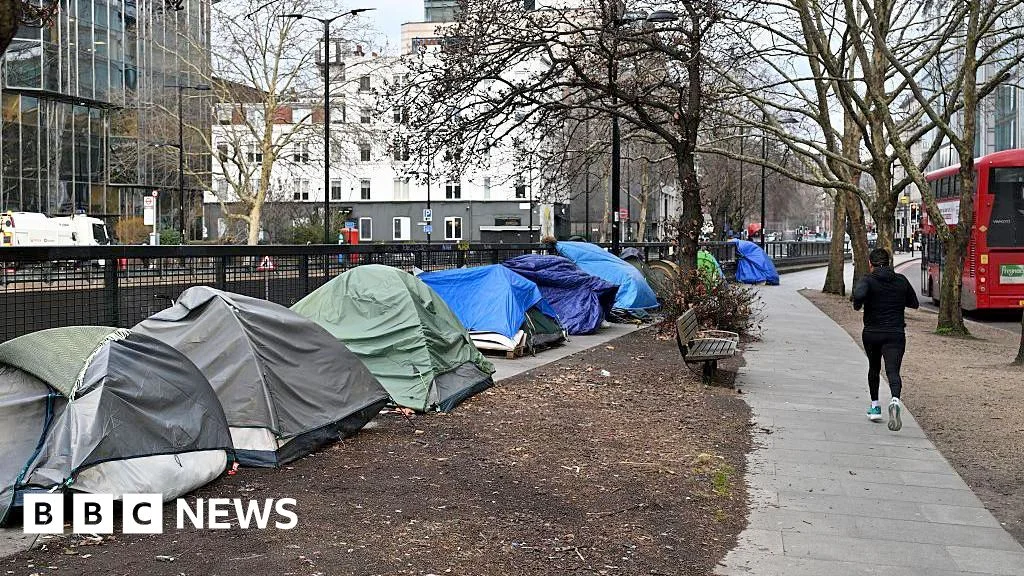
The article explores how disparities in early childhood support, such as access to childcare, parental leave, and green spaces, influenced by postcode and employment status, impact children's development and long-term outcomes in Britain, highlighting the need for more equitable policies.
A UK doctor was suspended for five months after scheduling fake appointments to leave work early and pick up her children, sparking debate about the pressures faced by working parents and the need for reforms in the healthcare system.
In 2025, while AI-powered dating tools gained popularity, there was a strong resurgence in traditional, in-person dating experiences as people sought genuine connections beyond digital algorithms, signaling a shift towards more authentic, offline interactions.