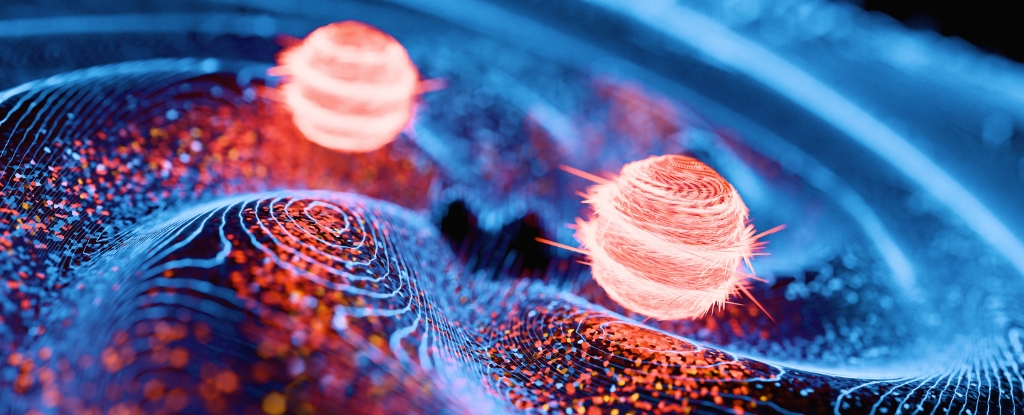
Researchers have achieved quantum entanglement between two atomic nuclei separated by 20 nanometres using electrons as 'telephones', a breakthrough that could enable scalable, integrated quantum computers based on silicon technology.
Researchers have demonstrated quantum entanglement between two atomic nuclei separated by 20 nanometres using electrons as 'telephones', a breakthrough that could enable scalable, reliable quantum computers integrated with existing silicon technology.
TSMC has revealed its work on 1.4nm fabrication technology, known as the A14 node, which is expected to be used in future Apple silicon chips. The 1.4nm technology will follow TSMC's 2nm chips and is unlikely to be seen in Apple devices before 2027. Each successive TSMC node offers improved transistor density, performance, and efficiency. The M1 series of Apple silicon chips is based on the A14 Bionic, while future iterations like the M2 and M3 will use TSMC's upcoming nodes. The iPhone's chip technology is expected to continue advancing with each new generation.