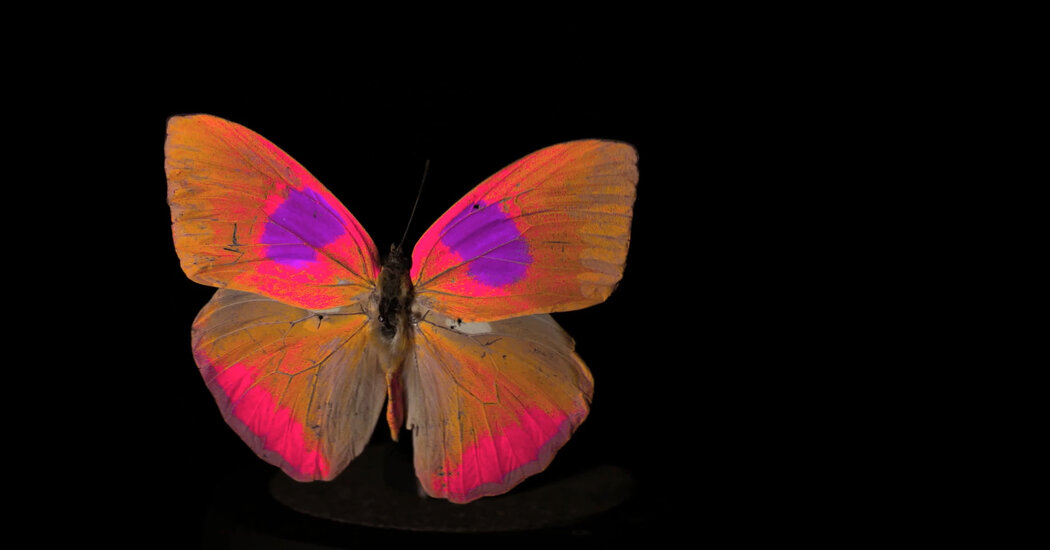
An international team of researchers has developed a video camera system that captures how various animals perceive color, providing insights into their vision systems. The camera system can reveal hidden cues guiding animals with different vision systems, such as bees not seeing red and birds having markings more visible in ultraviolet. By translating animal vision into the human visual range, the system allows for the study of scenarios where animals make decisions based on color, with potential applications in fields such as agriculture and window design.
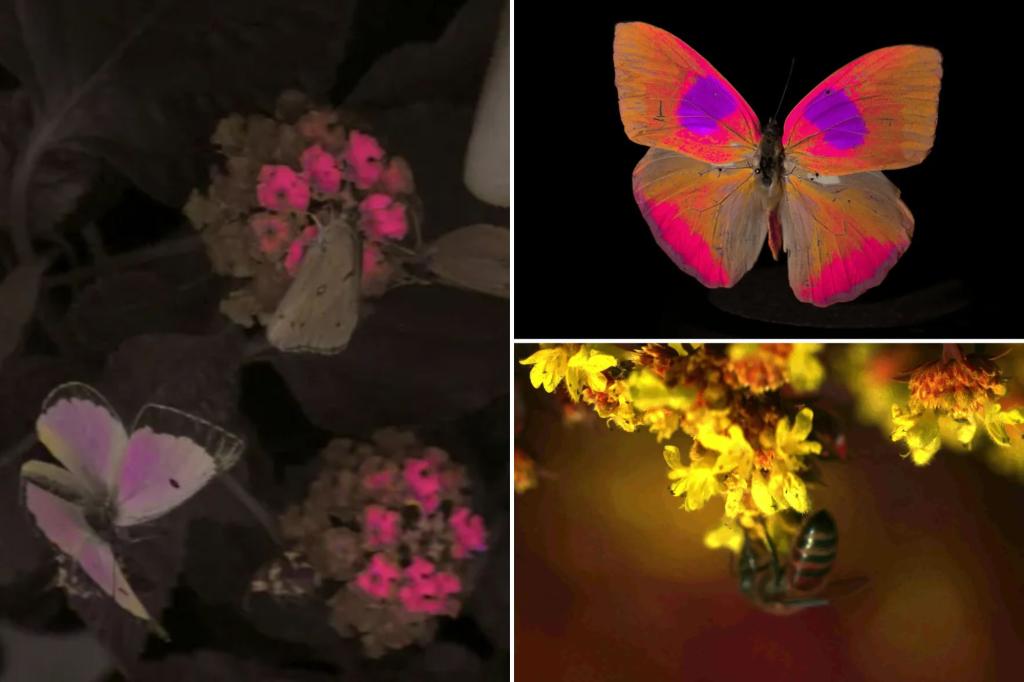
A new video camera developed by American and British scientists allows people to see the world through the eyes of animals by recording video in four color channels, including ultraviolet. This innovative technology provides insights into how different species perceive colors and visual stimuli, offering a unique perspective on the natural world. The researchers have shared their methods and software codes to encourage others to replicate the camera, with the aim of advancing the development of this groundbreaking tool for ecologists and filmmakers.
A new camera system developed by researchers accurately replicates how various animals perceive colors, providing a groundbreaking tool for filmmakers and scientists to understand animal communication and navigation. By recording videos across four color channels and processing the footage to match the color perception of specific animals, this innovative approach captures the full complexity of visual signals in their natural context, including movement and varying light conditions. This advancement opens up new possibilities for studying animal behavior, communication, and evolution, revolutionizing our understanding of sensory ecology.
Scientists have developed a new video system that simulates how animals see color, revealing that many animals perceive the world in their own distinct color palettes due to different combinations of photoreceptors. For example, birds can see ultraviolet light, expanding their rainbow and sky colors, while mice have just two types of cones, making their rainbow composed of two broad bands. The new tool captures natural behavior, providing insights into how animals perceive and interact with their environment.