Tag

Research Fraud

All articles tagged with #research fraud

science-and-research-integrity2 months ago

Rising Academic Fraud: The Role of AI and Paper Mills in Scientific Misconduct

The article discusses the problem of fake scientists and paper mills in academic publishing, highlighting cases of fabricated authors and reviewers used to manipulate peer review and publish fraudulent research, and explores potential measures to improve identity verification and uphold research integrity.

science5 months ago

Rising Threat of Scientific Research Fraud and Fake Publications

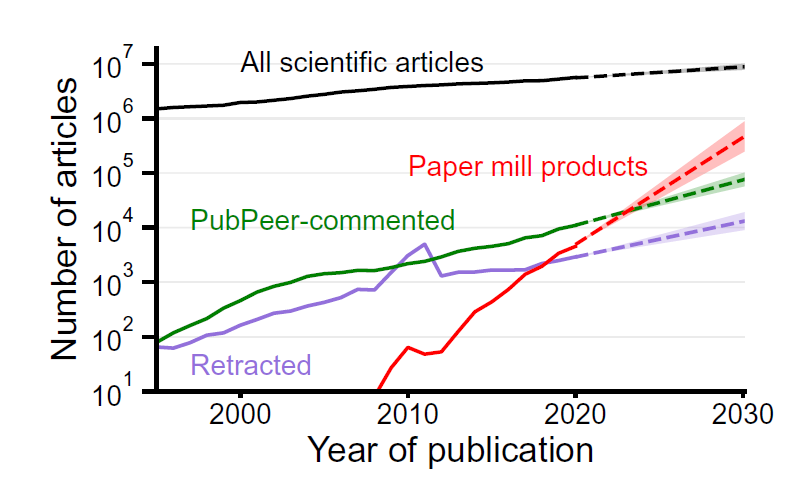
A study from Northwestern University reveals that research fraud in scientific papers is widespread and increasing, with estimates suggesting actual fraud rates could be 10 to 100 times higher than detected. The rise is driven by paper mills, corrupt editors, and the pressure to publish, with the problem exacerbated by online publishing and the potential of generative AI to produce fake research. Experts call for collective action, accountability, and stricter enforcement to combat this growing threat to scientific integrity.

academiaresearch-scandal1 year ago

"AI-Generated Content Scandal: Uncovering Plagiarism in Academic Studies"

Nearly 200 academic papers across various journals have been found to have been partly generated by ChatGPT, raising concerns about the infiltration of low-quality computer-generated content into scientific literature. The scandal has exposed lax peer-review processes at for-profit journals, damaging public trust in science. Academic researchers face pressure to publish, leading to the proliferation of low-value papers. The influence of AI on research papers was exposed by a report from 404 Media, revealing the widespread use of AI-generated content in academic publishing.

science2 years ago

The Need for Research Detectives in the Face of Rising Scientific Fraud.

Fraud in science is becoming increasingly common, and automated screening tools are not enough to tackle it. While they have been successful in detecting faulty experiments and plagiarism, they can be easily fooled by fraudsters. The solution is to employ more people to check the quality of research, such as the Dutch microbiologist Elisabeth Bik, who has caught multiple fraudsters. Quality control systems need not be expensive, and random spot checks could be effective. Institutions and funders should be notified of any wrongdoing, and there should be consequences for repeat offenders.