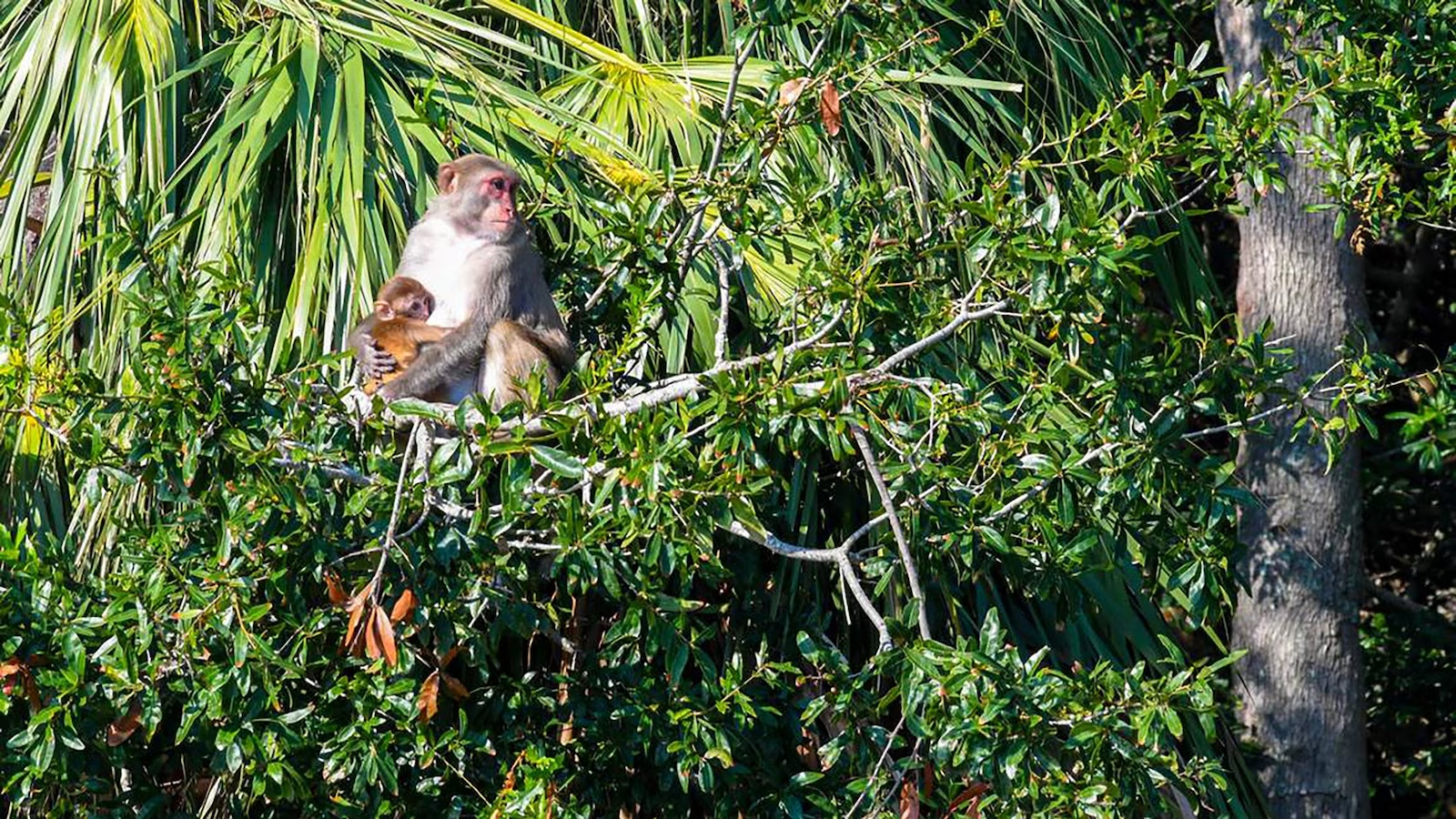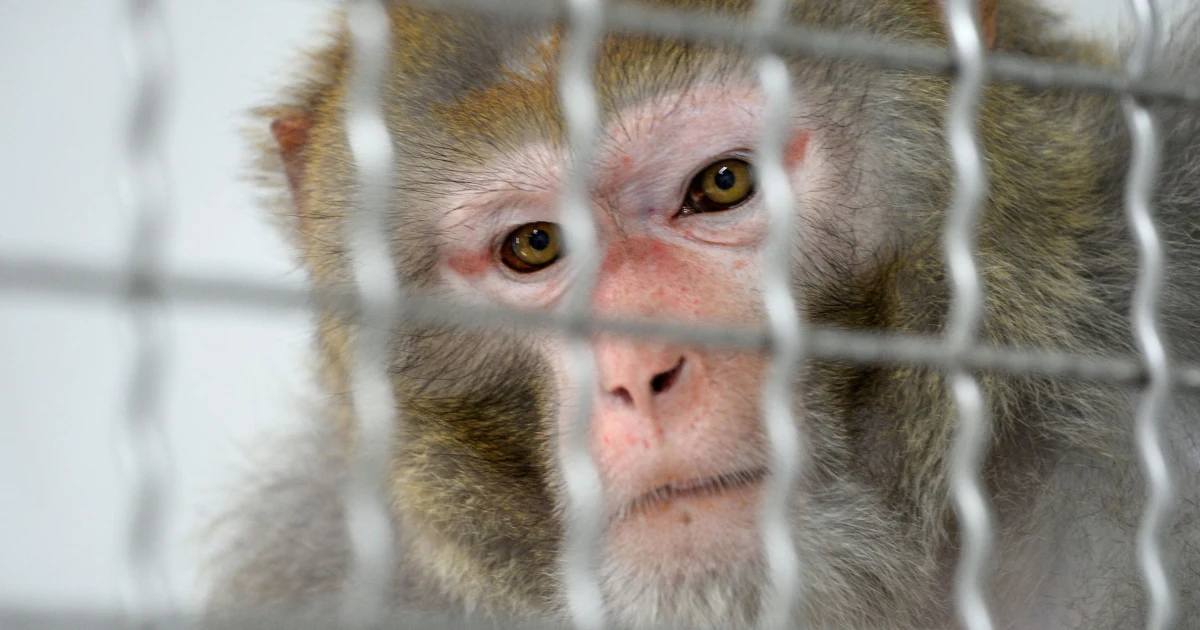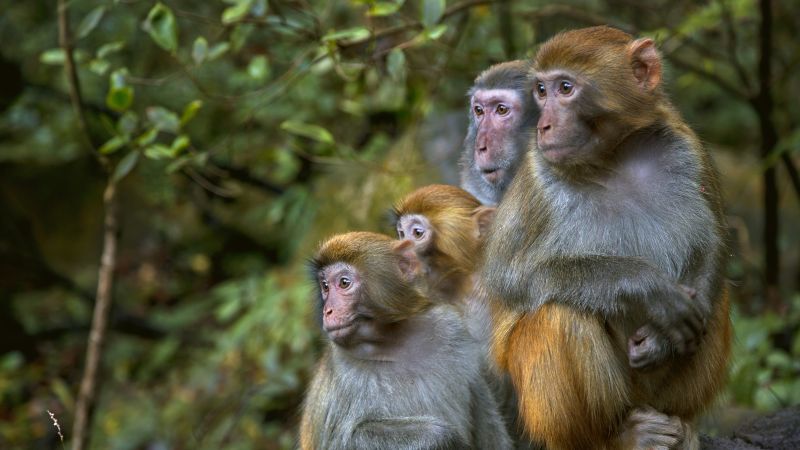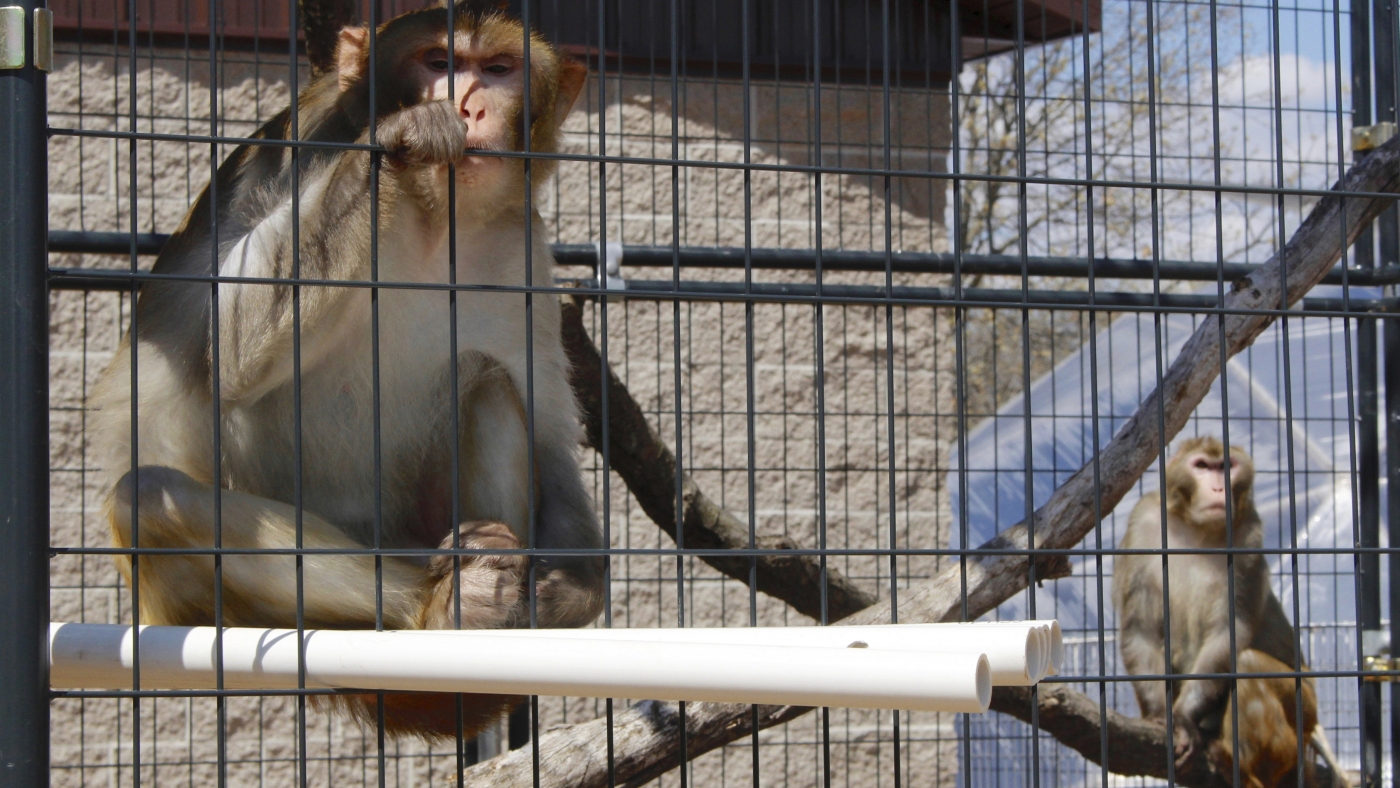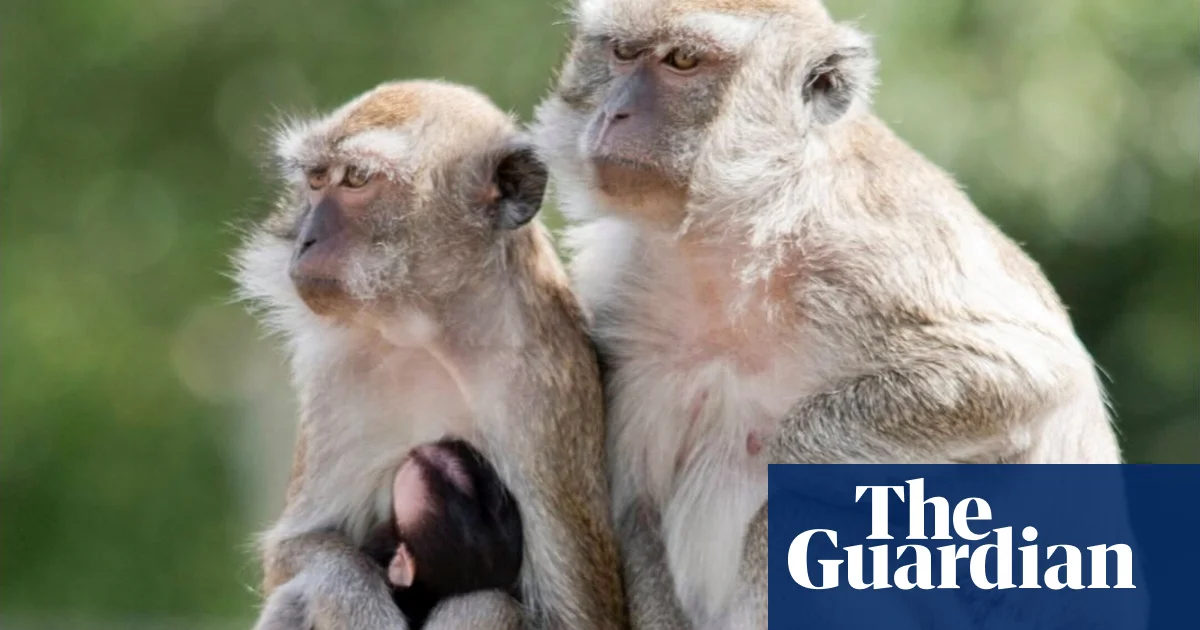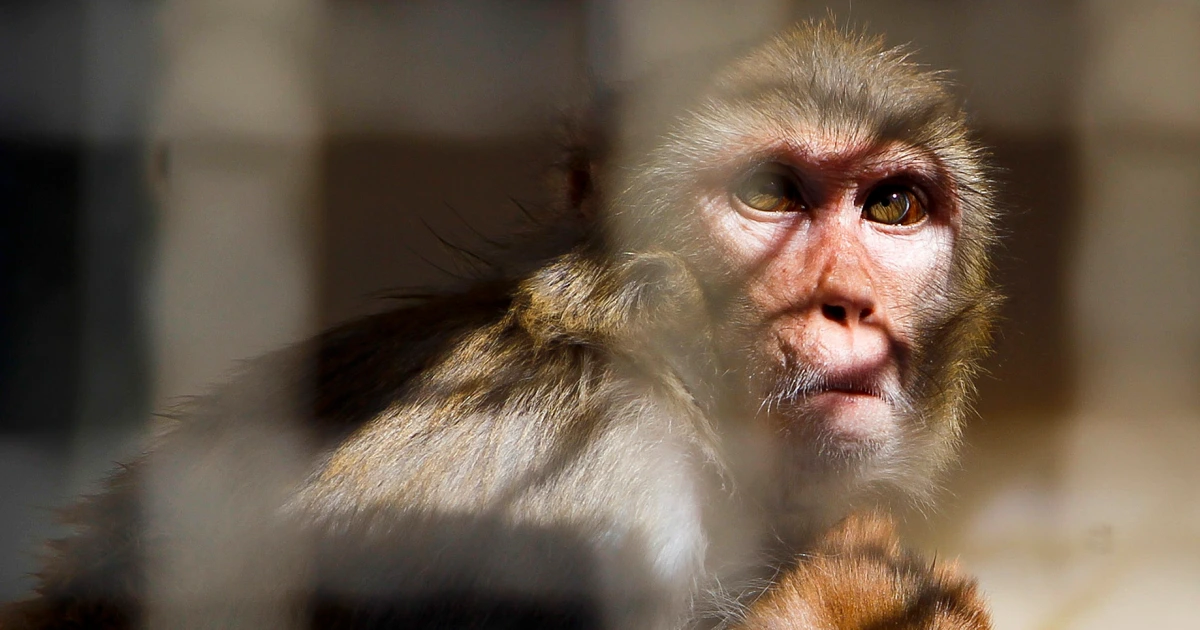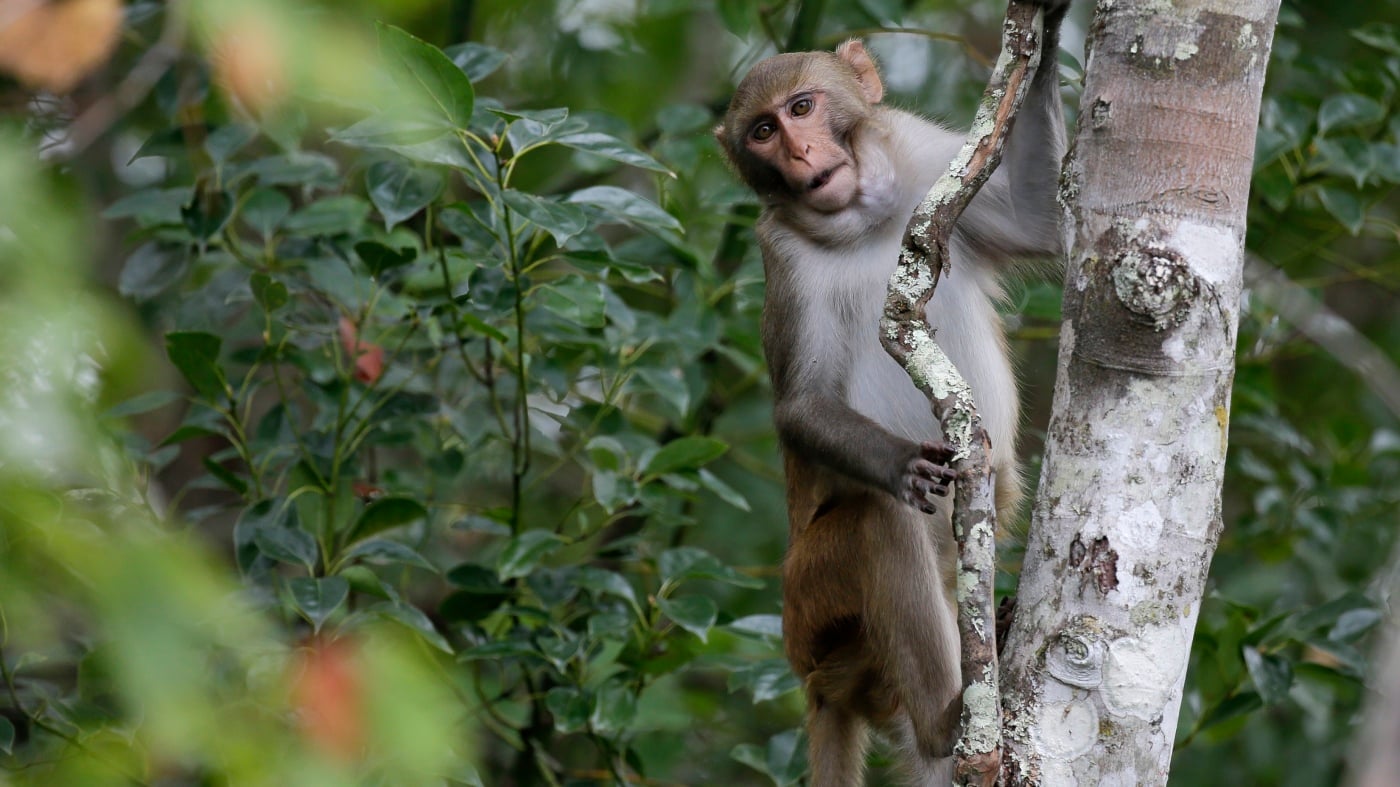
Twenty-five out of 43 rhesus macaques have been recaptured after escaping from the Alpha Genesis Primate Research Center in Yemassee, South Carolina. The young monkeys, weighing between 6 and 7 pounds, escaped when a caretaker accidentally left a door unsecured. Despite their time in the wild, the monkeys are reportedly in good health. The facility breeds and researches primates for vaccine development and experimental procedures. Residents have been advised to avoid the area and not to use drones to locate the remaining monkeys.
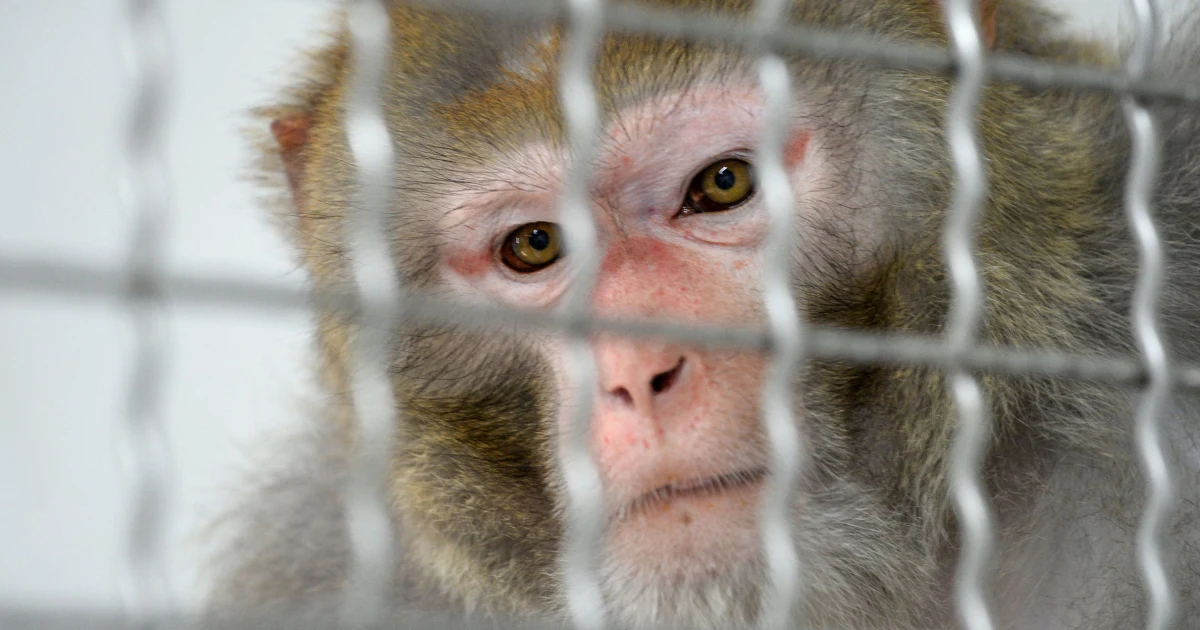
Twenty-four of the 43 monkeys that escaped from the Alpha Genesis Primate Research Center in Yemassee, South Carolina, have been recovered, with efforts ongoing to capture the remaining 18. The monkeys, young female Rhesus macaques, escaped due to a human error when a caretaker failed to secure enclosure doors. Authorities have urged local residents to secure their homes and avoid the area while the search continues.
One of 43 rhesus macaque monkeys that escaped from the Alpha Genesis research facility in Yemassee, South Carolina, has been safely recaptured, while 42 others remain on the loose. The monkeys, bred for medical research, escaped after an employee failed to fully secure a door. Despite their escape, officials assure that the monkeys pose no public health risk. Efforts to recover the remaining monkeys are ongoing, with the animals still interacting with those inside the facility.
One of 43 rhesus macaque monkeys that escaped from the Alpha Genesis Primate Research Center in Yemassee, South Carolina, has been captured and is reportedly in good health, enjoying a peanut butter and jelly sandwich. The escape occurred when a new employee left an enclosure door open. Officials have located several other monkeys near the facility, and efforts to capture them continue. The monkeys are young females and pose no public health threat.
A group of 43 rhesus macaque monkeys escaped from the Alpha Genesis Primate Research Center in Yemassee, South Carolina, with one monkey successfully recaptured. The remaining primates are still near the facility, interacting with those inside. Recovery efforts are ongoing, and residents are advised to avoid the area and secure their homes. The monkeys are nonviolent and too young to carry diseases. This incident follows a similar escape in 2016.
One of 43 Rhesus macaques that escaped from the Alpha Genesis research facility in Yemassee, South Carolina, has been safely recovered, while 42 remain at large. The monkeys escaped after an employee failed to secure a door. They have been seen near the facility's fence, interacting with monkeys still inside. Efforts to recapture them are ongoing, with officials stating the monkeys pose no public health risk.
Forty-three rhesus macaque monkeys escaped from the Alpha Genesis research facility in Yemassee, South Carolina, after a caretaker failed to secure an enclosure door. The monkeys, which are young females not yet used for testing, remain near the facility, evading capture despite baited traps and thermal imaging efforts. Residents have been advised to secure their homes and avoid contact with the monkeys. Alpha Genesis has a history of USDA violations, including previous monkey escapes.
In South Carolina, 43 monkeys escaped from the Alpha Genesis research facility after a caretaker failed to secure two doors. The monkeys, young females weighing 6 to 7 lbs, are loose in a wooded area near Yemassee. Police urge locals to avoid the area and call 911 if they spot the primates. The facility is using food to lure the monkeys back. This incident raises concerns about the ethics of primate research, with animal rights groups advocating for non-animal research methods.
In Yemassee, South Carolina, 43 rhesus macaque monkeys escaped from the Alpha Genesis Primate Research Center due to human error. Residents are advised to secure their homes and avoid interacting with the monkeys, which are nonviolent but skittish. Efforts to recapture the primates include setting traps and using thermal imaging. This incident follows a similar escape in 2016 from the same facility.
Dozens of young rhesus macaque monkeys escaped from the Alpha Genesis Primate Research Center in Yemassee, South Carolina, prompting police to advise residents to secure their homes. The monkeys, which have not been used for testing and are too young to carry diseases, escaped after a caretaker accidentally left an enclosure door open. Search teams are working to recapture the 43 escaped primates, while the public is urged to avoid the area to prevent disturbing the skittish animals.
Forty monkeys have escaped from the Alpha Genesis research facility in South Carolina, prompting local authorities to warn residents to secure their homes and avoid approaching the animals. The Yemassee police are collaborating with Alpha Genesis personnel, using traps and thermal imaging to locate the monkeys. This incident is not the first escape from the facility, as 19 monkeys fled in 2016. Residents are advised to contact 911 if they spot any of the escaped monkeys.
Authorities in South Carolina have advised residents to secure their homes after 43 rhesus macaque monkeys escaped from the Alpha Genesis research facility in Beaufort County. The Yemassee Police Department is using traps and thermal imaging to locate the primates, and residents are urged to contact 911 if they spot any of the animals. Alpha Genesis, which breeds monkeys for research, has experienced similar escapes in the past, but assures there is no health risk from the current situation.
Police in Yemassee, South Carolina, are searching for 40 monkeys that escaped from the Alpha Genesis research facility. The facility specializes in nonhuman primate research, including clinical trials for brain diseases. Authorities have set traps and are using thermal imaging to locate the monkeys, advising residents to secure their homes and call 911 if they spot any of the animals. The breed of the monkeys is unspecified, but the facility works with macaque and capuchin monkeys. Previous escapes have occurred at the facility, including incidents in May this year and in 2016.
Experiments conducted at the Max Planck Institute for Dynamics and Self-Organization (MPI-DS) in Göttingen reveal that the scaling laws formulated over 80 years ago, which explain turbulent flows, are only partially accurate. The study shows that these laws, established by mathematician Andrei Kolmogorov in 1941, apply only to strongly idealized flows and do not fully explain real-world turbulence. The researchers used a unique wind tunnel to generate high degrees of turbulence and found systematic deviations from Kolmogorov's predictions, suggesting that medium-sized eddies are not completely decoupled from larger eddies in a system. The findings have implications for understanding turbulence in engineered flows and climate models.