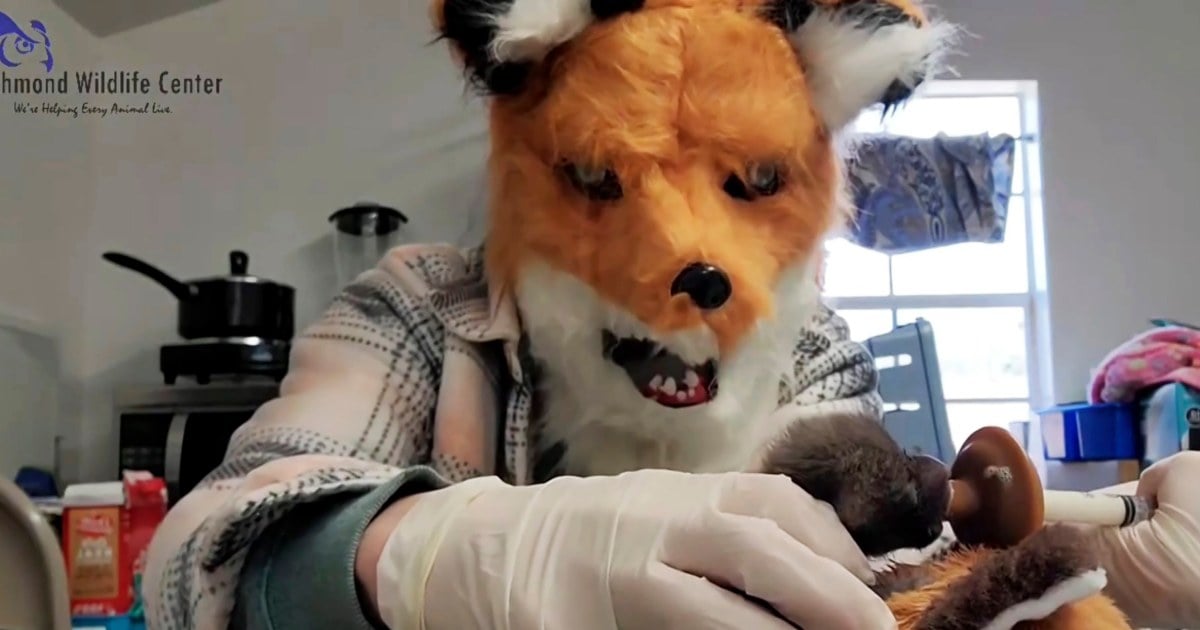
Staff at a wildlife center in Virginia are wearing a fox mask to feed and care for a rescued newborn red fox in an effort to prevent the animal from becoming too accustomed to humans. The center aims to avoid imprinting and habituation by minimizing human interaction and using visual barriers. The center also highlighted the importance of handling wildlife with proper precautions to prevent the spread of rabies, despite the minimal risk from the fox kit.
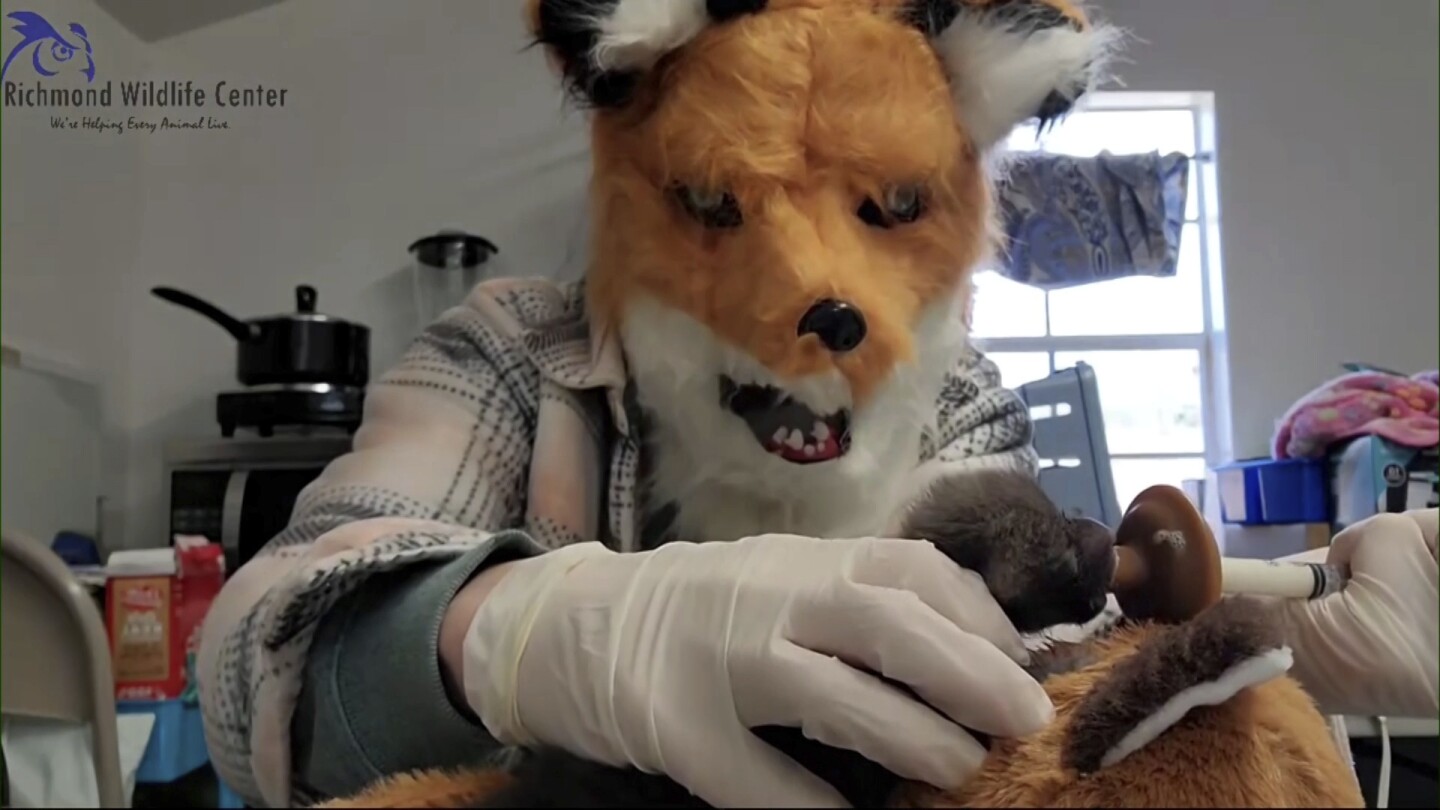
Staff at a Virginia wildlife center are caring for an orphaned red fox kit by wearing a fox mask and taking other precautions to prevent the kit from becoming imprinted upon or habituated to humans. The kit was found in an alley in Richmond and is being fed every two to four hours while being comforted by a large stuffed animal meant to mimic her mother. The center is also working to reunite the kit with other red fox kits of the same age and weight in order to eventually release them back into the wild together.
The highly pathogenic avian influenza has been detected in a mammal in the Lehigh Valley for the first time, with the H5N1 strain of the bird flu being found in a red fox collected in Northampton County. Of the 191 detections of highly pathogenic avian influenza in mammals, 42% have been in red foxes. The bird flu has also been found in other mammal species. The red fox that tested positive was an orphaned kit that was admitted to a local wildlife rehabilitation center after it was found alongside dead littermates. Federal agriculture officials recommend not touching or collecting sick or dead animals.