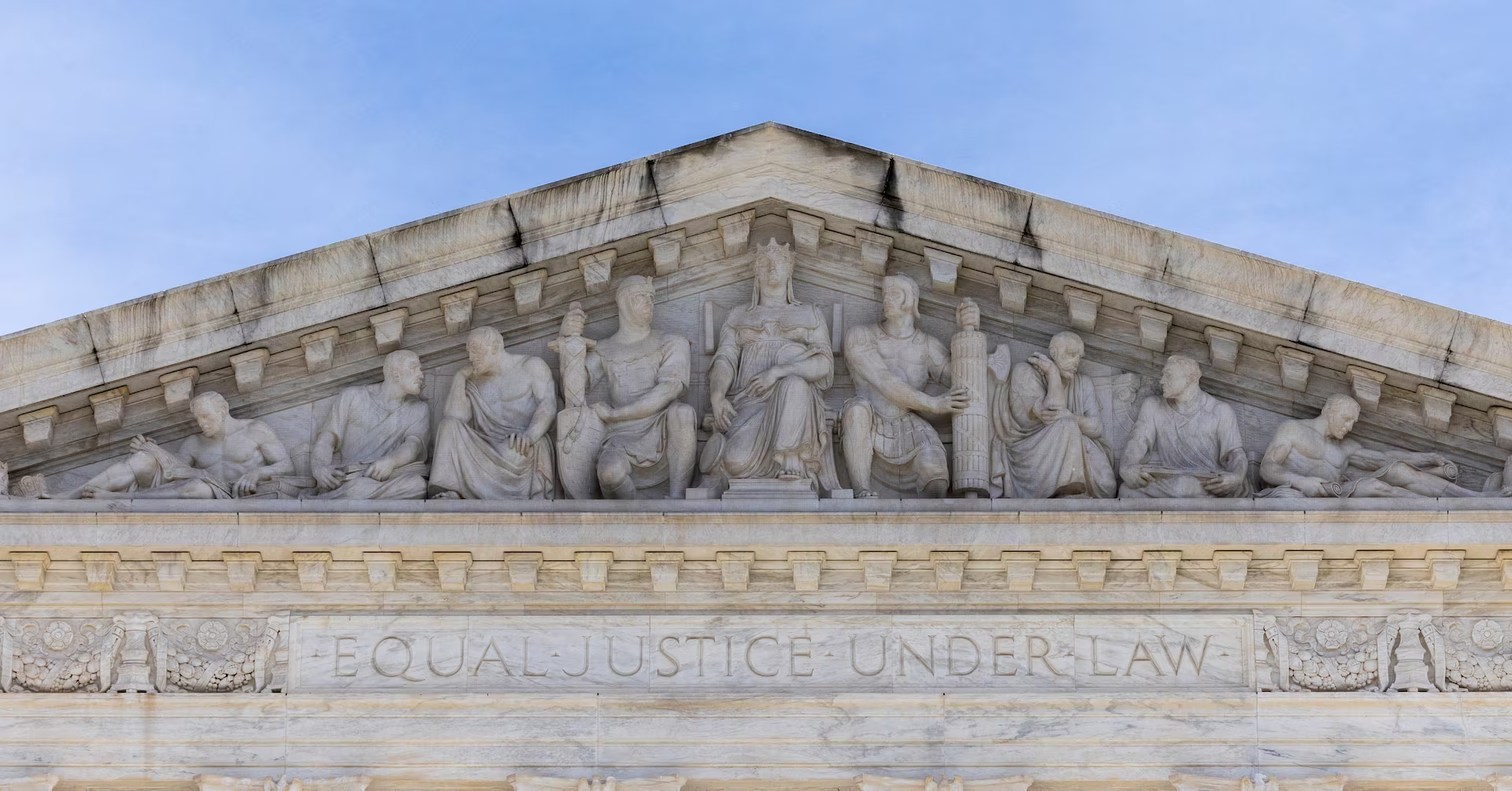
The US Supreme Court is considering whether Cox Communications can be held liable for enabling customer piracy, with the case potentially resulting in a $1.5 billion verdict against Cox. The case revolves around whether ISPs can be responsible for user copyright infringement and how much they must do to prevent it, raising broader questions about internet liability and user rights.

The US Supreme Court is seeking input on whether Internet Service Providers (ISPs) should be held liable for users' piracy, following a case where record labels argue that ISPs like Cox profit from subscribers' infringement by not terminating accounts of repeat offenders. Cox contends that enforcing such rulings would unfairly require ISPs to cut off service based on unverified allegations. Meanwhile, a similar case involving Grande Communications saw the 5th Circuit Court rule against the ISP for not terminating repeat infringers, though it called for a new trial on damages.
The Fourth Circuit Court of Appeals has overturned a $1 billion judgement against Cox Communications in a music piracy lawsuit, ruling that a new trial should determine appropriate damages. The lawsuit, involving record labels such as Sony Music and Universal Music Group, accused Cox of not addressing copyright infringement notices and failing to take action against music pirates. The court found that Cox did not profit from its subscribers' infringement, a legal prerequisite for part of the liability. This decision marks a significant development in the ongoing battle between record labels and ISPs over music piracy.
Cox Communications successfully appealed a $1 billion jury verdict in favor of major record labels, accused of failing to prevent user piracy, leading to a new trial to determine damages. The 4th U.S. Circuit Court of Appeals ruled that the amount of damages was not justified and that a federal district court should hold a new trial. The labels' attorney affirmed Cox's willful infringement, while Cox disagreed with the ruling, stating that providing broadband service should not be a violation of copyright law. The case is seen as a test of the obligations of internet service providers to thwart piracy, with other ISPs also facing similar lawsuits from record labels.
Cox Communications successfully appealed a $1 billion jury verdict in favor of major record labels, with the U.S. appeals court ruling that the damages were not justified. The court ordered a new trial to determine the appropriate amount, following accusations of the company failing to curb user piracy.
Cher and other artists are releasing Christmas albums in October to maximize sales during the limited holiday music sales window. Labels release holiday music early to meet the demand of physical retailers and cater to consumers who start their holiday shopping early. Christmas music is big business, with revenues estimated at $177 million in 2018. Record labels strategically plan holiday releases and focus on Christmas music specifically, aiming to find enduring hits. Getting Christmas music on streaming playlists is crucial for reaching new audiences. Despite some resistance, the trend of releasing Christmas albums in October is likely to continue due to the popularity of streaming and consumer demand.
Oliver Anthony's co-manager, Draven Riffe, discusses the success of the country singer's viral hit "Rich Men North of Richmond" and the overwhelming response from record labels and high-profile artists. Riffe explains how he discovered Anthony's music and the organic push that led to the song's explosion on social media. Despite the offers pouring in, Anthony's team is taking it slow and focusing on their own bookings and projects. Riffe emphasizes Anthony's passion for helping other musicians and his commitment to his community. More music is on the way, with five acoustic videos set to be released soon.
Country singer Oliver Anthony claims to have turned down $8 million offers from record labels after his song "Rich Men North of Richmond" went viral, accumulating nearly 20 million views on YouTube. The song's lyrics have sparked controversy, with critics calling them offensive and fatphobic. Anthony responded to his sudden success by expressing his disinterest in fame and commercial success, stating that he wrote the music as a means of coping with mental health issues. While some fans view the song as an ode to the American working class, others criticize it for perpetuating fatphobia and the "welfare queen" trope. Anthony also addressed skeptics questioning his working-class background and shared personal details about his life.
Universal Music Group, Sony Music Entertainment, Capitol, and other record labels have filed a $412 million copyright infringement lawsuit against Internet Archive, accusing the organization of operating as an "illegal record store" through its "Great 78 Project." The suit claims that Internet Archive has violated copyright laws by reproducing and distributing pre-1972 musical works without authorization. The plaintiffs argue that the organization's activities go beyond preservation and research, seeking to provide free and unlimited access to music for everyone, regardless of copyright. Internet Archive plans to appeal the lawsuit.
Record labels, including Universal Music Group and Sony Music Entertainment, have filed a lawsuit against the nonprofit Internet Archive over its "Great 78 Project," which offers a streaming collection of digitized music from vintage records. The labels claim that the project acts as an illegal record store and could result in damages of up to $412 million. The Internet Archive, which compares itself to a library, is already facing a separate lawsuit from book publishers. The labels argue that the recordings are available on authorized streaming services and are not at risk of being lost or forgotten.