The SEC's new nine-game schedule starting in 2026 aims to preserve historic rivalries while adapting to conference realignment, leading to the loss of some traditional matchups like LSU-Florida and LSU-Alabama, but also creating new scheduling challenges and opportunities for other rivalries and programs.

MLB commissioner Rob Manfred plans to step down in 2029 and has proposed potential expansion and geographic realignment that could eliminate the traditional American and National Leagues, sparking concern over the sport's historical roots.
The Mets are not focused on MLB's ongoing discussions about geographic realignment and expansion, which could involve adding two new teams and expanding to 32 franchises, potentially affecting scheduling and postseason formats.
The Yankees are contemplating MLB realignment that could place them in a division with teams like the Red Sox, Mets, and Phillies, which could increase competition but reduce travel. Meanwhile, they face injury concerns with relievers Jonathan Loáisiga and Brent Headrick, and have activated Amed Rosario from the injured list, as they manage their roster amidst ongoing challenges.
A proposed MLB realignment suggests creating a highly competitive East division featuring the Yankees, Mets, Phillies, and Red Sox, which would intensify competition and reduce weaker opponents, but could impact revenue sharing and playoff opportunities, especially with potential league expansion to 32 teams.
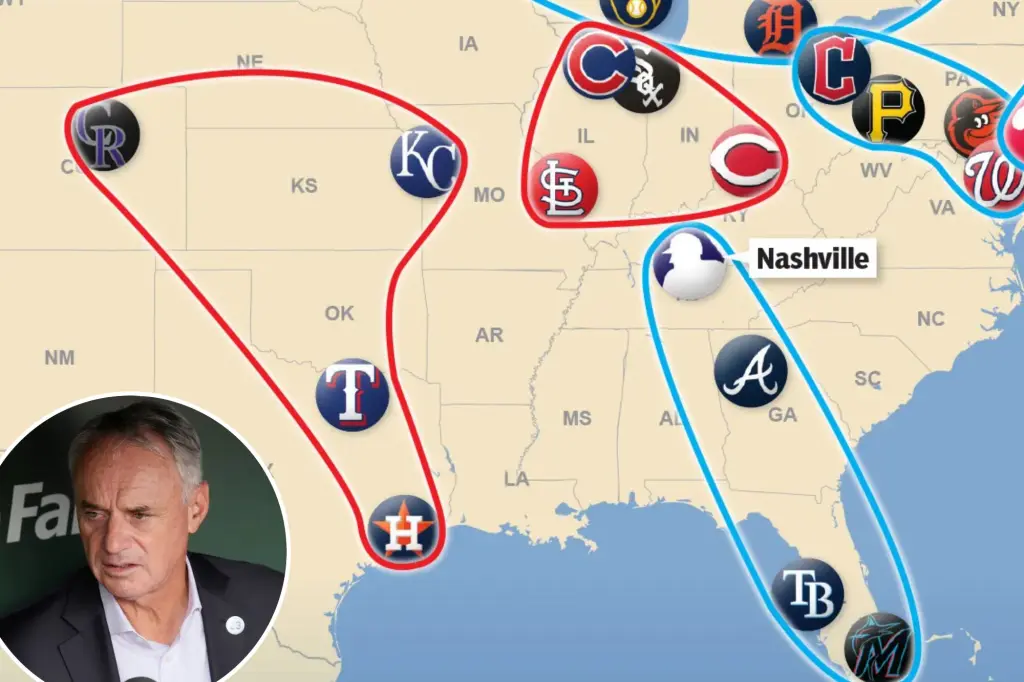
MLB Commissioner Rob Manfred proposed a radical realignment of the league, potentially ending the traditional American and National League format, to include geographic restructuring and expansion into new markets like Nashville and Portland. The idea has faced strong opposition from baseball traditionalists and concerns over disrupting rivalries and playoff balance, with the plan still in early conceptual stages.
MLB commissioner Rob Manfred hinted at significant changes to the league's structure, including potential expansion to new cities like Portland and Nashville, and a possible geographic realignment of divisions, which could dramatically alter the traditional American and National League formats.
MLB commissioner Rob Manfred indicated that if the league expands, it will likely undergo geographic realignment to reduce travel and improve postseason appeal, potentially leading to a division structure similar to the NHL or NFL. The league has not expanded since 1998, but candidates like Nashville and Salt Lake City are considered for future expansion, which could increase teams to 32 and prompt a divisional reorganization.
The North Carolina High School Athletic Association (NCHSAA) has finalized the average daily membership (ADM) numbers for its upcoming realignment, expanding from four to eight classifications starting in the 2025-2026 school year. This change, driven by a bylaw amendment, limits each classification to no more than 64 schools, with the largest 32 schools forming the new 8A classification. The NCHSAA collected ADM data independently this year due to data management changes and challenges from Hurricane Helene. The realignment aims to better organize schools based on size for interscholastic athletics.
Florida State and Clemson are exploring potential exits from the ACC, challenging the grant of rights agreement and potentially triggering another round of realignment in college sports. The schools are seeking to join the Big Ten or SEC, but face financial and legal hurdles. The ongoing power struggle between ESPN and Fox, the impact on the College Football Playoff revenue distribution, and the looming threat of antitrust implications add complexity to the situation. The potential departure of these schools could have significant implications for the future landscape of college athletics.
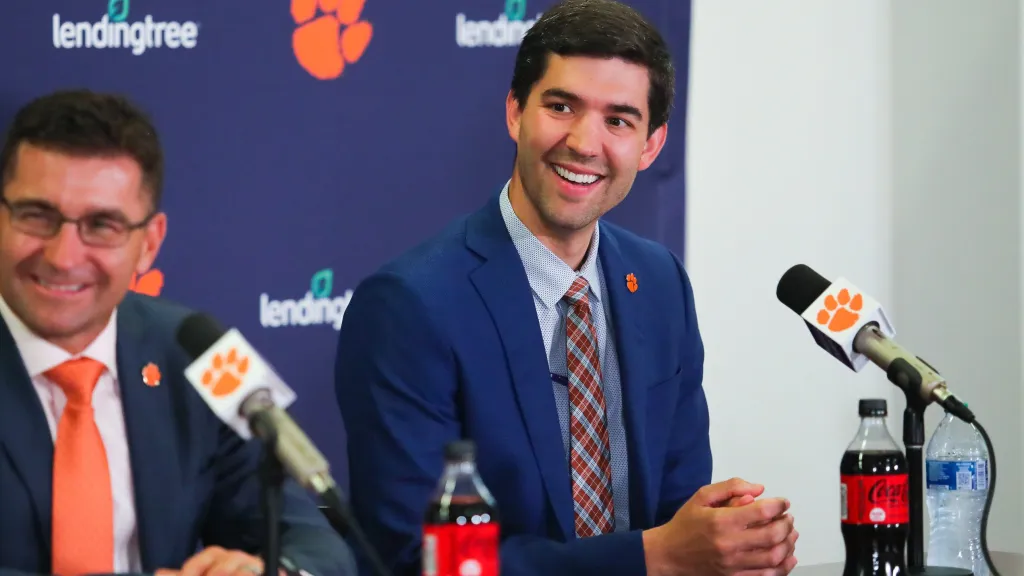
Clemson University has filed a civil action lawsuit against the Atlantic Coast Conference, seeking a declaration that its media rights do not include games played after leaving the ACC, and that it owes no fiduciary duties to the conference. The lawsuit signifies Clemson's determination to secure a position in a Power 2 Conference, recognizing the changing landscape of college athletics. This move echoes historical instances where Clemson took decisive actions to assert its place in major college football, with Athletic Director Graham Neff and President Jim Clements leading the charge.
Clemson has filed a lawsuit against the ACC in an attempt to escape hefty exit fees and a grant of rights that runs until 2036, following a similar move by Florida State. The lawsuit challenges the veracity of the grant of rights, arguing that it unfairly restricts Clemson's ability to maximize its brand value. The legal maneuver could have significant implications for college sports realignment, but the outcome is likely to be drawn out as jurisdiction and potential appeals are yet to be determined.
The College Football Playoff will adopt a 5+7 format, with five conference champions and seven at-large selections, starting next season. This decision comes after the university presidents overseeing the CFP unanimously voted to adjust the format due to realignment and the disassembling of the Pac-12, reducing the spots reserved for conference champions from six to five.
The Pac-12 Conference has appointed Teresa Gould as its new commissioner, making her the first female commissioner of a Power Five conference. She steps into a challenging situation as the conference is left with only two schools following the departure of 10 teams. Gould's extensive experience in college sports administration will be crucial as the Pac-12 navigates through a period of uncertainty and potential realignment, with the possibility of joining forces with the Mountain West Conference.
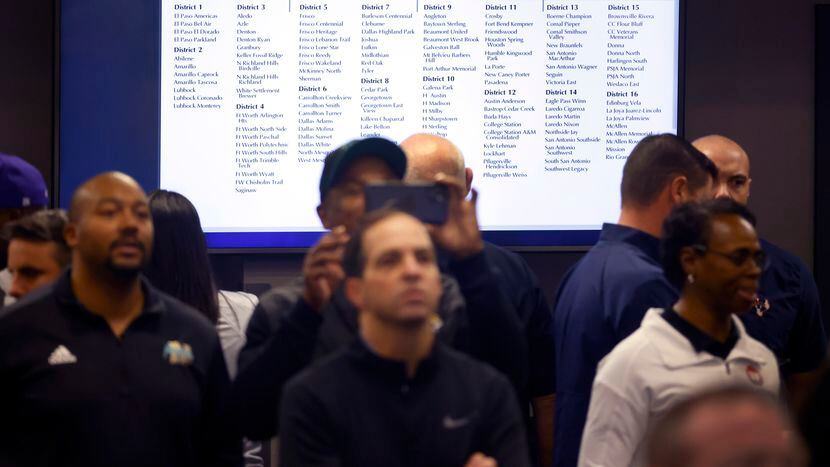
The University Interscholastic League (UIL) announced the biennial realignment for high school football districts in the Dallas area for the 2024-26 seasons. The realignment includes notable matchups such as Southlake Carroll vs. Euless Trinity and Denton Guyer in the same district for the first time. Additionally, the tough 6A District 11-6A features powerhouse teams like DeSoto, Duncanville, and Lancaster, making it the toughest district in Texas for football. The realignment also affects districts in Class 5A Division I and II, as well as Class 4A Division I and II, with several teams moving to new districts and facing new competition.