A new hypothesis, the Quantum Memory Matrix (QMM), proposes that space-time itself stores quantum information, potentially resolving the Black Hole Information Paradox by preserving unitarity and reconciling quantum mechanics with general relativity. This framework could impact quantum computing, improve black hole models, and inspire experimental tests through Hawking radiation or gravitational wave observations. The study, involving researchers from Terra Quantum and Leiden University, suggests that space-time quantized at the Planck scale can store information in 'quantum imprints,' offering a new perspective on quantum gravity.
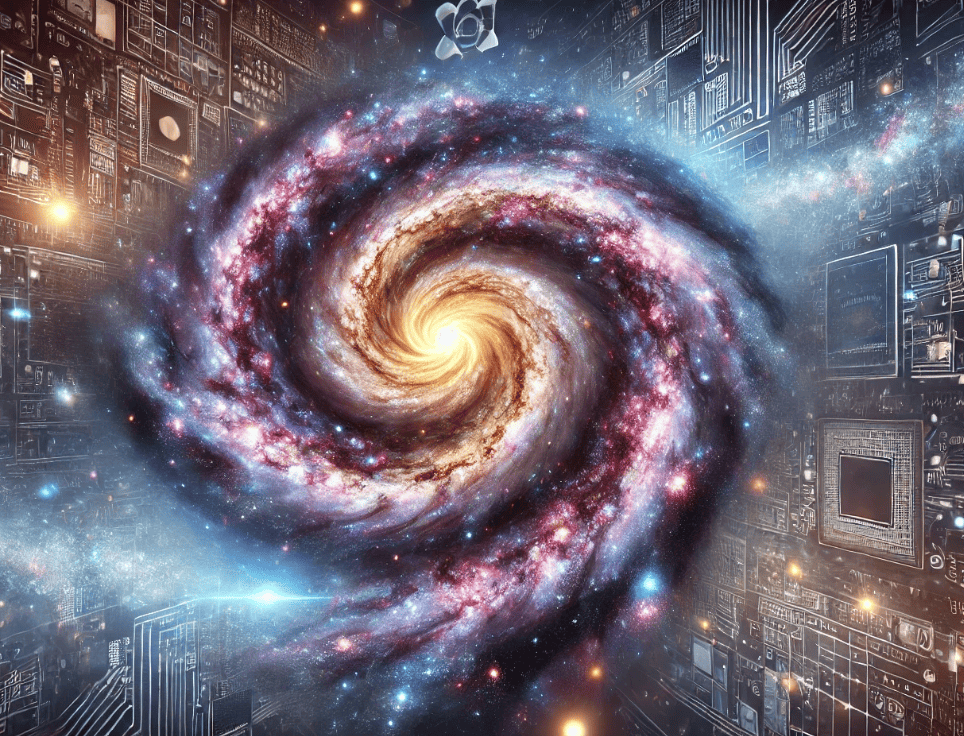
A study in Quantum Reports by Espen Gaarder Haug suggests the universe may function as a vast quantum gravity computer, with particle interactions representing bits of information processed at the Planck scale. This speculative theory proposes that the observable universe operates like a computational system, potentially offering new insights into cosmic interactions and energy conservation. While the idea is intriguing, it remains theoretical and faces challenges in terms of empirical evidence and testing.
Scientists have made a major breakthrough in measuring gravity at the quantum level, using a new technique to detect weak gravitational pull on a tiny particle, the smallest mass at which gravitational signals have ever been recorded. This discovery brings scientists closer than ever to understanding how forces at this scale work and potentially unlocking a 'theory of everything'. The method could pave the way for further advancements in measuring quantum gravity, offering new insights into the mysterious forces that govern the Universe.
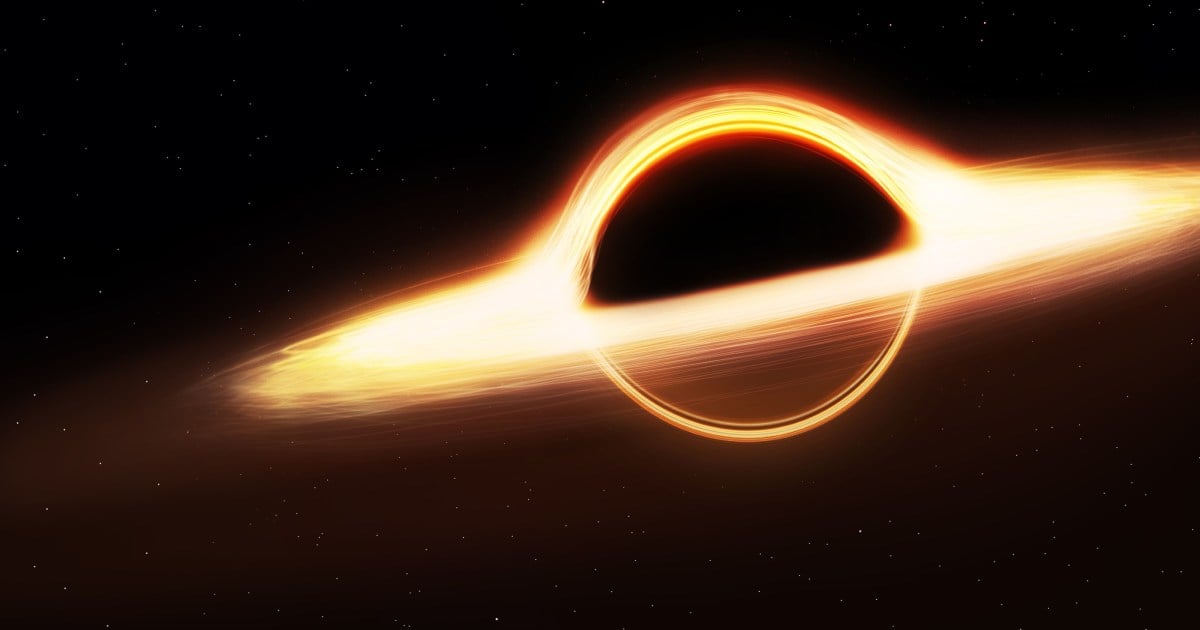
The center of a black hole, known as the singularity, is a theoretical point where mass is thought to be compressed to zero volume, implying infinite density, which suggests a breakdown of our current understanding of physics. The event horizon marks the boundary beyond which nothing can escape the black hole's gravitational pull. While general relativity predicts the existence of singularities, it is believed to fail at describing the true nature of a black hole's center, indicating the need for a new theory of quantum gravity. The reality inside a black hole remains speculative and may forever be beyond our empirical understanding.