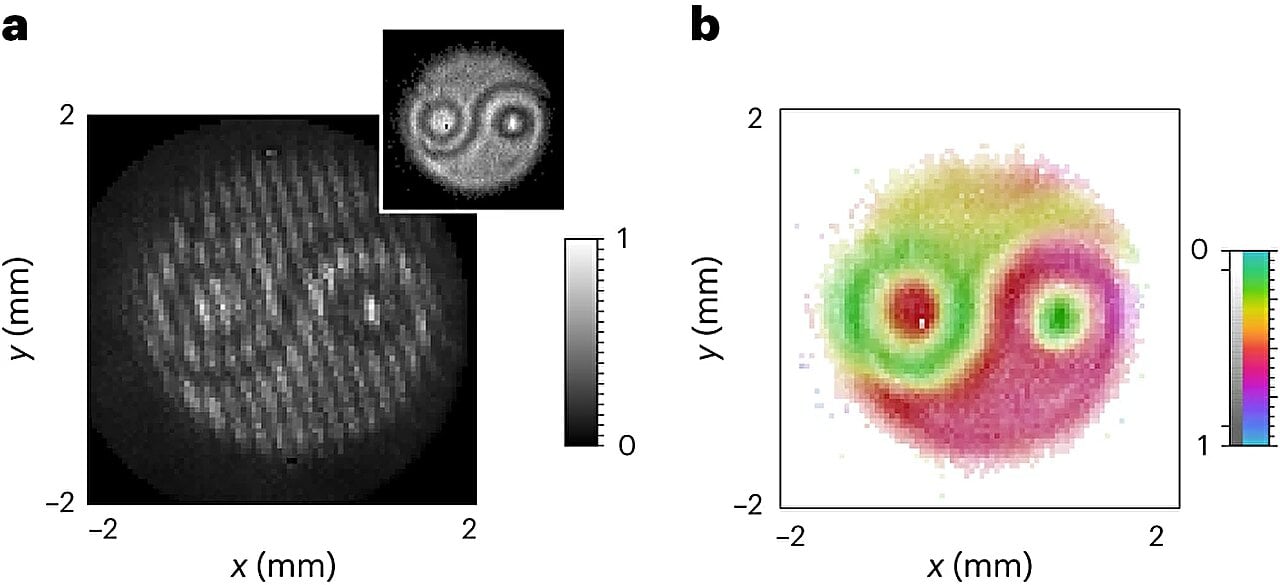
Physicists have developed a new analytical technique using biphoton digital holography to measure multiple quantum states in entangled particles more efficiently. By applying holographic principles, researchers were able to infer additional dimensions from just a few details carried between a pair of photons, allowing them to recreate a yin-and-yang symbol programmed into the photon-generating apparatus. This method is exponentially faster than previous techniques, providing a solution to the scalability challenge in projective tomography and offering potential advancements in quantum computing and imaging technologies.
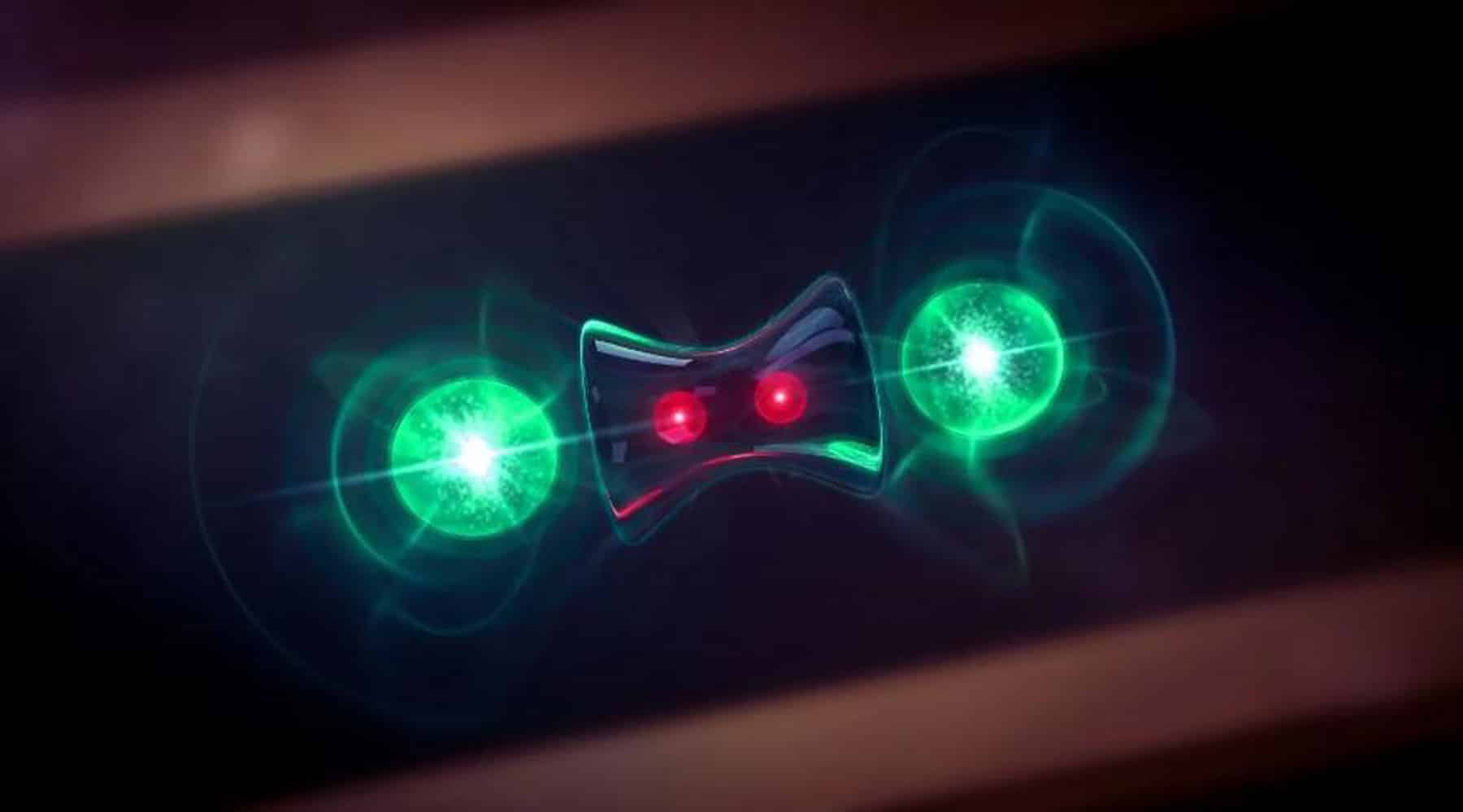
Scientists from the University of Ottawa and Sapienza University of Rome have developed biphoton digital holography, a fast and efficient method for reconstructing the full quantum state of entangled particles. By visualizing the wave function of two entangled photons in real-time, this technique allows for the prediction of outcomes in quantum technology applications. The previous projective measurement approach to quantum tomography was time-consuming and impractical, but the new method requires only minutes or seconds, regardless of the system's complexity, addressing the scalability challenge.
Researchers at the University of Ottawa have developed a novel technique that allows for the real-time visualization of the wave function of entangled photons. By using an advanced camera and interferometric imaging, the team was able to reconstruct the unknown wave function of two entangled photons, a process known as quantum tomography, in minutes or seconds instead of days. This breakthrough has the potential to accelerate advancements in quantum technology, including quantum state characterization, quantum communication, and quantum imaging techniques.
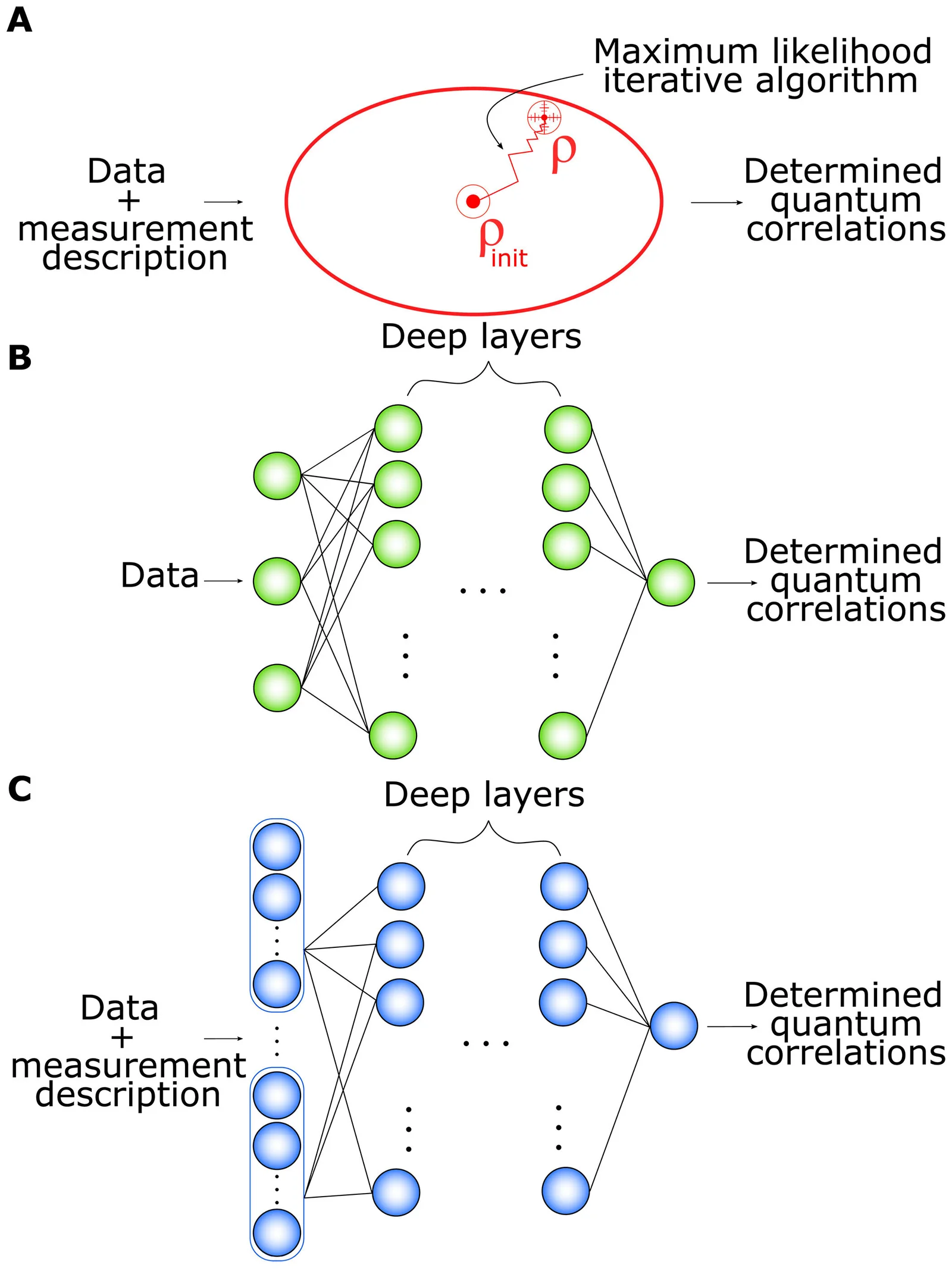
Physicists have developed a new technique using deep-learning AI technology to accurately quantify the amount of entanglement in a given system. By training AI apps to study entangled quantum states using numerical data, the researchers were able to generate successive estimations of the degree of entanglement, resulting in error rates 10 times lower than traditional estimation methods. This approach provides a more precise and efficient way to measure entanglement without directly measuring the quantum state, which is destructive.