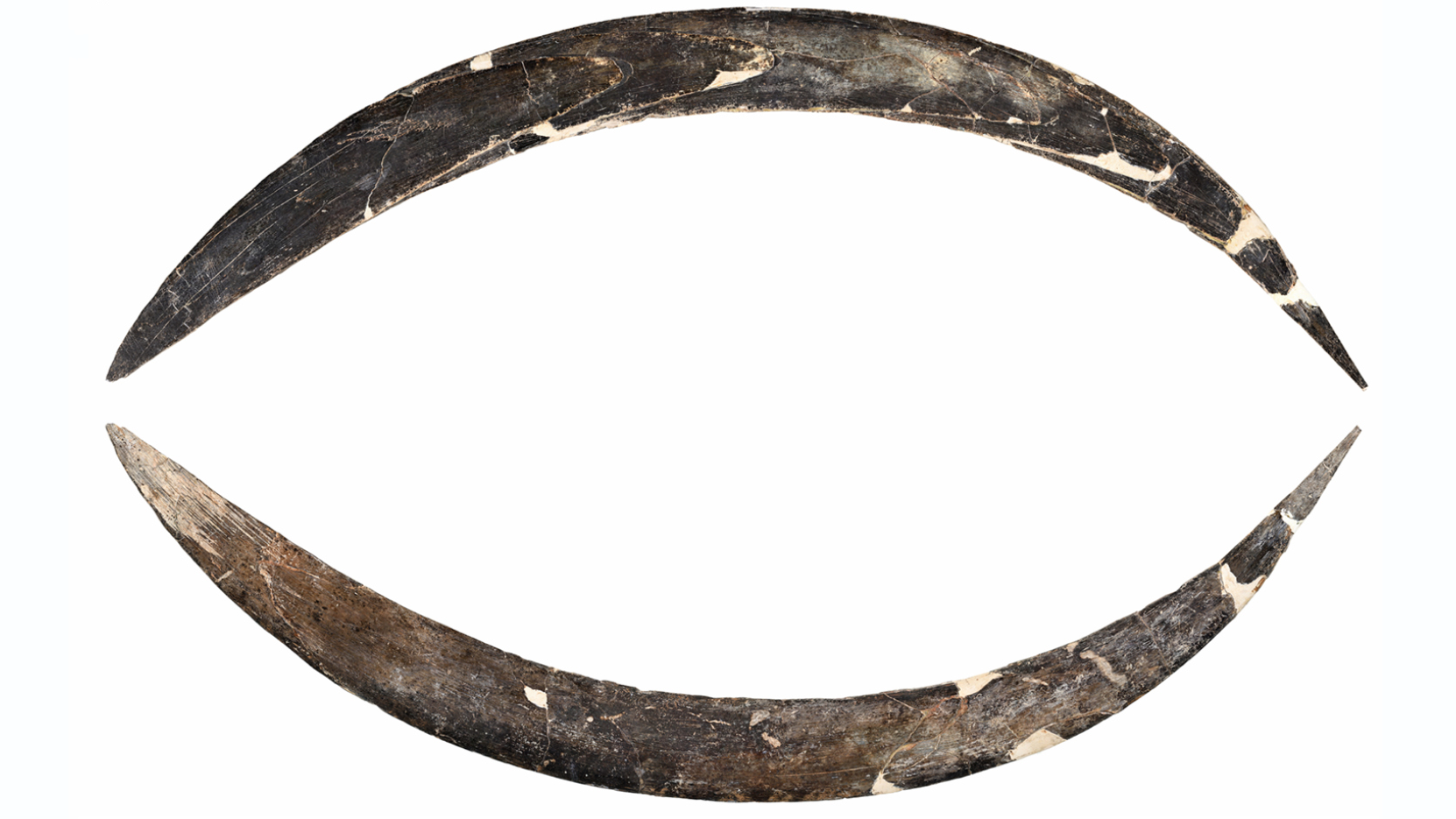
A 40,000-year-old mammoth tusk boomerang was discovered in Poland, making it the oldest in Europe and possibly the world, revealing advanced tool-making skills of early Homo sapiens during the Paleolithic period.
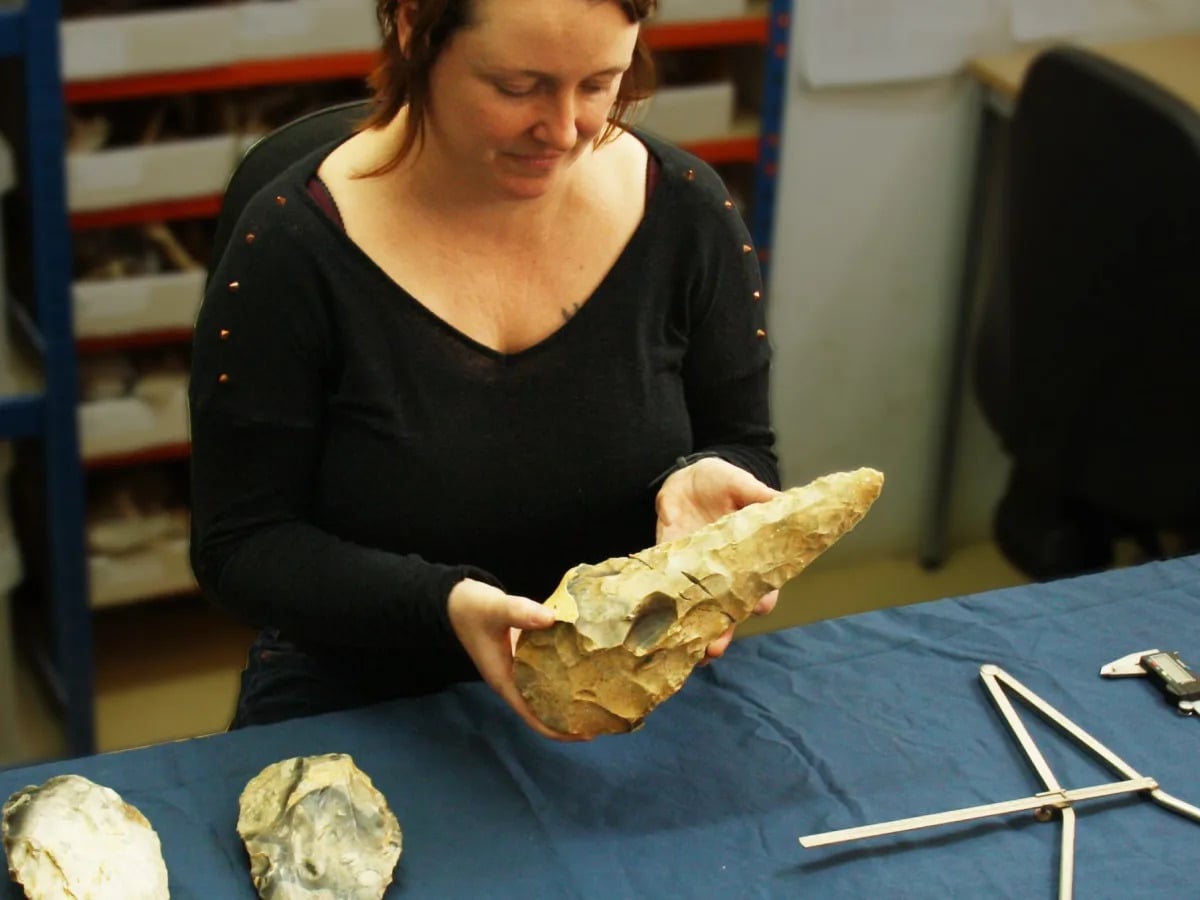
Archaeologists from UCL Institute of Archaeology have discovered a pair of giant handaxes, including the third largest ever found in Britain, at an archaeological site in Frindsbury, Kent. The handaxes, weighing over 3.5 pounds and estimated to be over 300,000 years old, are believed to have been used for specialized purposes or in symbolic/cultural practices. The discovery offers an opportunity to learn more about the early humans who made these tools and their significance.
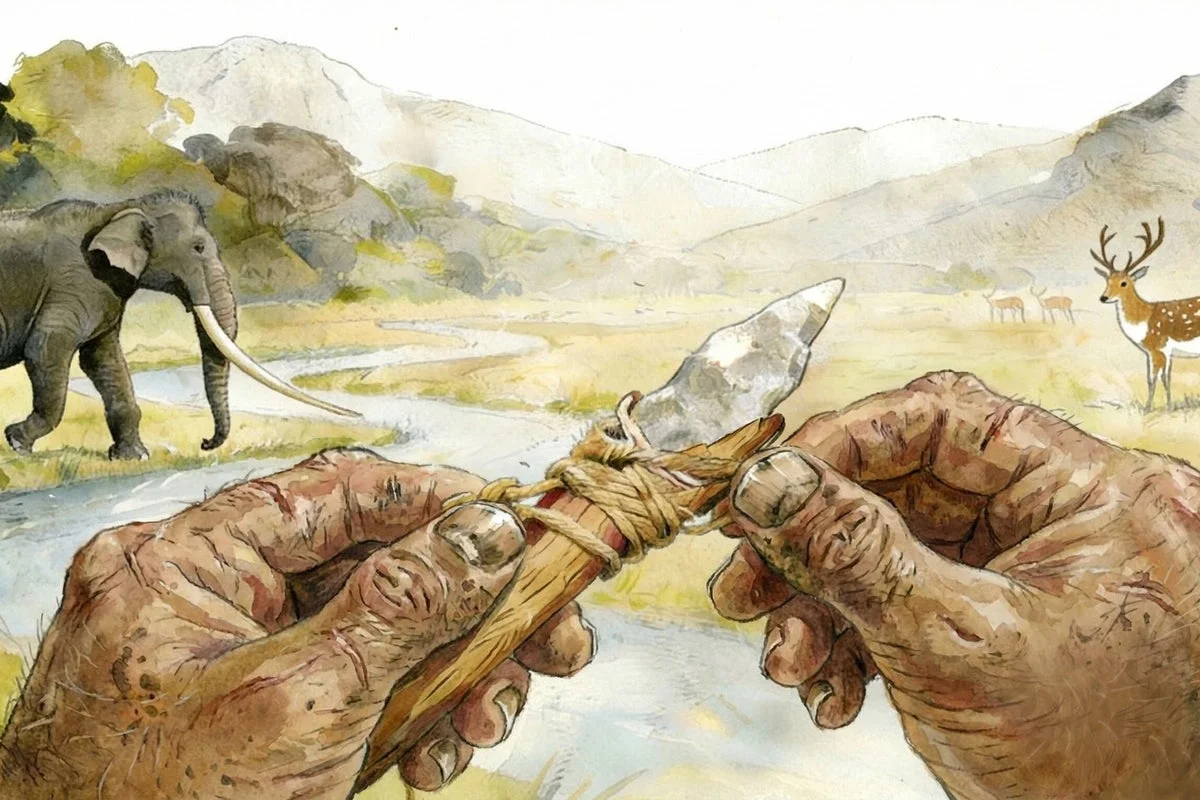
Two giant hand axes, over 300,000 years old, have been discovered in England. These prehistoric tools, measuring over 22cm long, are difficult to handle and may have been used for demonstrations of strength and skill. Archaeologists believe they were used for butchering or skinning animals, but their large size suggests a possible symbolic or less practical function. The site where they were found was a prime hunting ground during the Ice Age, inhabited by early humans and Neanderthals. The purpose and creators of these unusually large hand axes remain a mystery.
Two giant hand axes, over 300,000 years old, have been discovered in England. These prehistoric tools, measuring over 22cm long, are so large that it is difficult to imagine how they were used practically. Archaeologists speculate that they may have been used for demonstrations of strength and skill, rather than for practical purposes like butchering or skinning animals. The discovery offers an opportunity to learn more about the early humans who made these tools and the reasons behind their size.