Scientists from Kyoto and Hiroshima Universities have developed a new measurement technique to identify the elusive W state of quantum entanglement, a breakthrough that could advance quantum teleportation and computing technologies, bringing us closer to practical quantum networks and possibly even teleportation in the future.
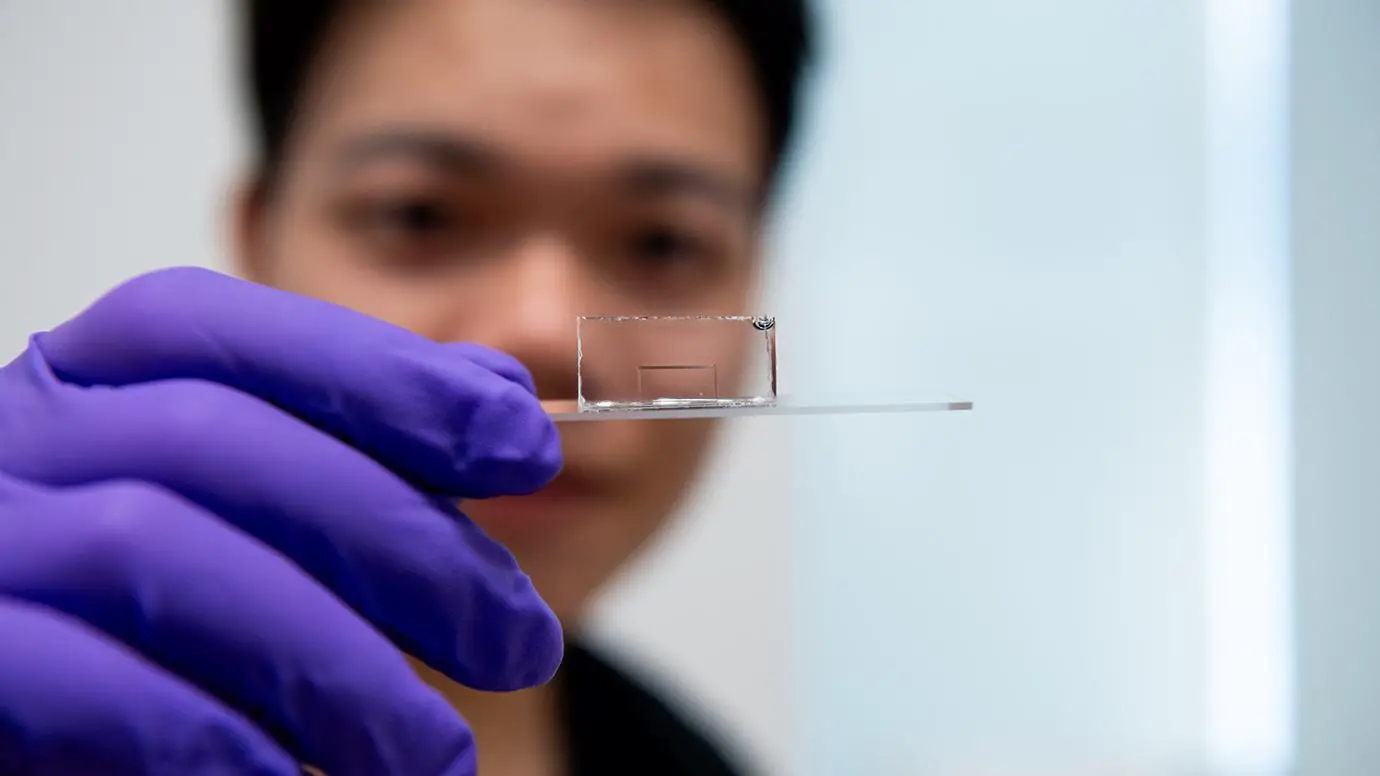
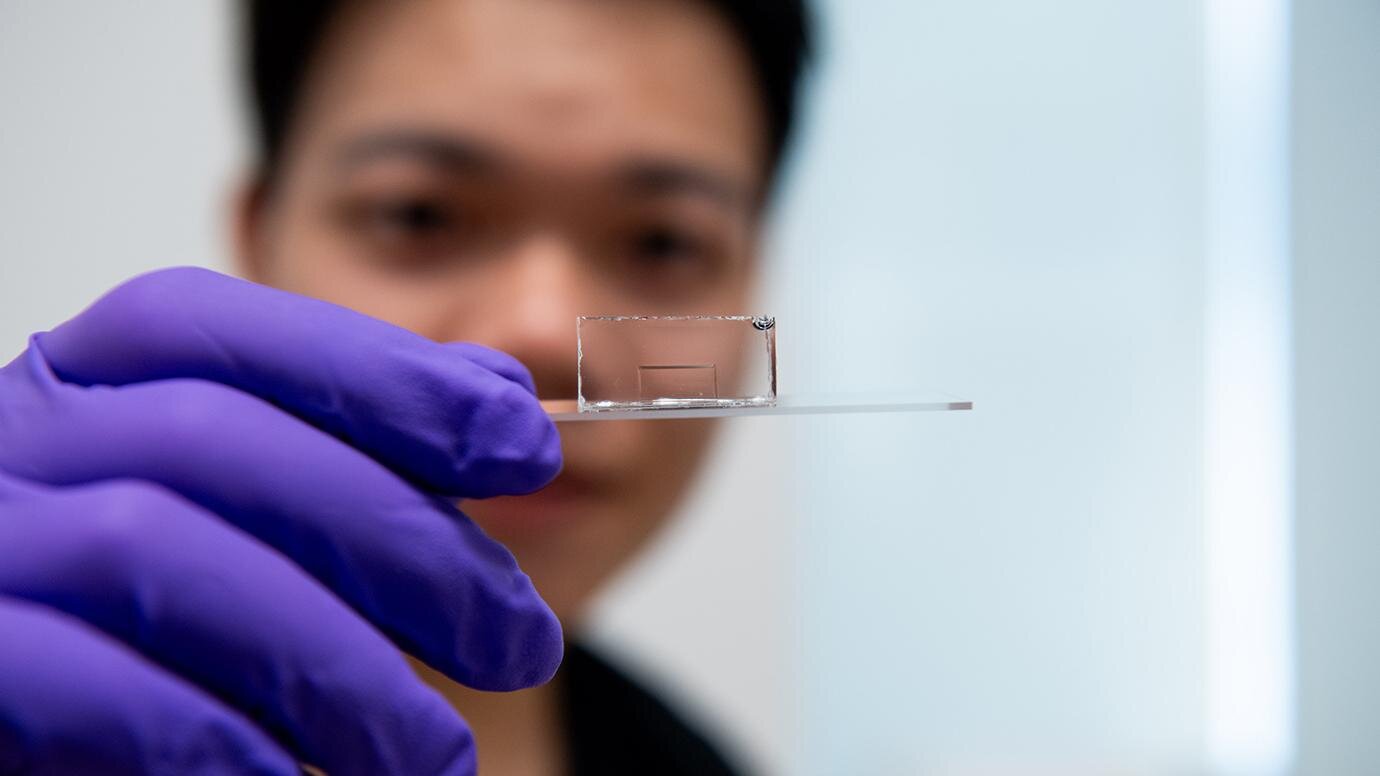
Scientists at the University of Chicago have discovered that a glass crystal just a few atoms thick can trap and carry light, paving the way for innovative technology in light-based computing. This 2D optical waveguide system allows for the guiding of light along a chip using tiny prisms, lenses, and switches, enabling the creation of circuits and computations. The glass crystal is thinner than the photon itself, allowing part of the photon to stick out of the crystal as it travels. This breakthrough could lead to the development of sensors at the microscopic level and the integration of more tiny devices into the same chip area.
Scientists at the University of Chicago have developed a 2D optical waveguide using a sheet of glass crystal just a few atoms thick. This ultra-thin waveguide can trap and carry light, allowing it to travel relatively long distances. The researchers have demonstrated the potential for creating 2D photonic circuits, which could lead to advancements in light-based computing and the development of sensors at the microscopic level. The system allows for easy manipulation of light using lenses and prisms, and the principles can be applied to other materials.
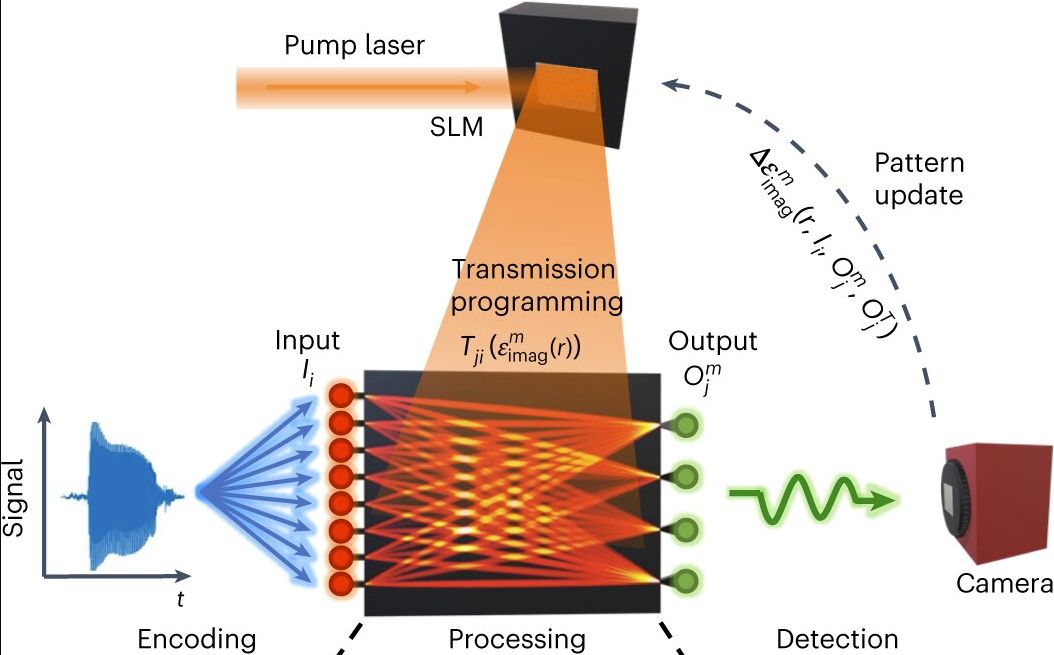
Researchers at the University of Pennsylvania have created a photonic circuit using a slab of InGaAsP and a laser pattern projection, without the need for lithography. While not the first of its kind, this approach may offer more versatility. In 2017, researchers used vanadium dioxide (VO2) to create photonic devices with μm-sized features. The development of fully photonic processors for computers and machine learning applications is still a long way off.