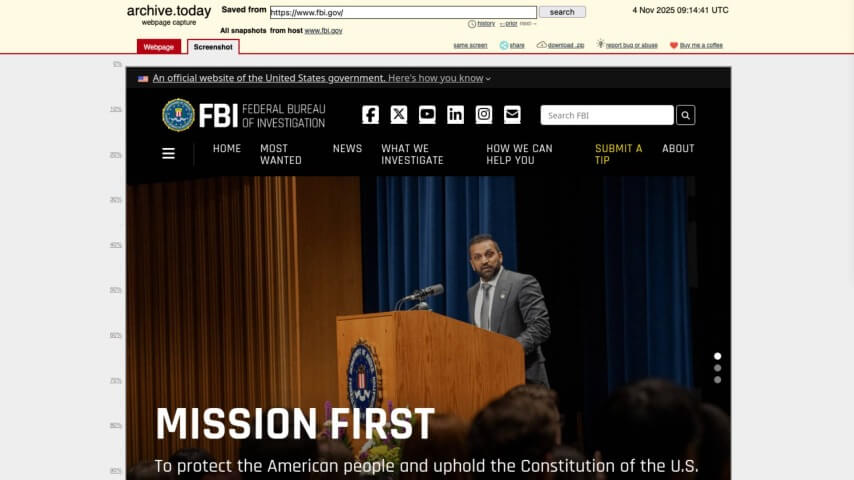
The FBI is investigating Archive.is, a popular archiving website used to bypass paywalls and track website changes, by issuing a subpoena to its Canadian domain registrar Tucows to uncover ownership details, amid concerns over its role in digital transparency and potential criminal activity.
AI web browsers like OpenAI's Atlas and Perplexity's Comet can bypass some publisher paywalls by mimicking human traffic, raising concerns about content access and copyright enforcement, especially as these tools become more prevalent in the digital landscape.
Scientific publishers are producing more papers than ever, but concerns are growing over their business models, which often involve high profit margins and paywalls that restrict access to academic research. Universities and research institutions are required to pay substantial subscription fees to access these articles, raising questions about the sustainability and fairness of the current system.
The New York Times responded to OpenAI's claims of "hacking" ChatGPT, arguing that it was not hacking but rather prompting the AI to bypass paywalls and discover evidence of copyright infringement. The NYT's court filing revealed that ChatGPT users were using the tool to generate entire articles and bypass paywalls, prompting OpenAI to temporarily disable a feature that allowed access to content beyond the model's training dataset. The NYT's lawsuit accuses OpenAI and Microsoft of copyright infringement, with the NYT seeking to track the full extent of copyright infringement and prompting ChatGPT to discover evidence.
OpenAI has temporarily suspended the "Browse with Bing" feature in its ChatGPT language model due to concerns that it inadvertently allowed users to bypass paywalls. The feature, which was introduced in May and limited to paying ChatGPT users, has been disabled while OpenAI works on fixing the issue. Users expressed disappointment over the suspension, as some had subscribed to ChatGPT Plus specifically for access to the Bing web search feature. It remains unclear how long the suspension will last or what changes will be made to the feature when it returns. Microsoft's Bing AI chatbot and Google's Bard, both powered by OpenAI's ChatGPT, have also been reported to bypass paywalls, but it is uncertain if they have made any changes to address this issue.
OpenAI has temporarily paused the "Browse with Bing" feature on its ChatGPT app after users discovered they could bypass paywalls on websites. The integration with Bing was introduced to allow users to get answers to their questions more effectively, but it was disabled due to concerns about displaying content in unintended ways. Despite this setback, OpenAI and Microsoft continue to have a successful partnership, with Microsoft investing billions in OpenAI and integrating ChatGPT into the Bing search engine. The feature is expected to return once the issues have been resolved.
Elon Musk blames data scraping by AI startups for the implementation of new paywalls on reading tweets. Twitter has imposed temporary limits on the number of posts users can read, with unverified accounts restricted to 600 posts per day and new unverified accounts limited to 300 posts per day. Verified accounts, including those obtained through the Twitter Blue subscription, are allowed a maximum of 6,000 posts per day. Musk plans to increase these limits soon. The restrictions come after Twitter blocked access for non-logged-in users due to aggressive data scraping by hundreds of organizations. Musk has been implementing various monetization strategies for Twitter, including API charges and the Twitter Blue pay-for-verification scheme. He has also appointed a new CEO, Linda Yaccarino, to rebuild relationships with advertisers.