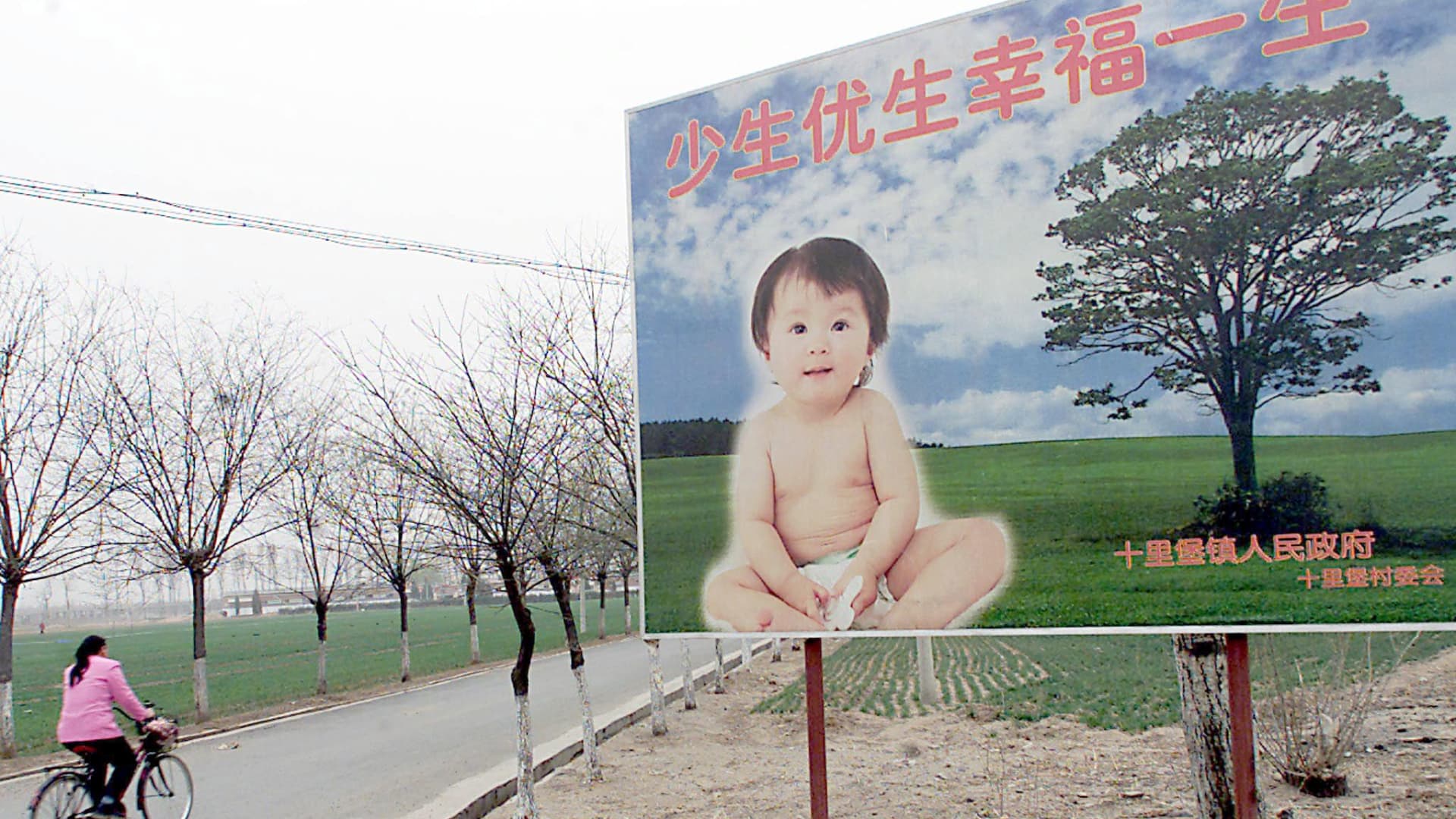
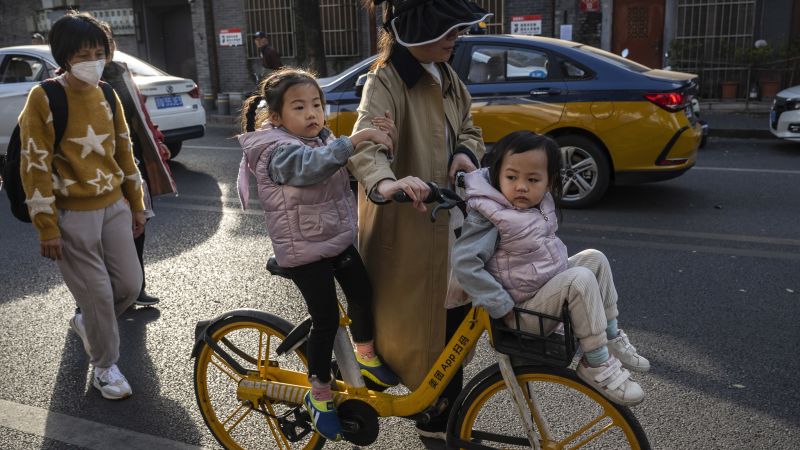
The death of Peng Peiyun, a former head of China's one-child policy, sparked social media criticism of the policy, which has contributed to China's population decline and aging demographic, prompting the government to implement measures to boost birth rates.
China is struggling with a declining birth rate despite offering financial incentives like a new nationwide childcare subsidy, as young adults face high costs, job insecurity, and societal pressures that discourage having children, highlighting the long-term impacts of its previous one-child policy and changing social dynamics.
China's population has declined for the second consecutive year, with birth rates dropping and death rates rising after the end of the one-child policy. The total number of people in China dropped by 2.08 million in 2023, with only nine million births compared to 2016's total. The nation's total fertility rate is 1.09, well below the replacement rate, and the working-age population is decreasing while the elderly population is increasing. Despite government efforts to encourage more births, including financial incentives and lectures on family values, factors such as economic uncertainty, discrimination against women, and the lingering impact of the one-child policy continue to contribute to the population decline.
Beijing's population has declined for the first time in 19 years, with a drop of 84,000 permanent residents in 2022. China's national population also shrank last year for the first time since the great famine in 1961, due to a combination of factors including the one-child policy, changing attitudes toward marriage and family, gender inequality, and the challenges of raising children in expensive cities. Policymakers have launched various initiatives to reverse the trend, but many activists and critics say it's not enough to solve deep-rooted structural problems.
China's political advisors have proposed over 20 recommendations to boost the country's low birth rate, including subsidies for families raising their first child, expanding free public education, and improving access to fertility treatments. The country's birth rate fell to a record low last year, and experts warn that China will get old before it gets rich. While financial incentives may not be enough, policies focusing on gender equality and better employment rights for women could have a more significant impact. However, some demographers remain skeptical and believe that China needs a "paradigm revolution" to boost fertility.