
Unveiling Venus: New Insights into Hidden Impact Craters
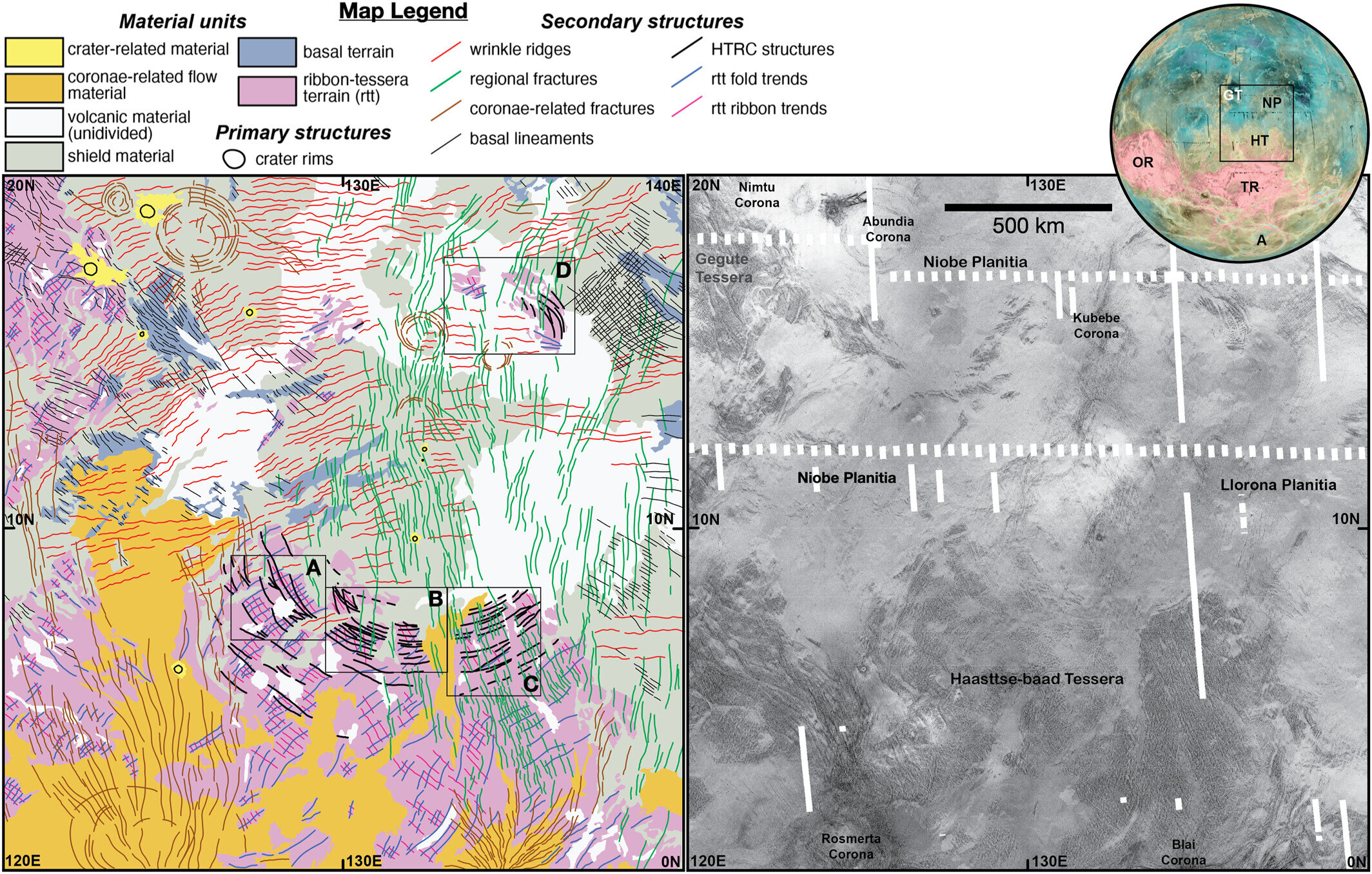
A study by geologists from Universidad Rey Juan Carlos, Lawrence Livermore National Laboratory, and the University of Minnesota suggests that the Haasttse-baad Tessera on Venus was formed by two large impacts early in the planet's history. Using geologic relations and numerical modeling, the researchers found similarities between the concentric circles of Haasttse-baad Tessera and formations on Jupiter's moon Callisto, indicating that impacts caused molten material to deform the crust. The study proposes that two objects, each about 75 kilometers across, struck Venus in the same area, leading to the unique formation.