
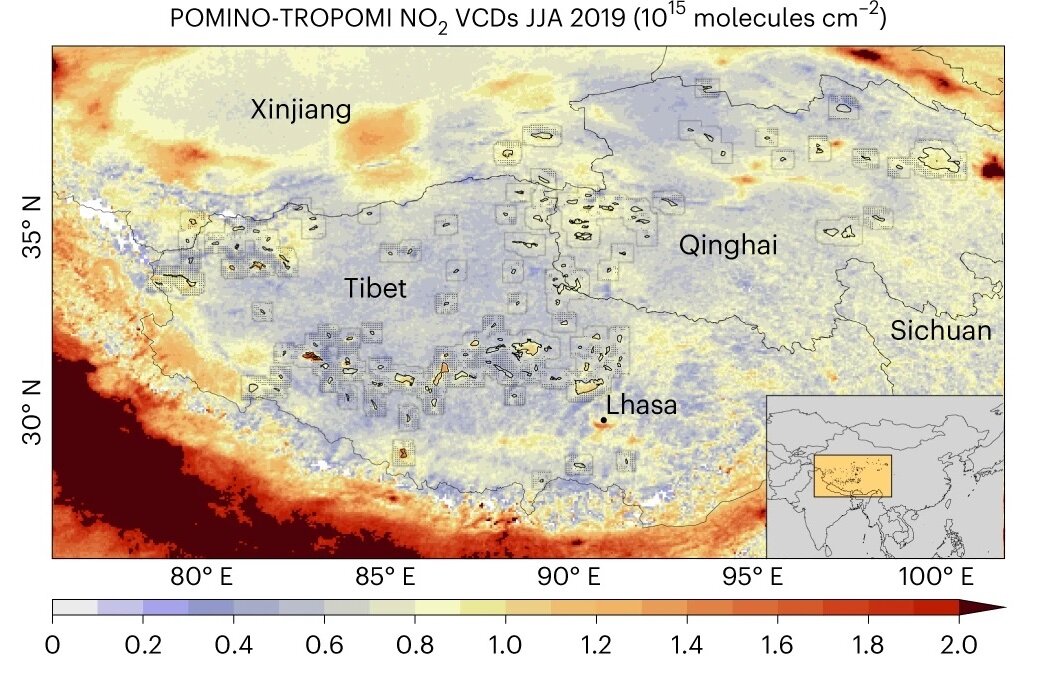
Tibetan Plateau lake emissions challenge climate models.
Satellite observations of 135 lakes on the Tibetan Plateau have recorded total nitric oxide emissions of 1.9 metric tons per hour, comparable to the emissions from global megacities, challenging the understanding that nitric oxide in lakes is not a major forcing factor in air quality or climate models compared to human sources. The cause of such unusually high levels of nitric oxide from the lakes has been attributed to a combination of microbial processes, alongside warming and melting of glaciers and permafrost on the plateau. The researchers advocate for future modeling of global warming to include lake and inland water nitric oxide emissions worldwide to help us understand how all aspects of Earth's system may affect, and be affected by, climate change.