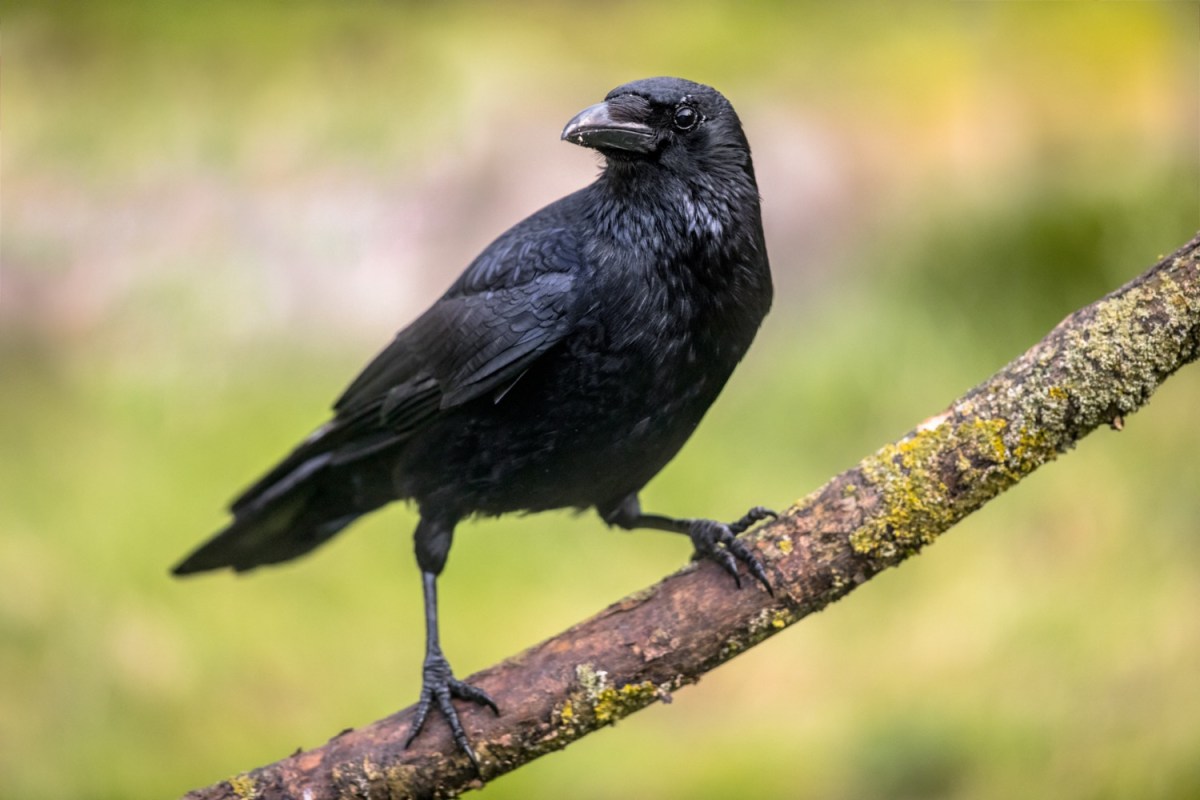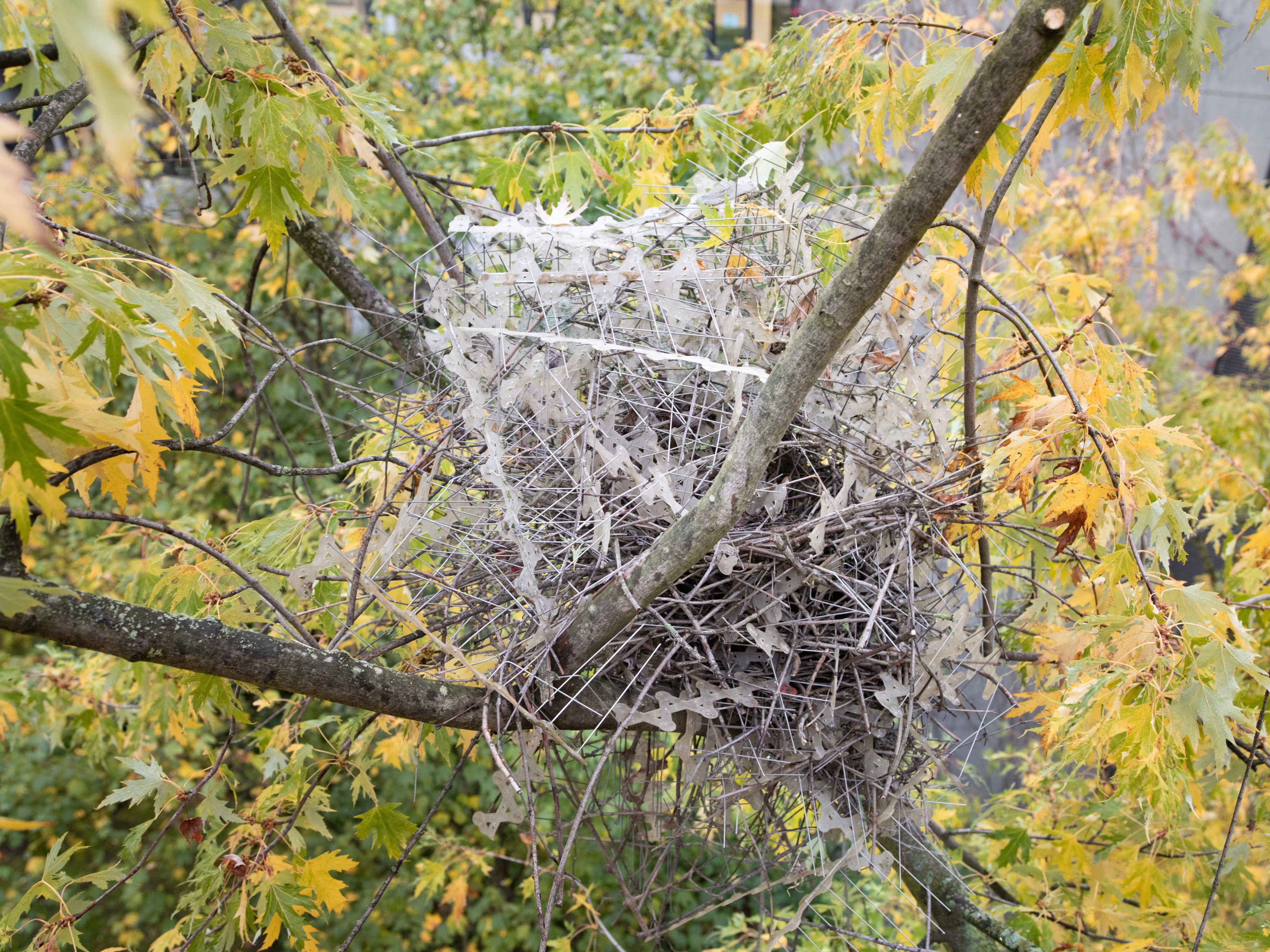
Birds, particularly crows and magpies, are using anti-bird spikes, typically installed to deter nesting birds, as materials for their nests. Researchers have observed nests made from these spikes, showcasing the birds' ability to adapt and utilize human-made objects. The nests have gained attention on social media and have been hailed as acts of rebellion against hostile architecture. The findings highlight the impact of urbanization on bird habitats and the need for more green spaces.
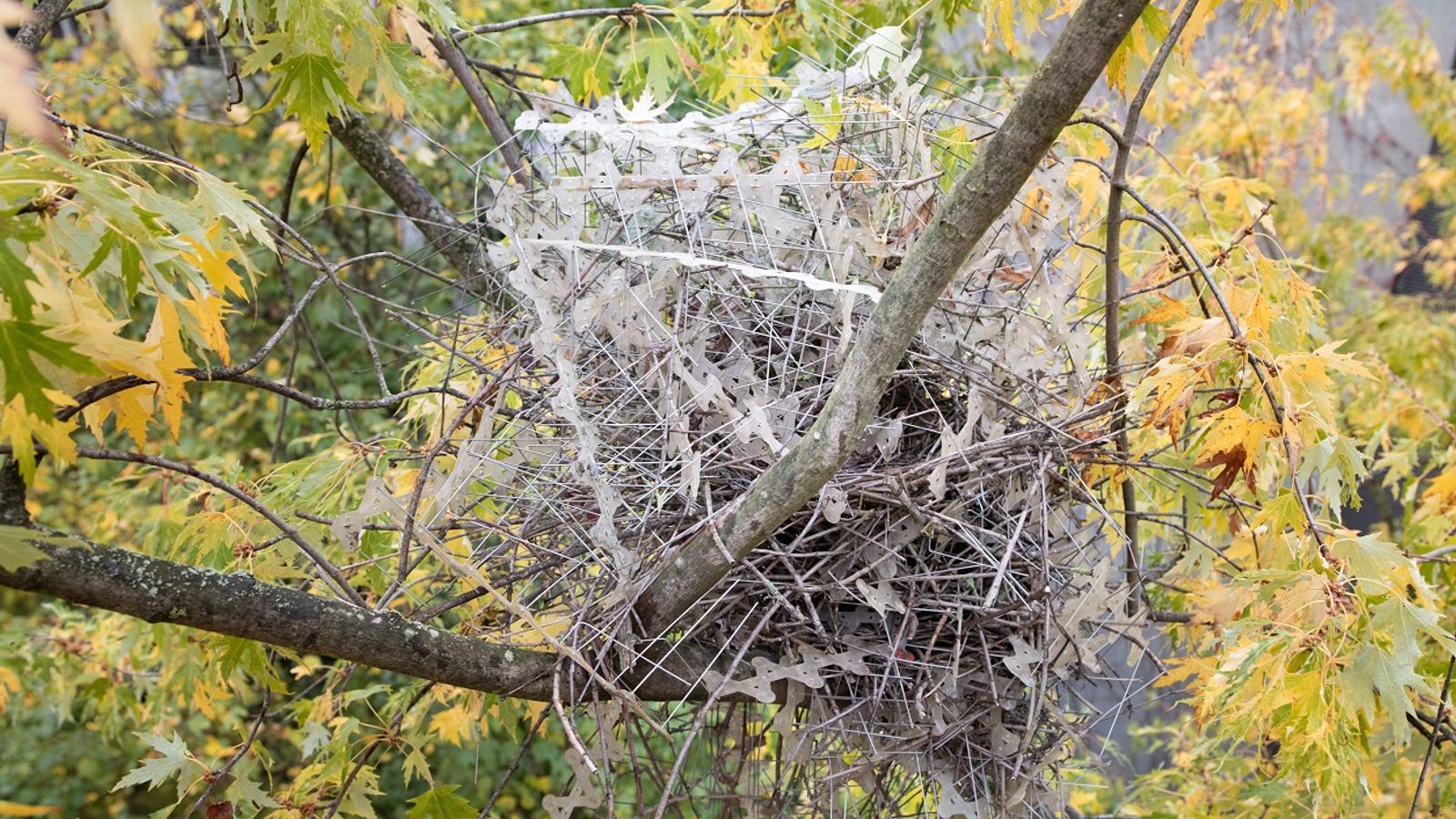
Birds, specifically magpies and crows, have been observed stealing anti-bird spikes installed on buildings and using them to build their nests. Researchers from Dutch natural history museums discovered this phenomenon in a hospital courtyard in Antwerp, where magpies had constructed a nest using around 1,500 stolen spikes. The behavior is seen as an "ultimate adaptation to life in the city," providing an urban alternative to thorny branches for nest protection. Similar nests have been found in the Netherlands, Belgium, and Scotland, and other sharp materials like barbed wire and knitting needles are also used by magpies for nest construction.
Carrion crows and Eurasian magpies have been observed using anti-bird spikes as materials for their nests, strategically positioning them to potentially defend against predatory birds. These metal pins, typically used to deter birds, serve to secure twigs and support the nest structure. This behavior highlights the adaptability of birds in utilizing man-made materials for nest construction, as seen in previous instances such as the Australian 'Parkdale Pigeon' nesting on top of anti-bird spikes.
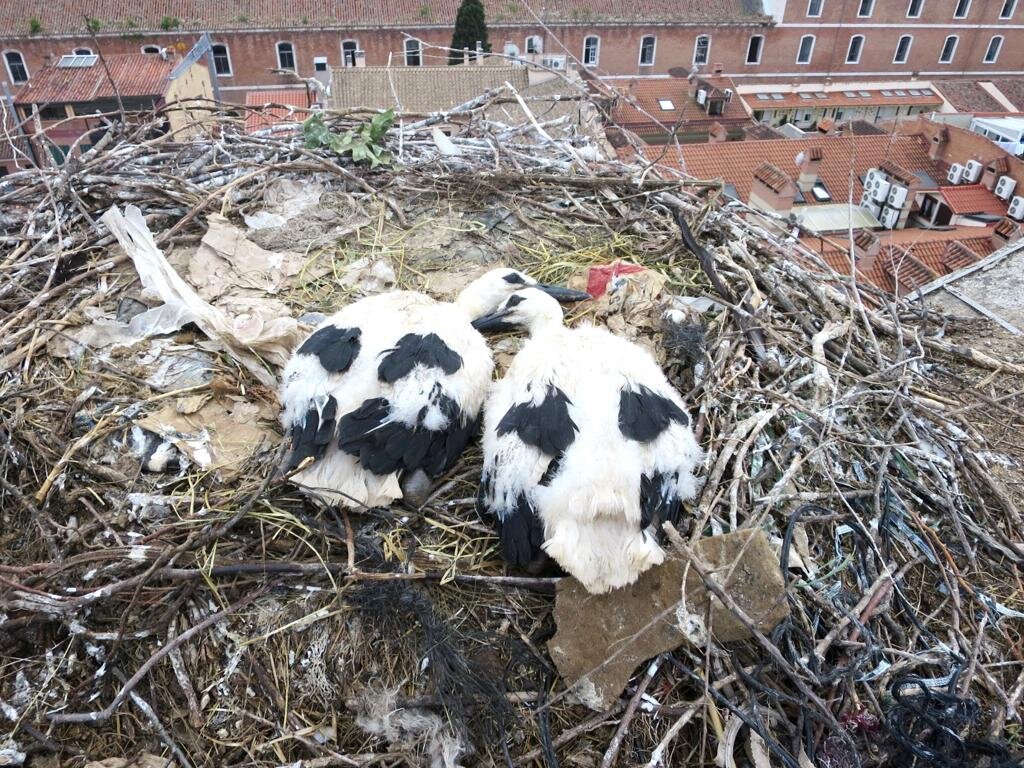
A study has found that 176 bird species worldwide incorporate a variety of man-made materials, such as plastic and fishing nets, into their nests. While some of these materials can provide benefits, such as repelling parasites or providing structural support and insulation, they can also pose risks to birds. Birds can become entangled or ingest harmful materials, and the inclusion of colorful materials can attract predators to nests. The researchers emphasize the need to reduce the amount of plastic and other anthropogenic materials that are discarded to protect bird populations.