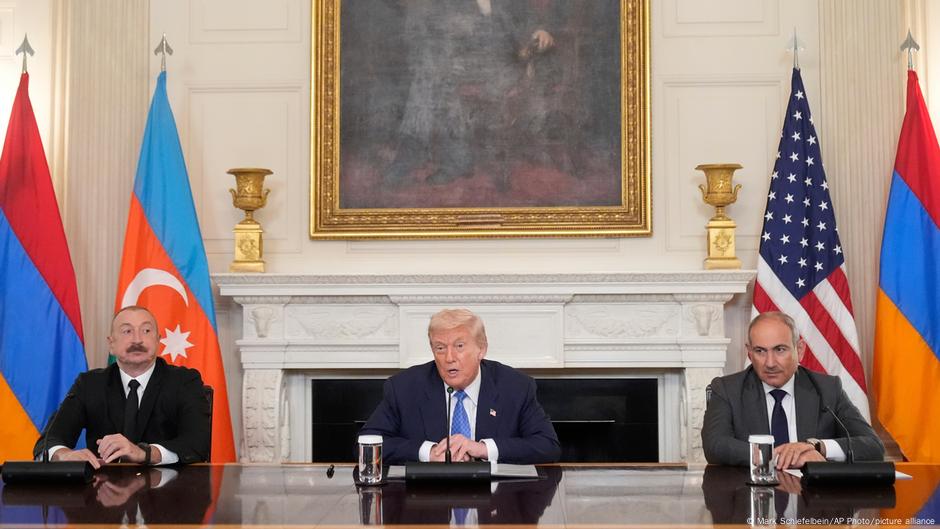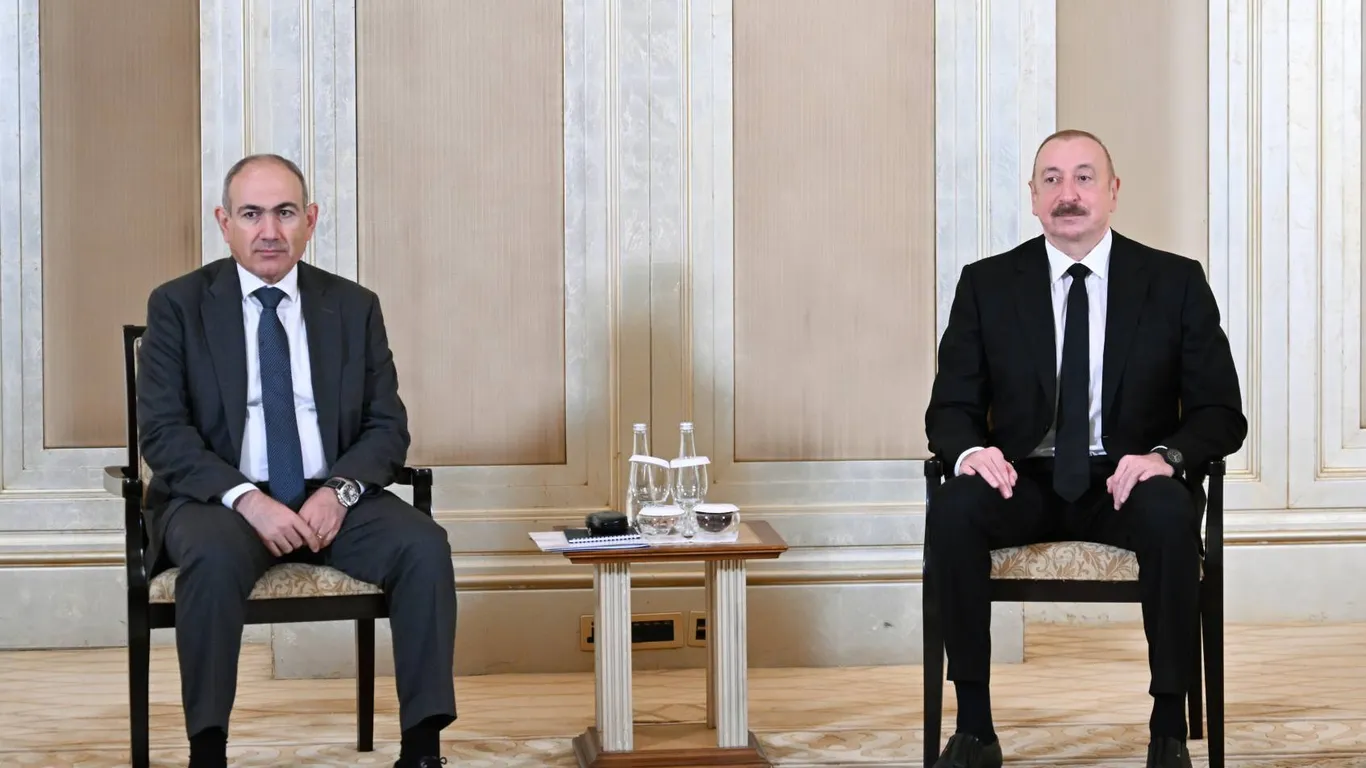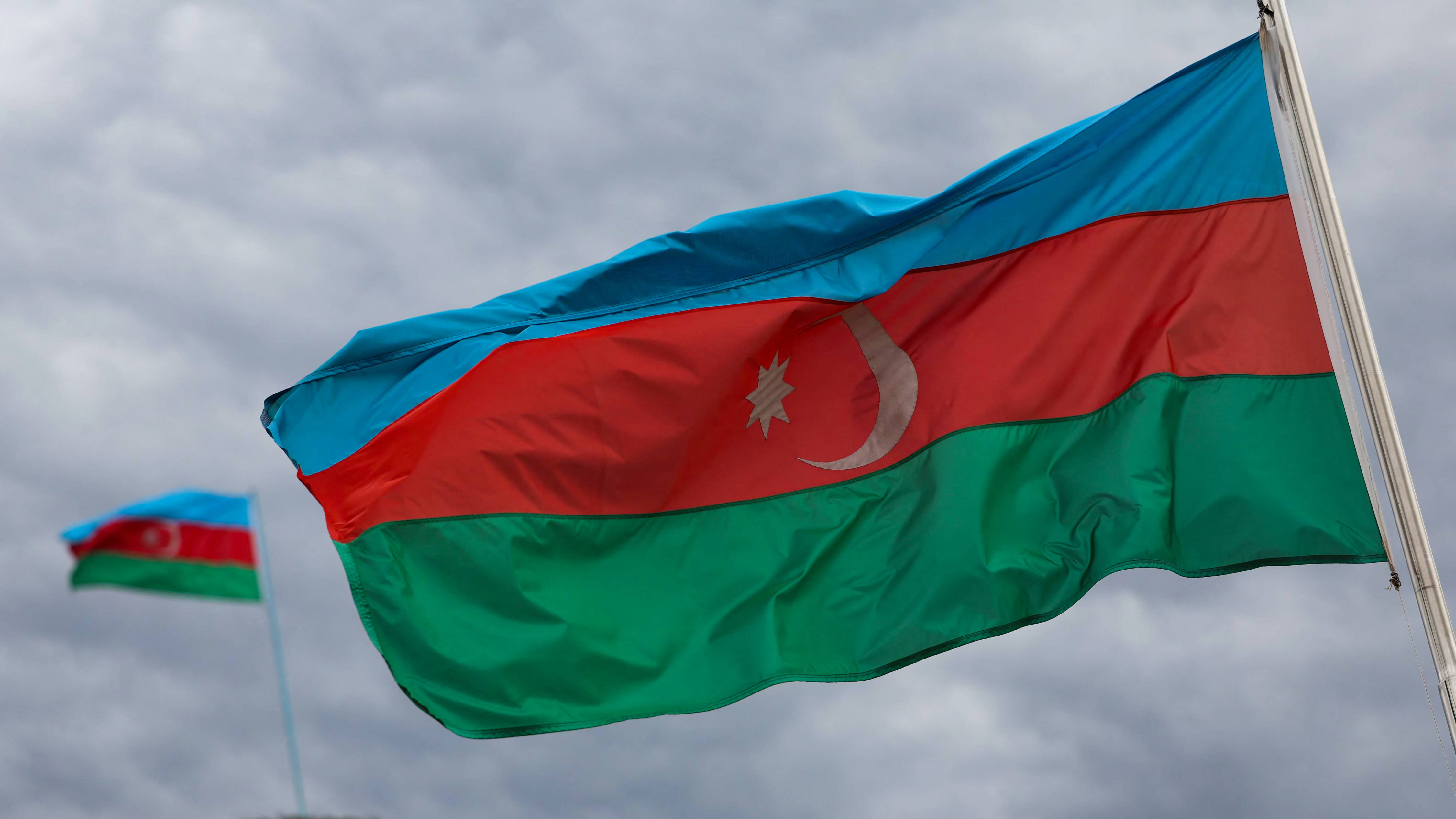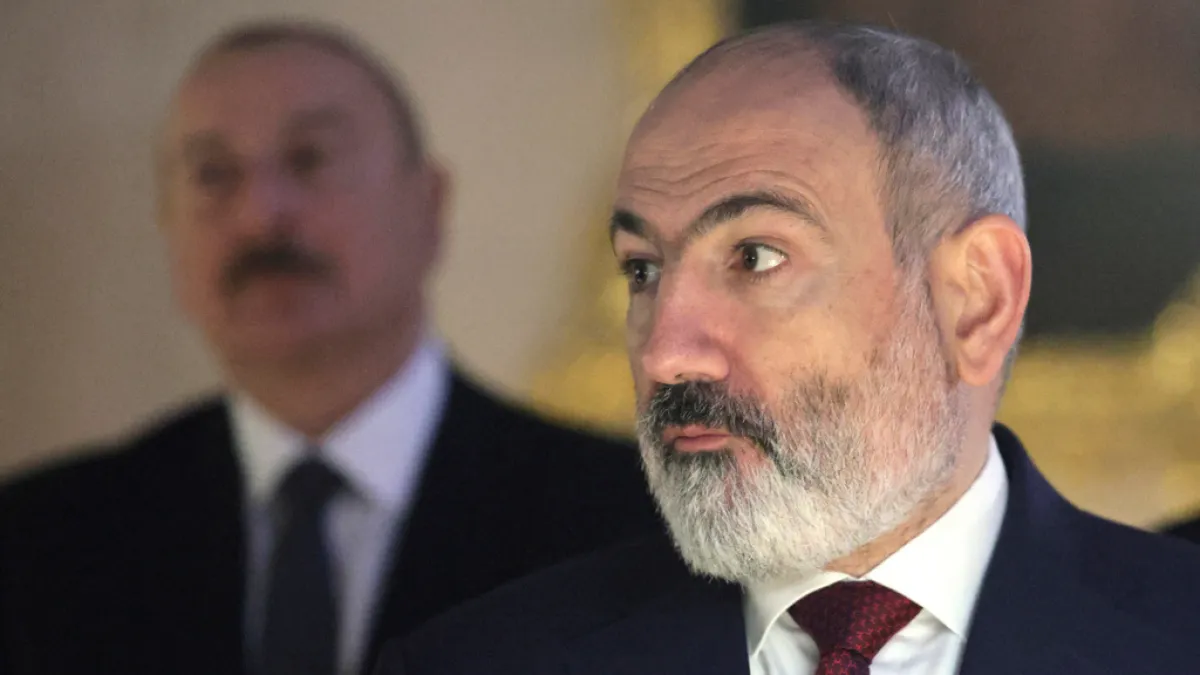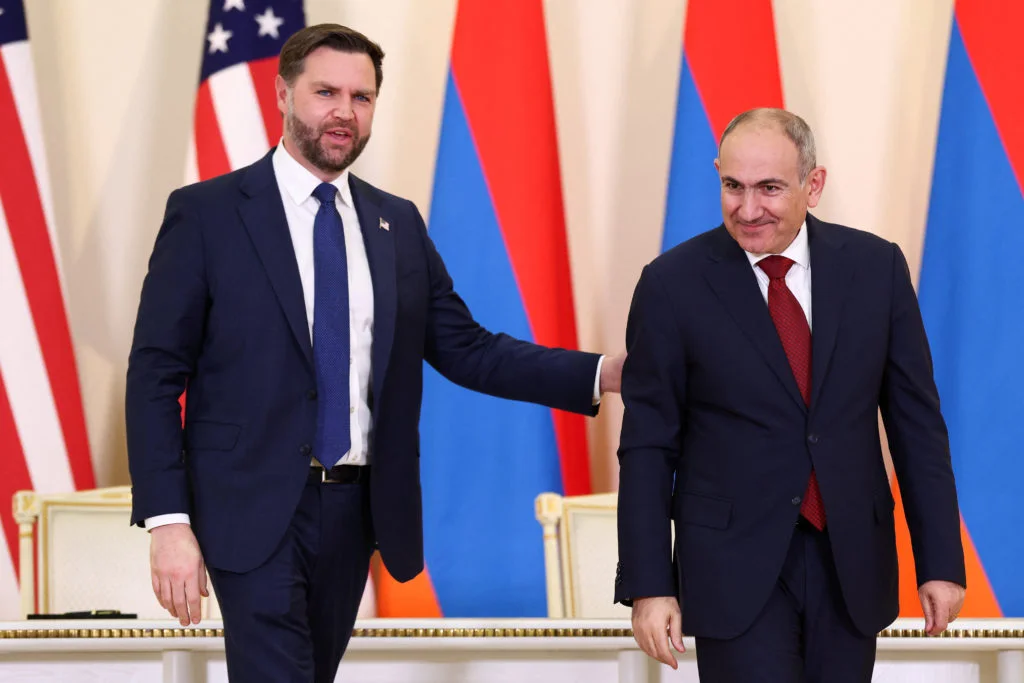
Armenia and Azerbaijan signed a historic US-brokered peace deal at the White House, ending nearly four decades of conflict over Nagorno-Karabakh, establishing a transit corridor, and marking a significant geopolitical shift in the South Caucasus region, with both leaders praising President Trump for his role in the peace process.
Former President Trump has played a role in facilitating a peace deal between Azerbaijan and Armenia, which includes concessions such as security assistance to Azerbaijan and the withdrawal of the U.S. from the Minsk Group. The deal has received mixed reactions, with some Armenian groups criticizing it for delaying discussions on displaced Armenians and prisoners of war. Trump’s involvement marks a notable shift in his foreign policy approach, with some hoping it could influence broader regional conflicts, including the Russia-Ukraine war.
President Trump is hosting Armenian and Azerbaijani leaders at the White House for a historic peace signing aimed at resolving their long-standing conflict over Nagorno-Karabakh, amidst shifting regional influences and diminished Russian involvement.
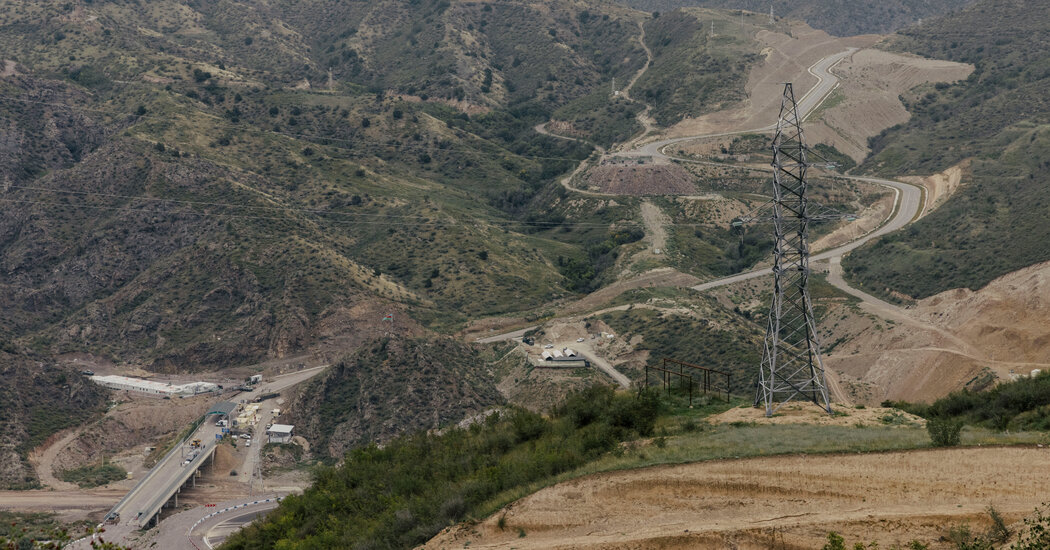
President Trump will host a signing ceremony at the White House for a historic peace agreement between Armenia and Azerbaijan, which includes the development of a U.S.-named corridor connecting Azerbaijan to Turkey and Central Asia, aiming to end long-standing conflicts and reduce influence from Russia, Iran, and China in the region.
In Armenia, a deepening conflict between Prime Minister Pashinyan and the Armenian Apostolic Church, led by Karekin II, has escalated amid accusations, arrests, and personal feuds, reflecting broader political and national tensions following the 2020 Nagorno-Karabakh war and ongoing struggles over Armenian identity and sovereignty.
Relations between Azerbaijan and Russia have sharply deteriorated following Azerbaijan's military successes and increased independence, with incidents like the downing of a civilian aircraft and police raids fueling tensions. Azerbaijan is pursuing a diversified foreign policy, strengthening alliances with Turkey, Pakistan, Israel, and China, which reduces its reliance on Russia. Moscow's influence wanes as regional dynamics shift, with Azerbaijan seeking closer security ties with Turkey amid broader geopolitical tensions.
In Armenia, tensions between the government and the church escalate as authorities arrest Archbishop Bagrat Galstanyan and seek another bishop amid protests and accusations of plotting against the government, highlighting ongoing political and religious conflicts in the country.
Russia announces the complete withdrawal of its troops from Nagorno-Karabakh, Iran's imprisonment of an EU diplomat signals a new era of hostage diplomacy by authoritarian governments, a punch-up in Georgia's parliament follows the EU's call for the withdrawal of a controversial foreign agent bill, Palestinians brace for Israeli reaction after an Iranian barrage, and Iran's direct assault strengthens Israeli leader Netanyahu's position amid the Gaza conflict.
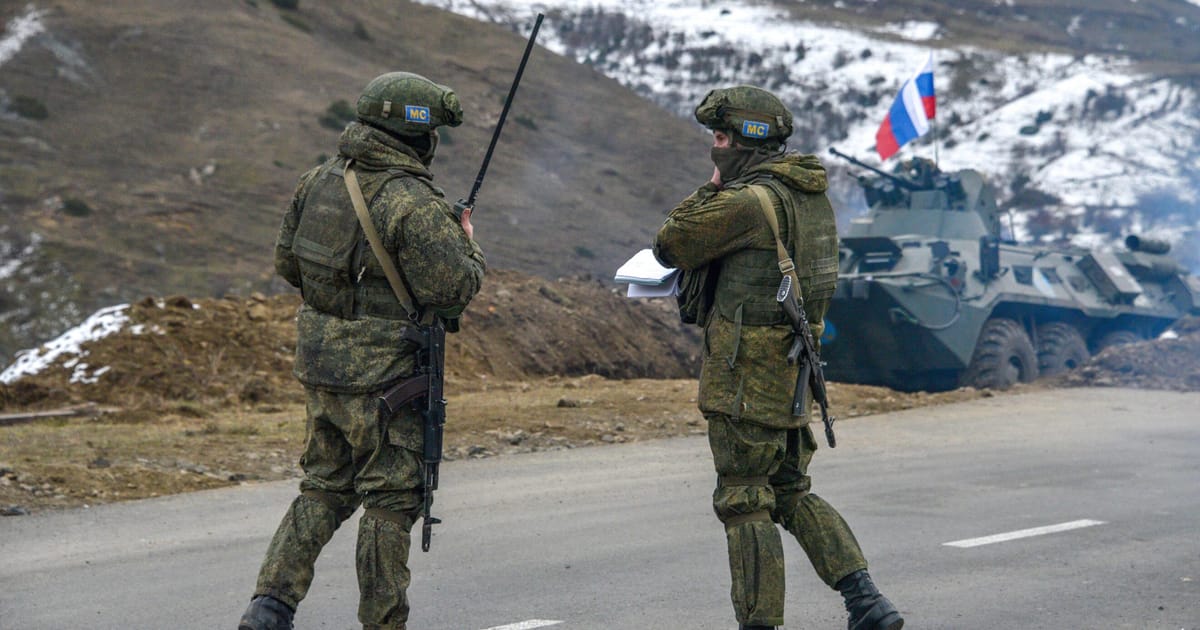
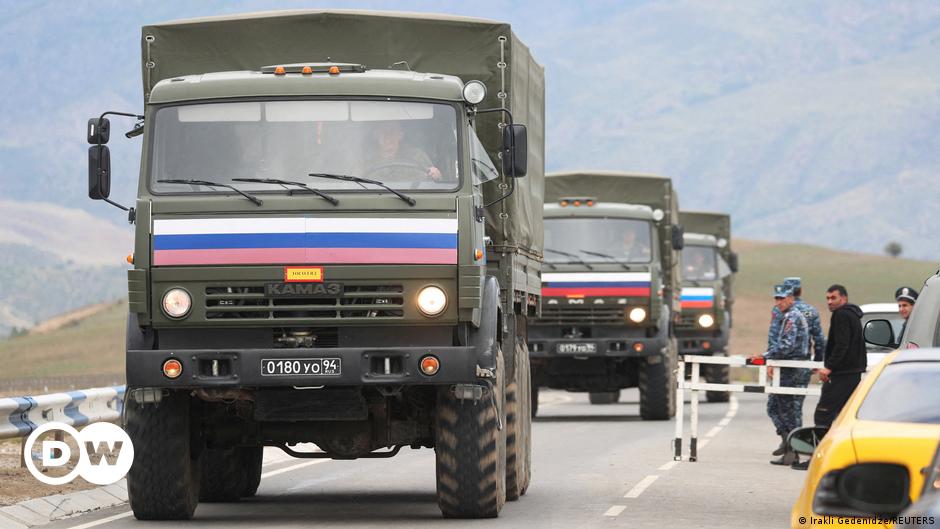
Russian peacekeepers are set to withdraw from Azerbaijan's Nagorno-Karabakh region, following the area's recapture by Azerbaijani forces last year. The move has led to a mass exodus of ethnic Armenians and strained relations between Russia and Armenia. The conflict has caused a rift in the traditional allies' relations, with Armenia criticizing Russia for not intervening in its favor. Meanwhile, Armenia and Azerbaijan are attempting to negotiate a broader peace agreement.
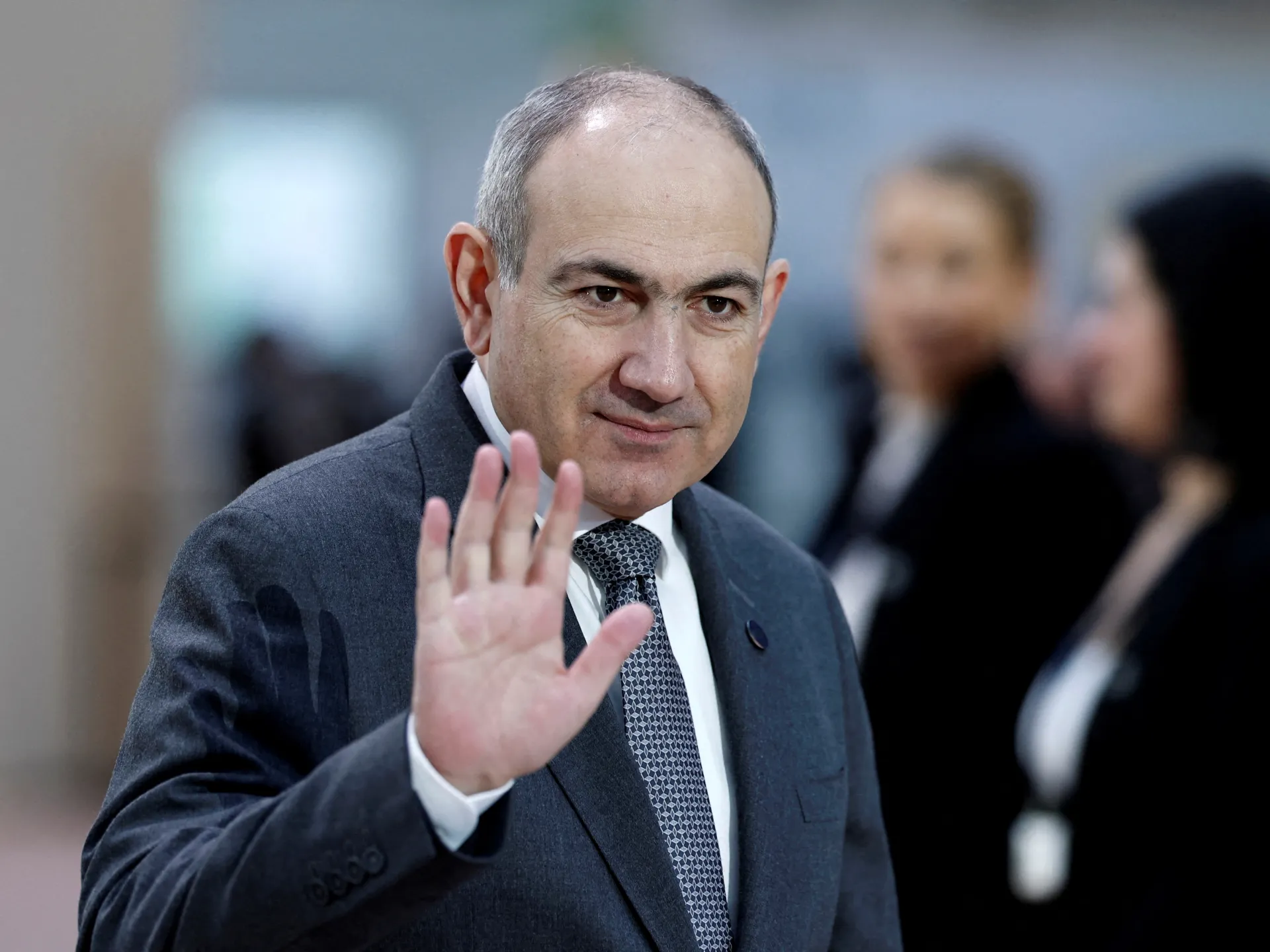
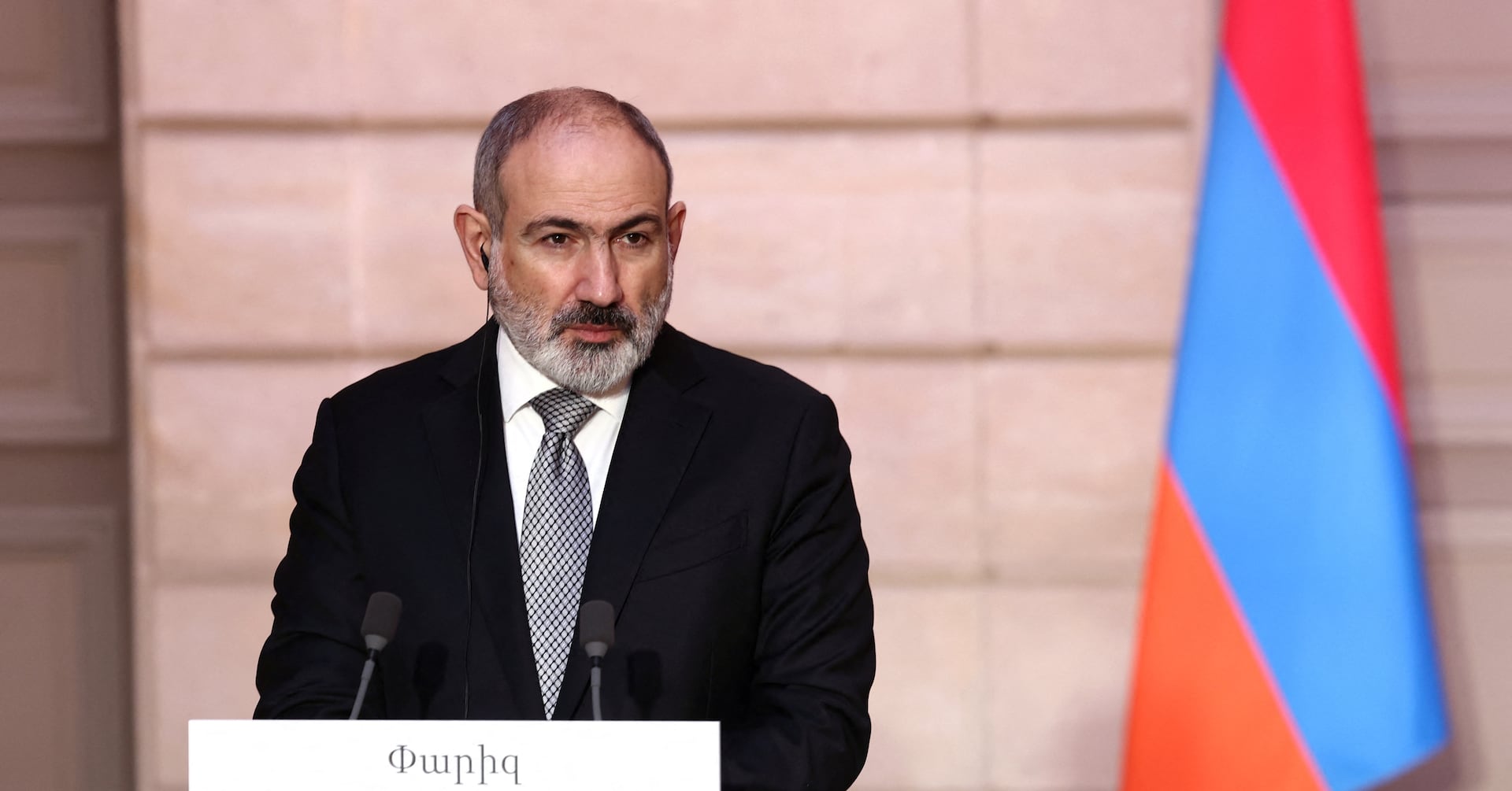
Armenian Prime Minister Nikol Pashinyan warned that failure to compromise with Azerbaijan over the return of four disputed villages could lead to war by the end of the week. The villages, held by Armenia since the early 1990s, are of strategic value and a precondition for a peace deal to end the Nagorno-Karabakh conflict. Pashinyan has signaled willingness to return Azerbaijani land and reroute Armenia's road network, as talks for a formal peace treaty have become bogged down. The situation has also led to Armenia pivoting its foreign policy towards the West, causing tensions with its traditional ally, Russia.
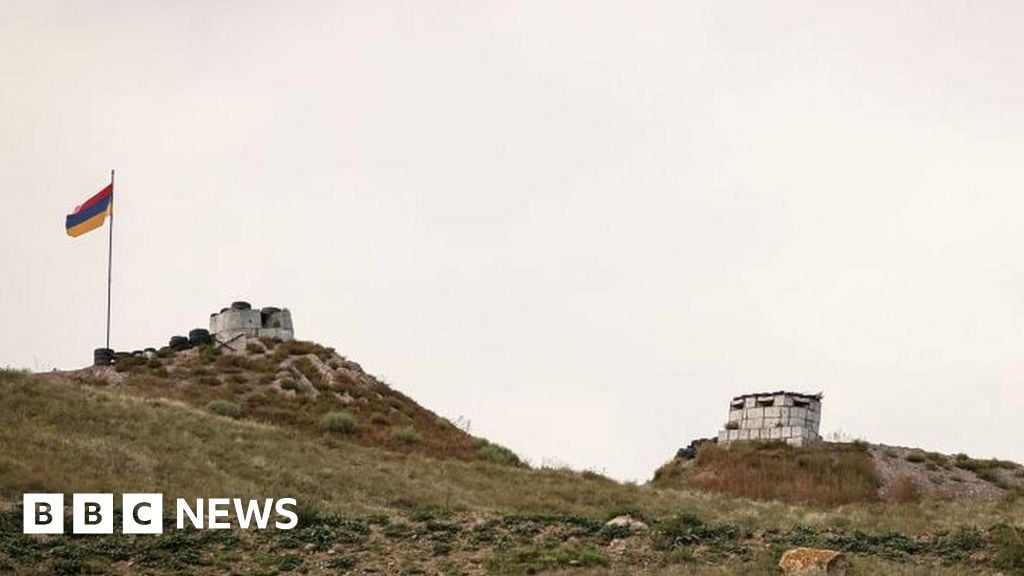
Four Armenian soldiers were killed and one wounded in a border clash with Azerbaijan, the first since peace talks began. Azerbaijan claims it retaliated against an Armenian attack, while Armenia accuses its neighbor of escalating tensions. The flare-up comes after Azerbaijan's President Aliyev's reelection and amid concerns of further military action. Russia, with peacekeepers in the region, has urged restraint, but Armenia is seeking to reduce Russian influence and faces challenges in doing so. The conflict also involves territorial disputes and concerns over a proposed peace deal.
Armenia accuses Azerbaijan of killing four soldiers and injuring one along the heavily militarized border, marking the first fatal incident since peace negotiations began last year. The skirmish comes after a period of relative calm following Azerbaijan's retaking of the Nagorno-Karabakh region in September, which led to an exodus of the area's ethnic Armenian population. Peace talks have stalled as both sides disagree on issues such as border demarcation and control over transport corridors.
Four Armenian soldiers were killed in a confrontation with Azeri forces on the countries' shared border, with both sides accusing each other of initiating the incident. This marks the first violence reported since peace talks began last year to resolve the longstanding conflict over the Nagorno-Karabakh region. The region has been a point of tension for over 30 years, with both countries engaging in wars in the 1990s and 2020. Efforts to reach a formal treaty have stalled, leading to renewed hostilities and a refugee crisis.
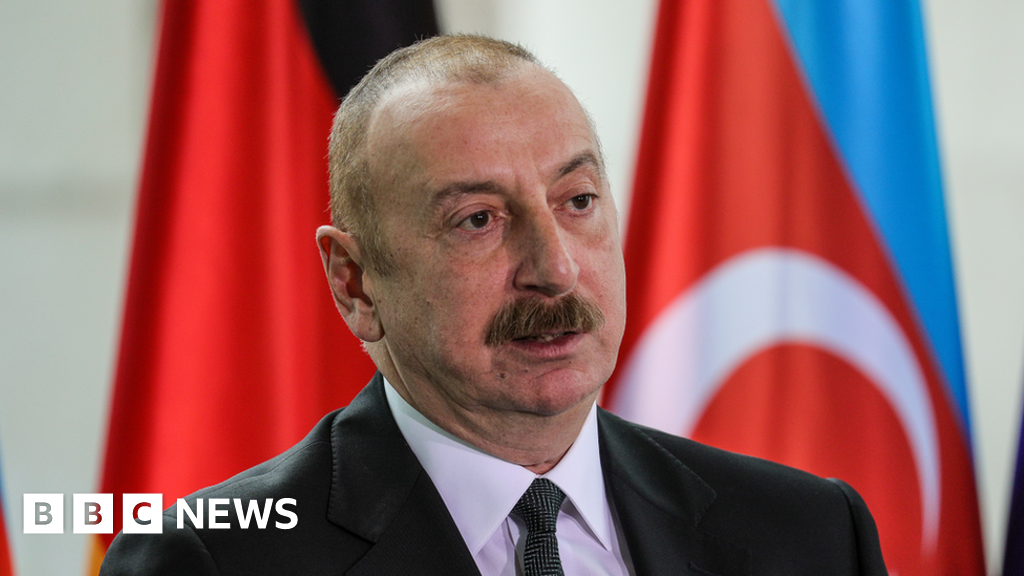
President Ilham Aliyev of Azerbaijan has won a fifth consecutive term with over 92% of the vote, amid criticism from international observers who say there was no meaningful challenger and the election lacked genuine pluralism. The main rival parties boycotted the election, and opposition leaders have called it an "imitation of democracy". The election was called early after Azerbaijan's successful military campaign in the disputed territory of Nagorno-Karabakh, and Aliyev's popularity surged. Critics argue that freedom of assembly is restricted, media is under government pressure, and political dissent is being suppressed in the country.
President Ilham Aliyev of Azerbaijan won a fifth term in a snap election with 92% of the vote, following the recapture of the Nagorno-Karabakh region from Armenian separatists. The election, held amid a crackdown on independent media and without real opposition, saw a turnout of 67.7% and was boycotted by the main opposition parties. Aliyev's victory, although slightly lower than previous elections, was still significant. His grip on power has been further solidified through constitutional changes and the appointment of his wife as first vice president.