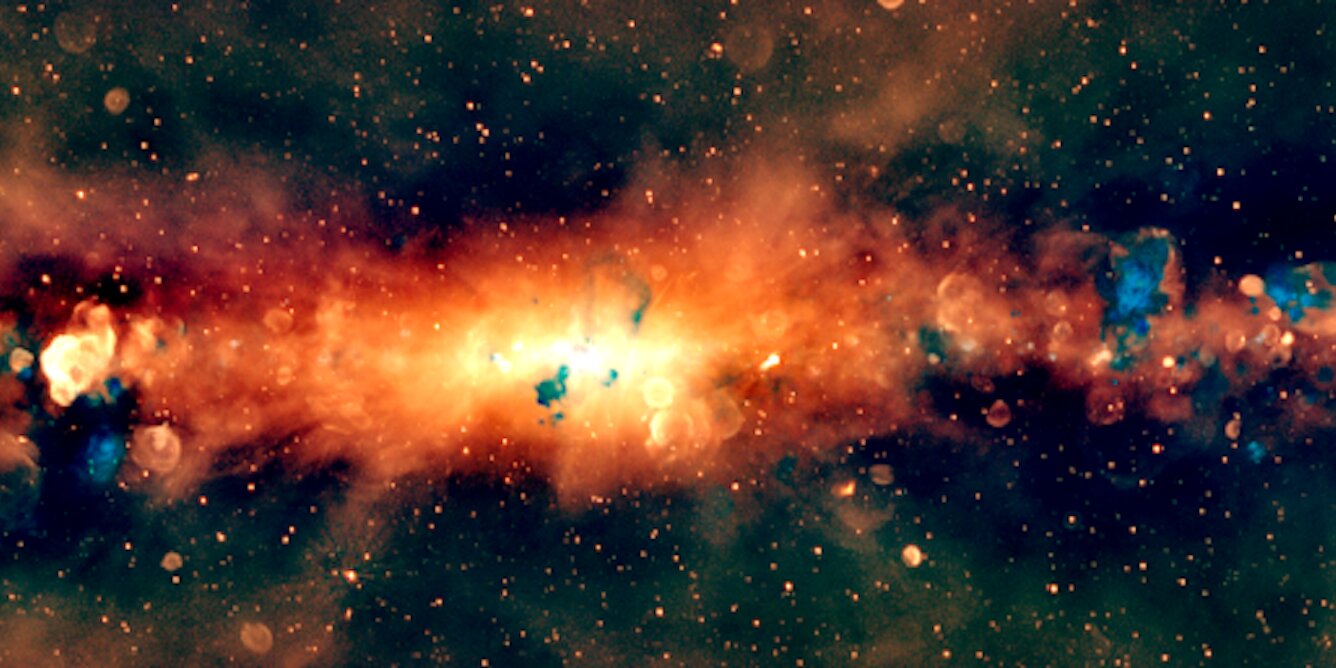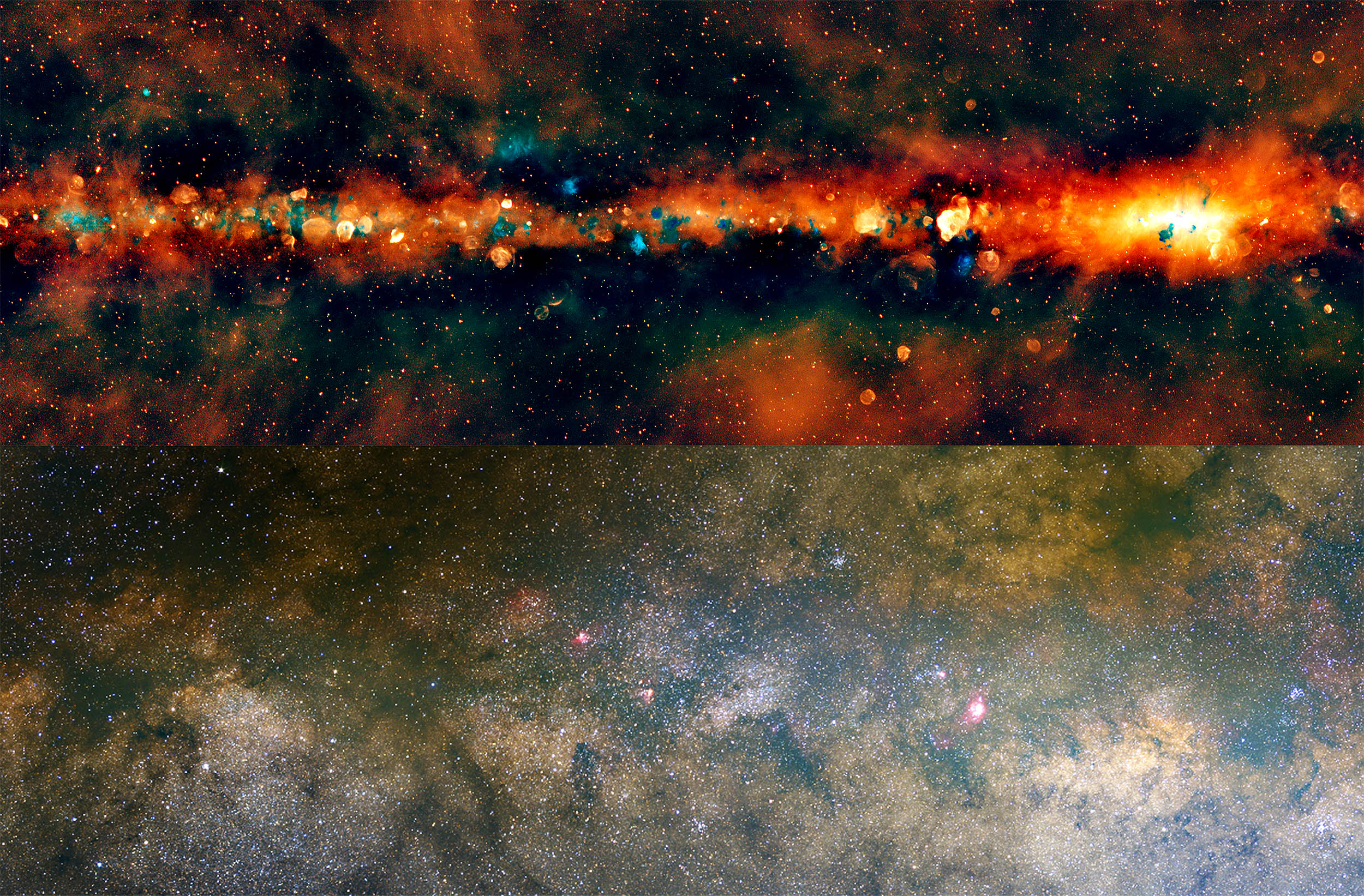
Astronomers used the Murchison Widefield Array in Western Australia to create a detailed radio color map of the Milky Way's southern region, revealing structures like supernova remnants and star-forming regions, with data available for public use and research.
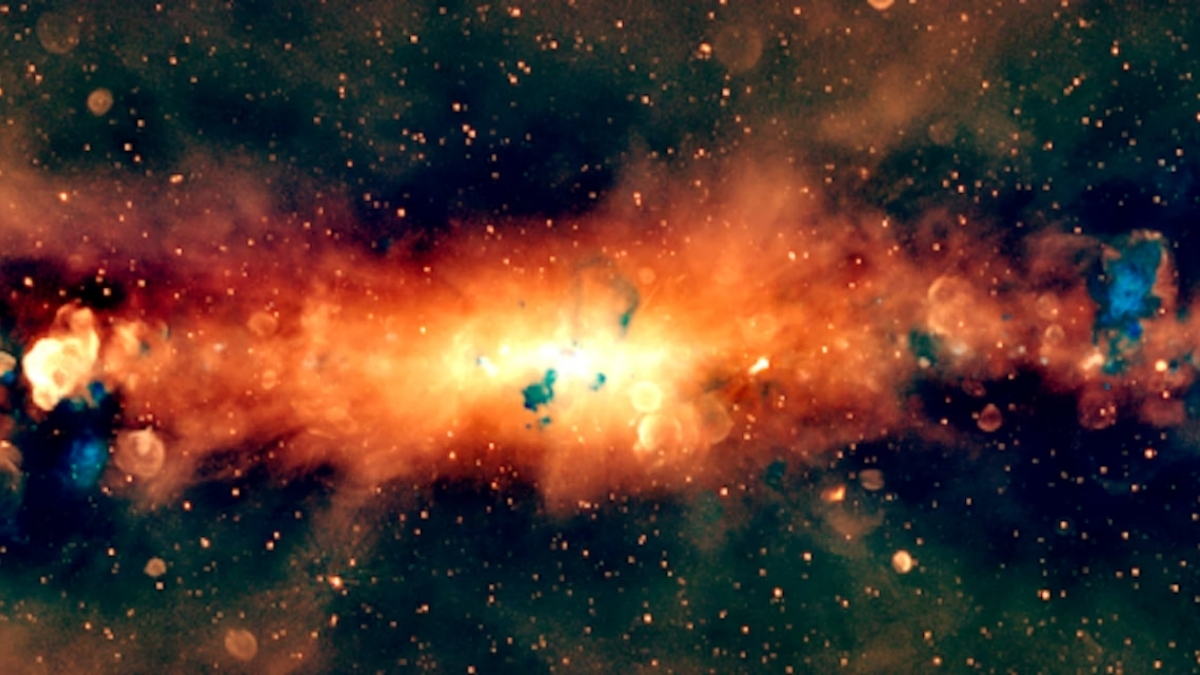
A new, detailed radio map of the Milky Way galaxy has been created using the Murchison Widefield Array, revealing intricate structures and components of our galaxy across a broad range of radio frequencies, providing valuable insights into its composition and evolution.
New high-resolution radio images of the Milky Way's galactic plane, created by combining data from the GLEAM and GLEAM-X surveys using the Murchison Widefield Array, reveal unprecedented detail and will aid future galactic studies, with even more advanced observations expected from the upcoming SKA-Low telescope.
Astronomers have traced a mysterious pulsing radio signal from deep within the Milky Way back to a red dwarf star, marking the first time such a signal's origin has been identified. The signal, named GLEAM-X J0704-37, is the slowest of its kind, emitting minute-long pulses every three hours. Researchers used the Murchison Widefield Array in Australia and the MeerKAT in South Africa to pinpoint the source, suggesting the signal is generated by interactions between a red dwarf's stellar wind and a white dwarf's magnetic field. This discovery opens new avenues for understanding cosmic radio waves.