Scientists at OIST have synthesized a stable 20-electron ferrocene, challenging the long-standing 18-electron rule in organometallic chemistry, which could lead to new advances in catalysis and materials science.
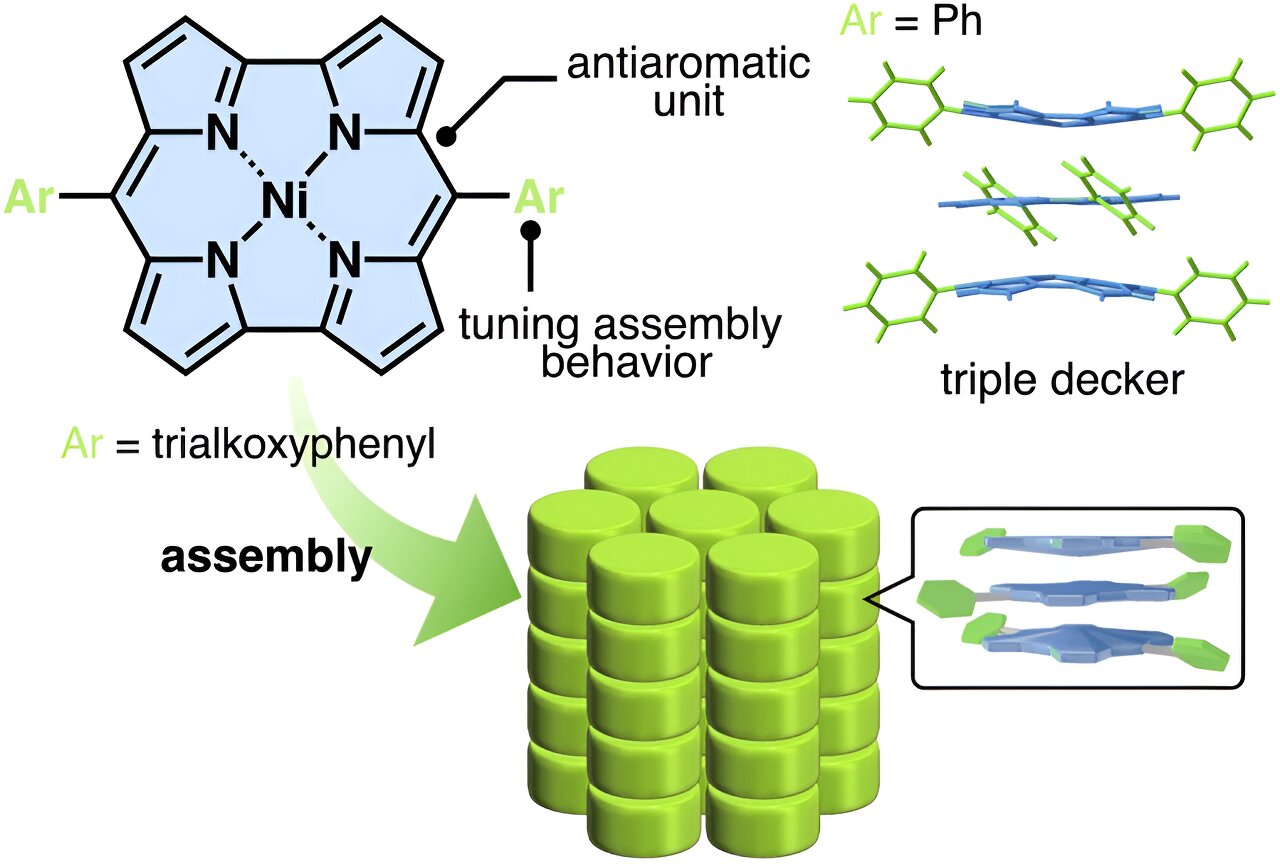
Researchers from Ritsumeikan University and collaborators have developed a novel antiaromatic π-stacking system using NiII-coordinated norcorroles with aliphatic side chains, leading to the formation of highly conductive liquid crystals. This breakthrough could significantly advance the design of organic semiconductors and electronic devices.
Scientists have developed a DNA-based nano engine that exhibits pulsing movements, similar to a hand grip trainer but on a much smaller scale. The engine is powered by RNA polymerases and nucleotide triphosphates, offering potential applications in advanced nanotechnology. The researchers plan to integrate the engine into complex nanomachines, and their findings have been published in the journal Nature Nanotechnology. The engine's design and operation were aided by computer modeling tools, and it represents a significant advancement in chemically powered DNA nanotechnology motors.