
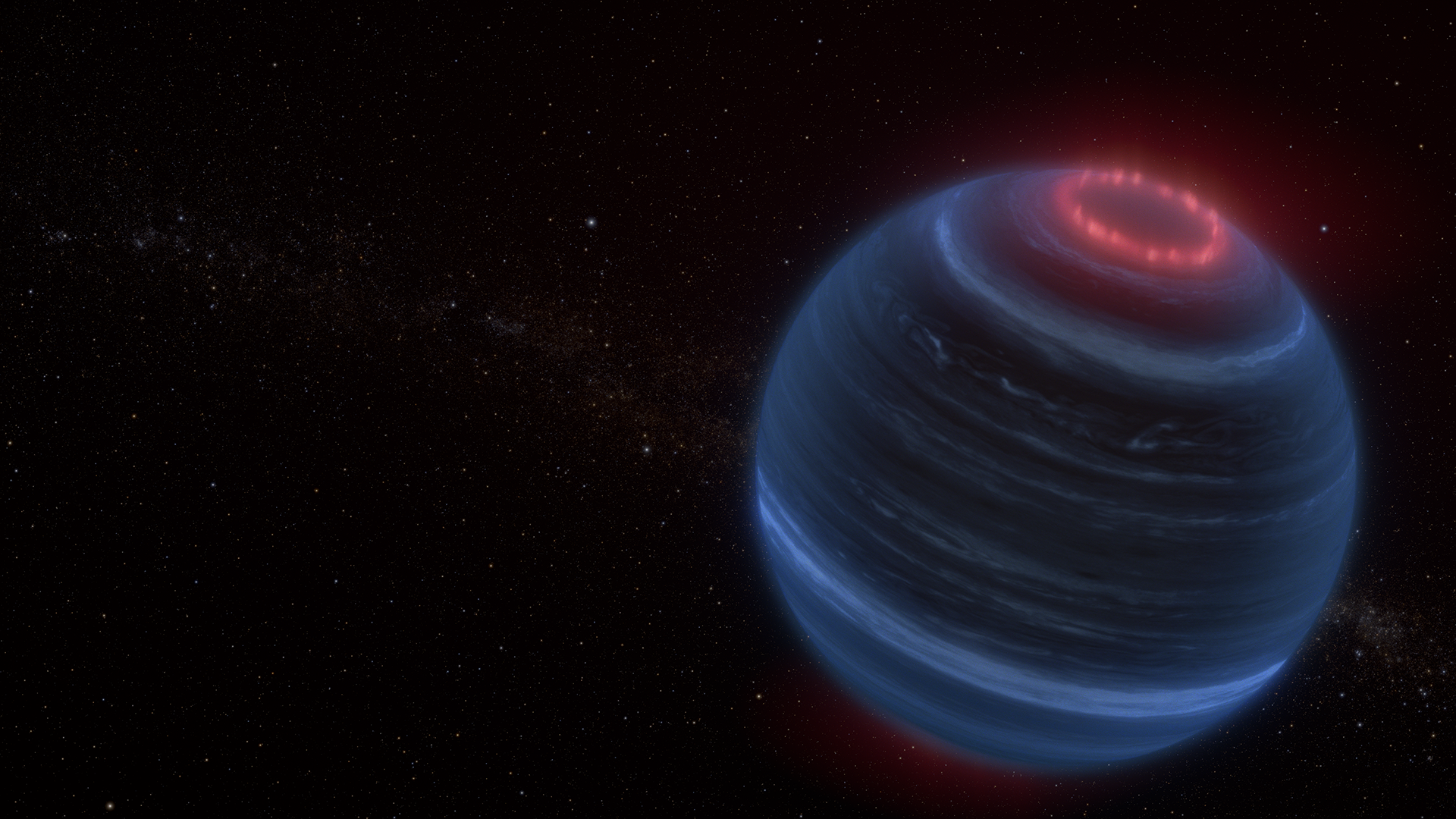
"NASA's Webb Spots Potential Aurorae on Solitary Brown Dwarf"
NASA's James Webb Space Telescope has discovered a brown dwarf, W1935, with infrared emission from methane, suggesting atmospheric heating by auroral processes. This unexpected finding raises questions about the source of energy in the cold, isolated brown dwarf, which lacks a host star. Astronomers speculate that the methane emission may be due to processes generating aurorae, similar to those observed in our solar system's gas giants. The discovery provides insight into the atmospheric phenomena of distant worlds and the potential role of auroral processes beyond our solar system.