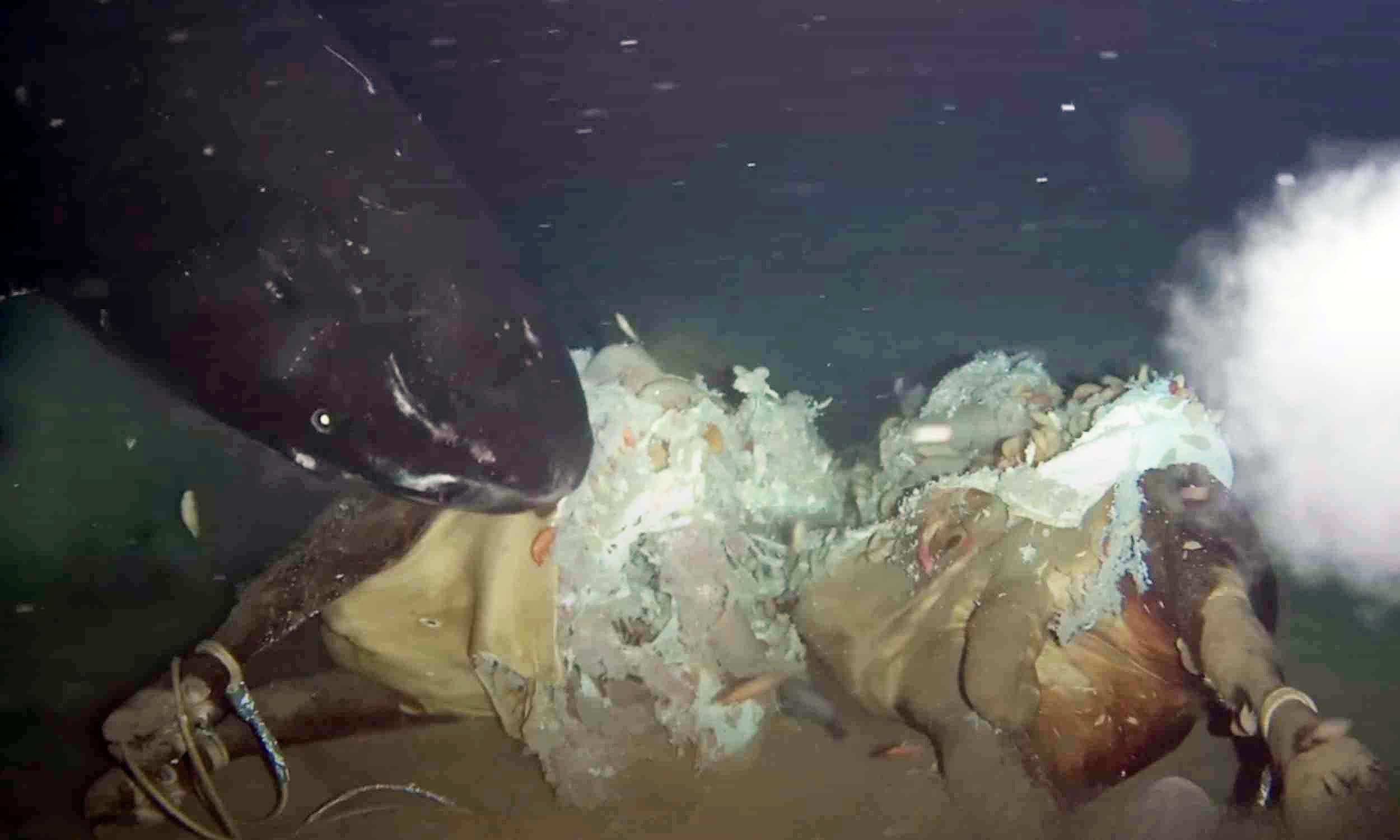
Scientists dropped a cow carcass on the seafloor of the South China Sea, revealing unexpected behaviors of Pacific sleeper sharks and expanding knowledge of deep-sea food webs and shark distribution.
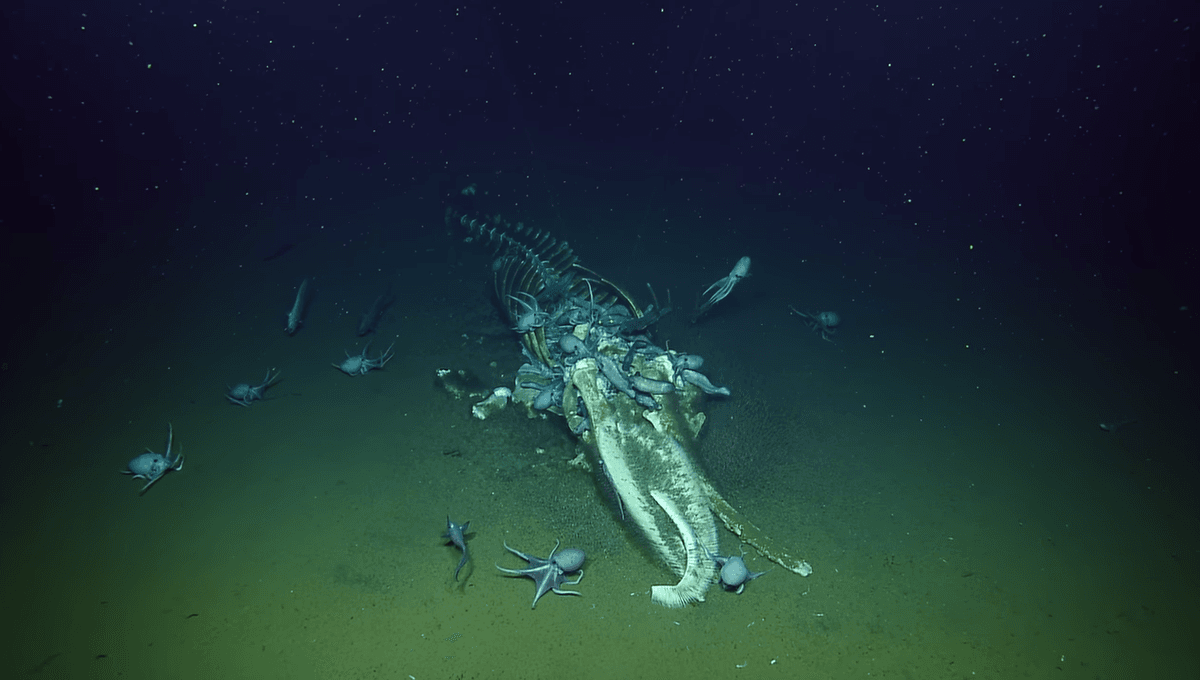
Scientists discovered a relatively fresh whale carcass at 3,238 meters depth off California, supporting a diverse deep-sea ecosystem that can last for decades, highlighting the importance of whale falls in oceanic food webs.
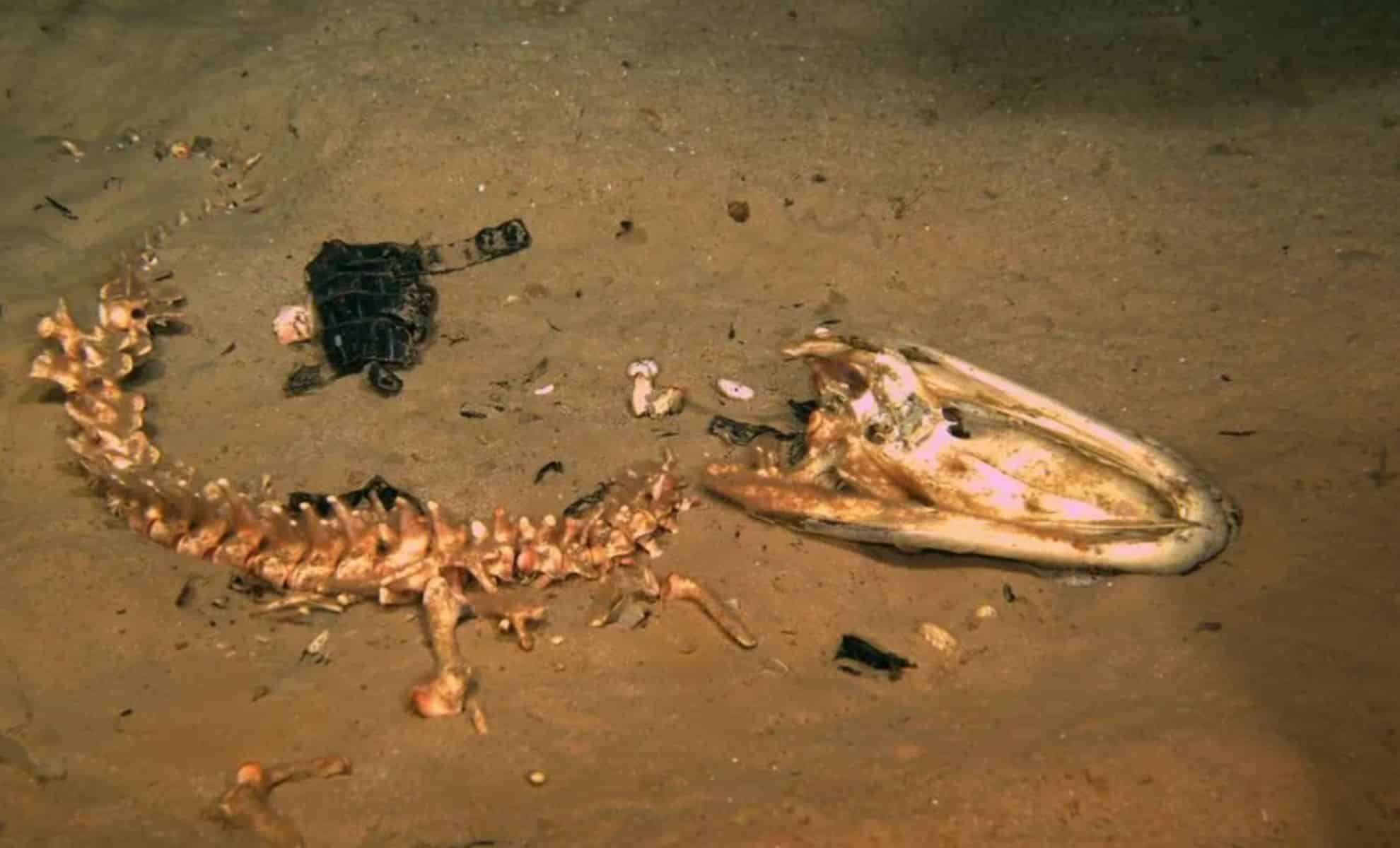
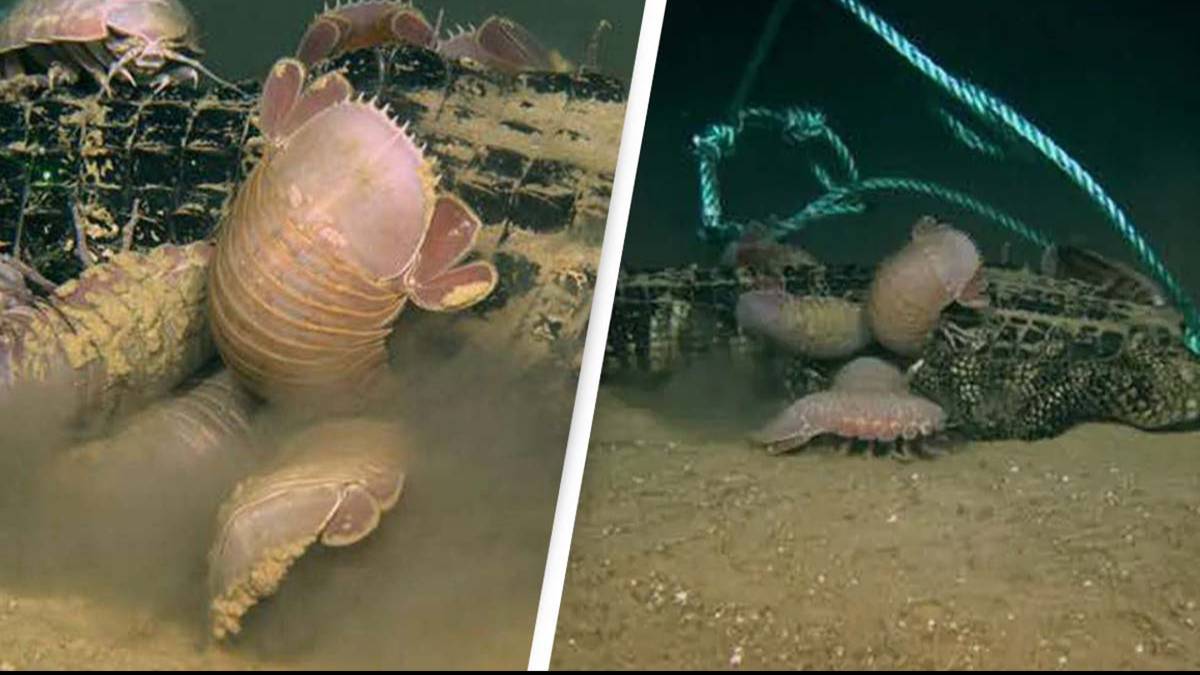
Researchers at LUMCON discovered a new species of bone-eating 'zombie worms' in the Gulf of Mexico after dropping dead alligators into deep water, revealing unexpected rapid scavenging by isopods and large predators like sharks, highlighting the surprising complexity of deep-sea ecosystems.
Scientists discovered a new bone-eating creature, a 'Zombie Worm', after dropping dead alligators into the deep sea floor in the Gulf of Mexico. Giant isopods and the 'Zombie Worm' were found to consume the alligator carcasses, with one alligator being carried off by a mysterious creature, likely a Greenland Shark or Six Gill Shark. This study sheds light on the scavenging behavior and biodiversity of deep sea creatures in response to unusual food sources.