Tag

Living Organisms

All articles tagged with #living organisms

science8 days ago

Human Light Emission Disappears After Death, Study Finds

A study by researchers from the University of Calgary and the National Research Council of Canada suggests that living bodies, including humans, may emit a faint visible light called biophotons, which significantly diminishes upon death. Experiments on mice and plants showed that these ultraweak photon emissions are linked to cellular stress and reactive oxygen species, potentially offering a non-invasive way to monitor health and stress in living organisms. The findings, published in The Journal of Physical Chemistry Letters, challenge previous notions about biological light emissions and open new avenues for health diagnostics.

science3 months ago

Study Finds Our Visible Light Emission Disappears Upon Death

A study by researchers from the University of Calgary and the National Research Council of Canada suggests that living bodies, including humans, may emit a faint visible light called biophotons, which significantly diminishes upon death. Experiments on mice and plants showed that stressed cells emit more biophotons, indicating potential for non-invasive health diagnostics. The findings, published in The Journal of Physical Chemistry Letters, open new avenues for understanding biological health and stress through light emissions.

science7 months ago

Living Beings Emit a Faint Light That Disappears at Death

Living organisms emit a faint glow through ultraweak photon emission, which ceases at death. This glow, linked to cellular activity and oxidative stress, could be used for non-invasive health monitoring, disease detection, and even searching for extraterrestrial life. Advances in imaging technology may soon enable real-time, field-deployable assessments of organism health and stress responses.

science2 years ago

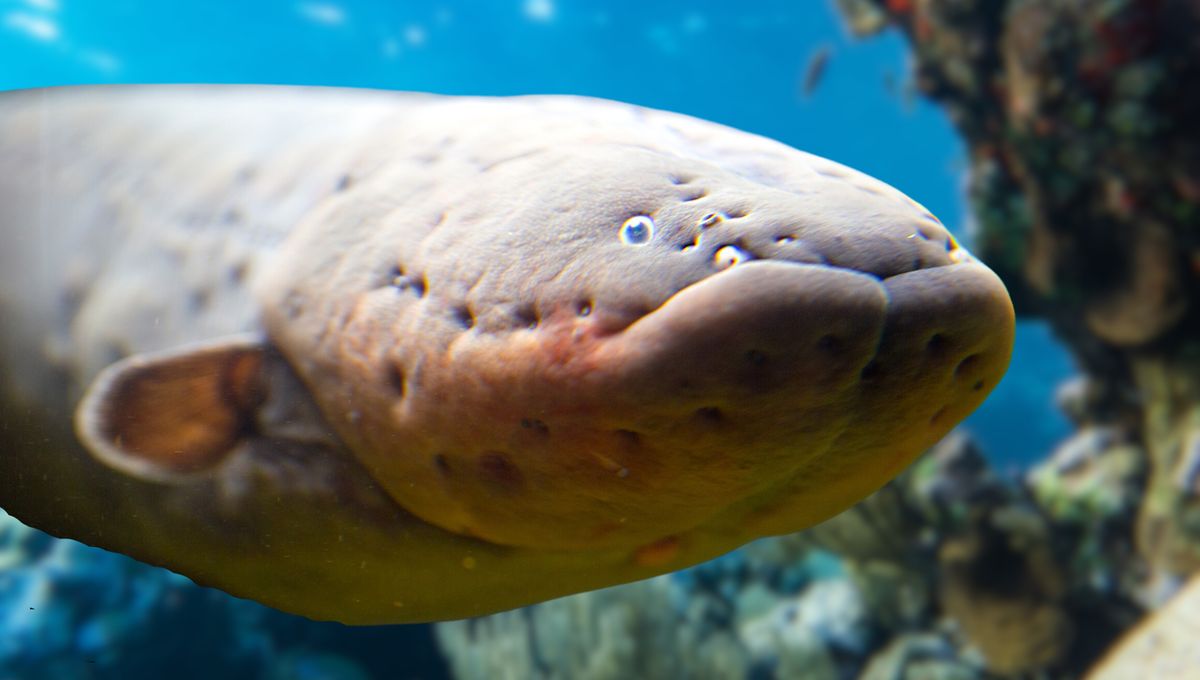
Electric Eels' Shocking DNA Transfer Ability Discovered

Electric eels have been found to discharge enough electricity that nearby fish larvae can undergo genetic modifications through a process called electroporation, which allows DNA to move into cells. This is believed to be the first time this mechanism of gene transfer has been observed in nature. Researchers conducted an experiment using zebrafish larvae and found that 5% of them showed green fluorescence, indicating that the DNA solution in the water had been taken up by the fish. The study suggests that electric eels and other organisms that generate electricity could potentially affect genetic modification in their natural environment.