A brief airspace closure over El Paso and nearby New Mexico exposed the difficulties of safely deploying anti-drone tech in urban areas, with questions about laser-based interdiction, interagency communication, and civilian risk, prompting calls for new protocols and oversight.
Laser weapons offer benefits like low cost and rapid engagement but cannot replace missiles due to limitations in range, atmospheric interference, line-of-sight constraints, and platform integration. Instead, they are seen as complementary tools within layered defense systems for specific roles.
China showcased its nuclear triad for the first time at a military parade, unveiling new ICBMs, an air-launched ballistic missile, hypersonic missiles, and advanced drone and laser defense systems, signaling significant military advancements and strategic capabilities.
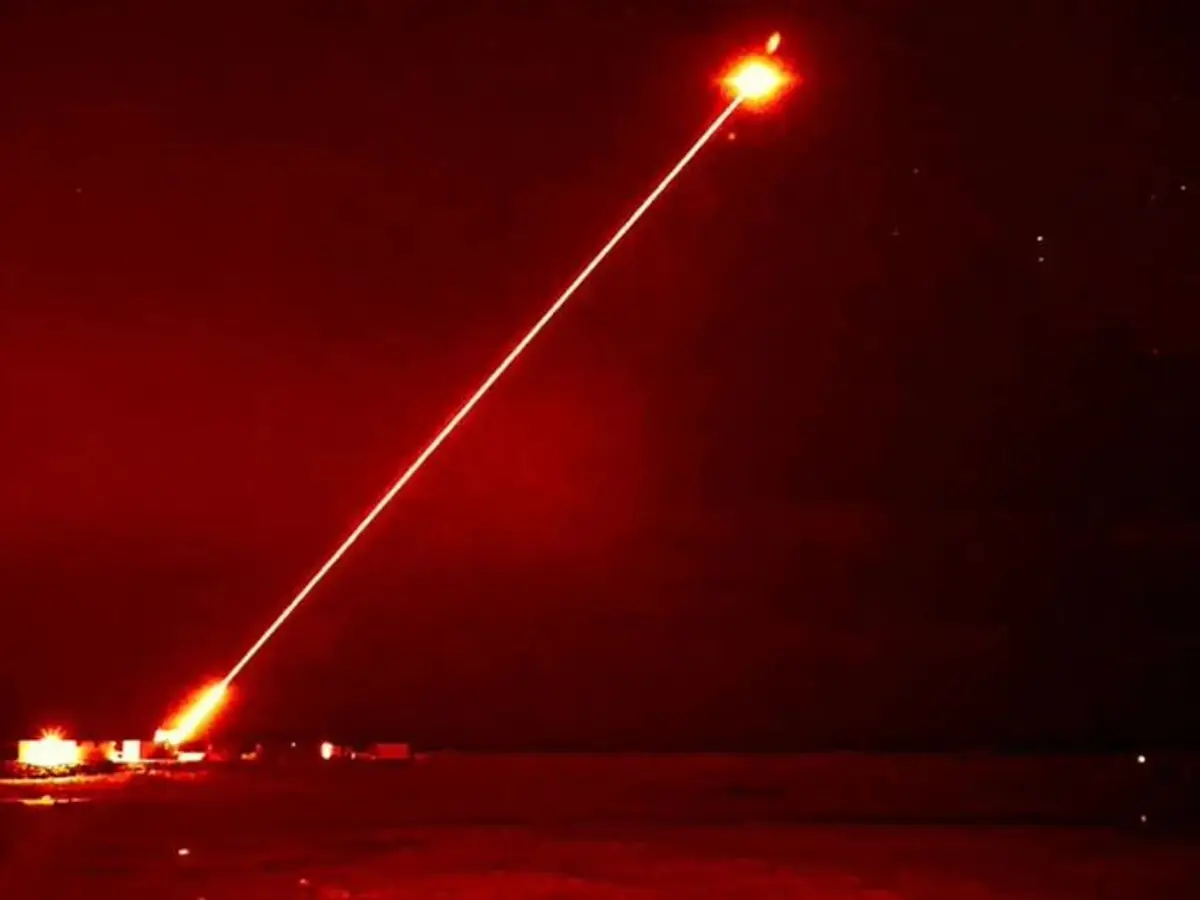
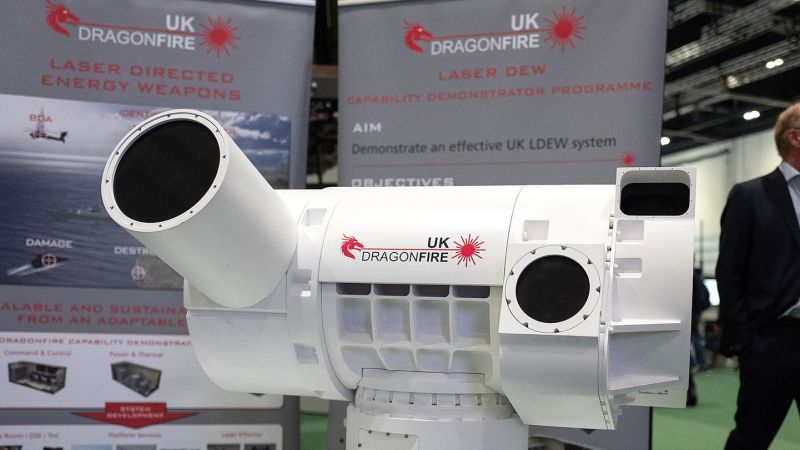
The United Kingdom has unveiled a new laser weapon system called DragonFire, which the military claims can provide lethal missile or aircraft defense at a cost of around $13 per shot, significantly cheaper than traditional missile interceptors. The system has the potential to revolutionize air defense by offering a low-cost alternative to expensive missiles, particularly in countering the threat of low-cost drones. While the technology shows promise, there are still limitations and challenges to be addressed, and the US Navy has also been testing similar laser systems. Despite these hurdles, there is a growing imperative to accelerate the deployment of laser weapons onto the modern battlefield.
Scientists have discovered a way to make lasers nine times more powerful, potentially paving the way for high-powered infrared laser weapons. Current laser-powered weapons are much weaker than those seen in movies like "Star Wars" and can only disable small airborne targets. The new research, funded by the U.S. Air Force, found a solution to limit light scattering from multimode optical fibers, allowing for the creation of lasers that are both high-powered and focused. While no prototypes have been developed yet, these lasers could be used to confuse enemy navigation systems or cause significant thermal damage to vehicles or machines. The technology could also have applications in remote sensing and gravitational wave detection.
The Pentagon is investing billions in laser weapons to enhance defense capabilities against a range of threats, from small rockets to ballistic missiles. Laser systems like the Iron Beam and DE M-SHORAD offer infinite interception opportunities, as they can recharge as long as there is electricity. The U.S. Army and Navy are actively testing and prototyping directed-energy systems, signaling a growing interest in the use of laser weapons in the military.
The Chinese military claims to have developed a cooling system that would allow high-energy lasers to remain powered up indefinitely without overheating, potentially surpassing similar projects attempted by the United States. The cooling system uses gas to remove excess heat, enabling precise laser beams to be maintained without losing power or becoming distorted. If successful, these lasers could provide a cheaper alternative to traditional missile systems and be used to shoot down satellites. However, the claims should be viewed with caution until the system is demonstrated.