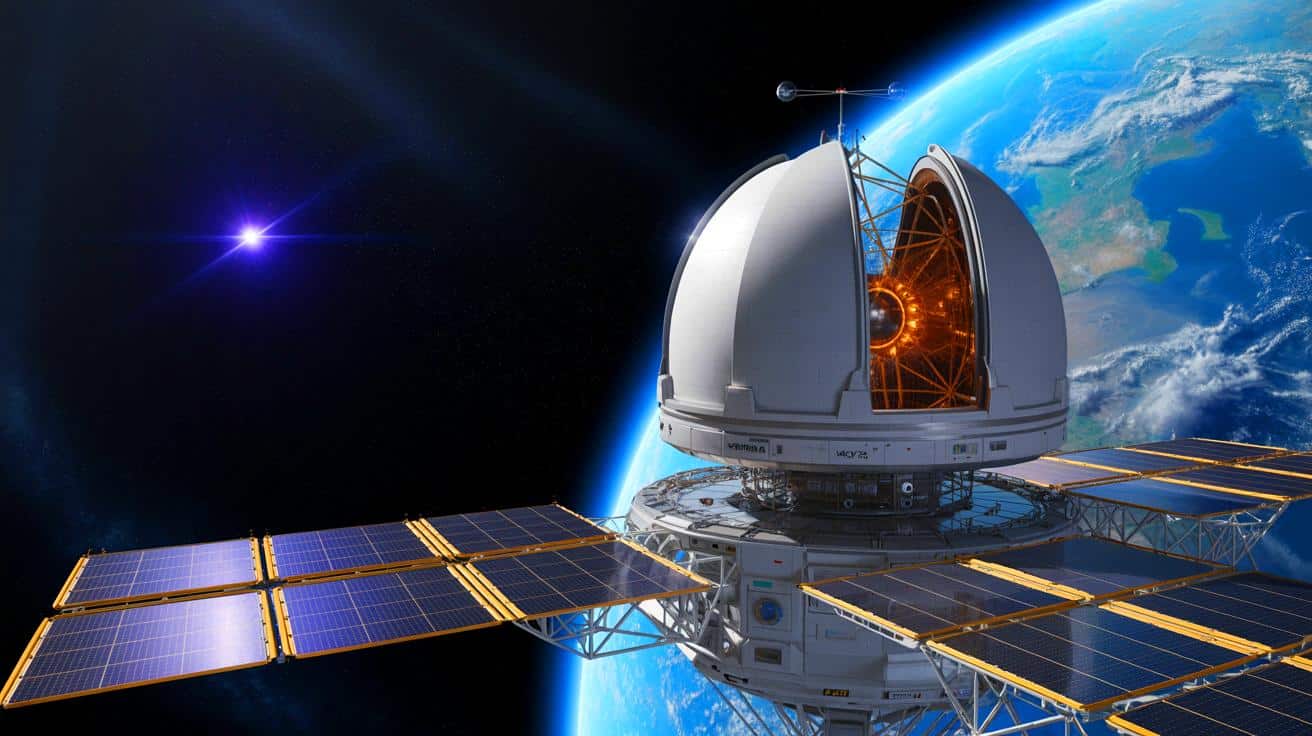
NASA's Carruthers Geocorona Observatory was launched to study Earth's exosphere and hydrogen loss from the L1 Lagrange point using advanced UV imaging, aiming to improve understanding of planetary atmospheres and the potential habitability of exoplanets.
NASA successfully launched the Carruthers Geocorona Observatory to study Earth's exosphere and its interaction with solar particles, aiming to better understand hydrogen loss from our planet and its implications for habitability and exoplanet research.
A scientific study has reignited interest in the concept of using a giant sunshade in space to block sunlight and cool the Earth's temperature. The study suggests that the ideal location for the sunshade would be the L1 Lagrange point, where objects in space experience minimal disturbance. The sunshade would need to have a critical mass of a few million metric tons to remain in place, but theoretical cosmologist István Szapudi proposes an alternative idea using a lightweight sunshade made of an asteroid or space debris. While the concept is still in the theoretical stage, interest in climate geoengineering is growing, and the Biden administration is open to further research on the subject.