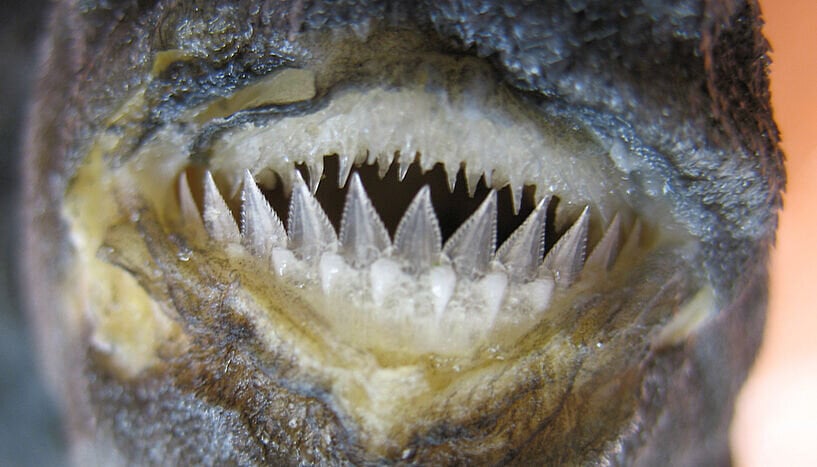
Great whites grow bone-cutting teeth with age, revealing a lifelong dietary shift
A study of nearly 100 great white sharks shows their teeth change across the jaw and as they grow: juvenile teeth are slender with cusplets for gripping small prey, but around 3 meters they shed cusplets and develop broader, serrated teeth for slicing; the front teeth are thicker ‘impact’ teeth while upper and lower teeth specialize for slicing and gripping, enabling larger sharks to target marine mammals. Continuous tooth replacement acts like a living record of lifestyle and diet changes, highlighting how the shark’s feeding toolkit adapts across life stages.