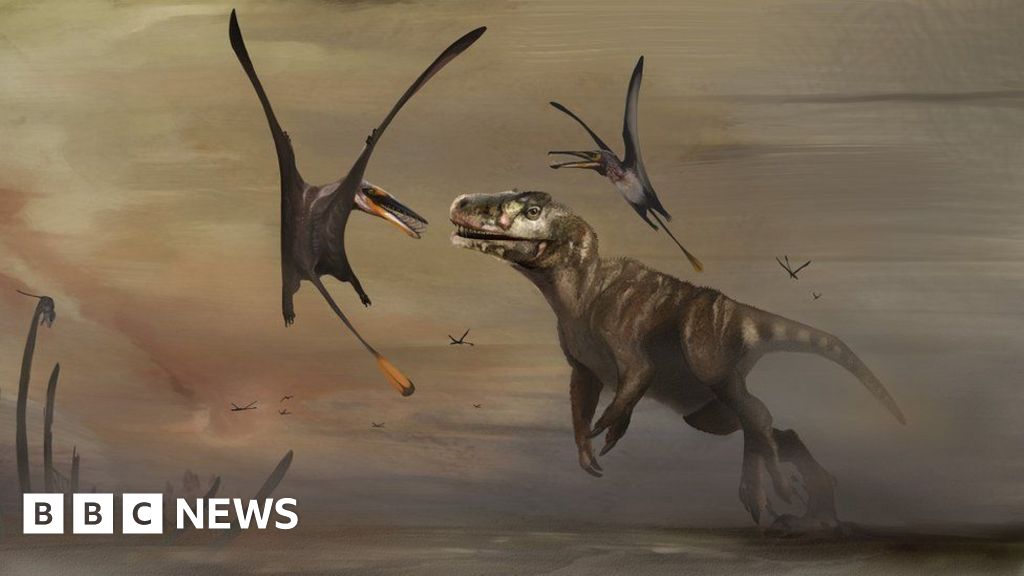
The Isle of Skye has been a treasure trove of dinosaur fossils for the past 40 years, with discoveries including footprints, bones, and winged reptile fossils. The first fossil was found in 1982 by a young student, and subsequent finds have shed light on the dinosaurs of the Middle Jurassic period, a time of massive diversification in dinosaurs. The fossils, dating back 162-175 million years, have put Skye on the map as an important site for understanding life during this period.
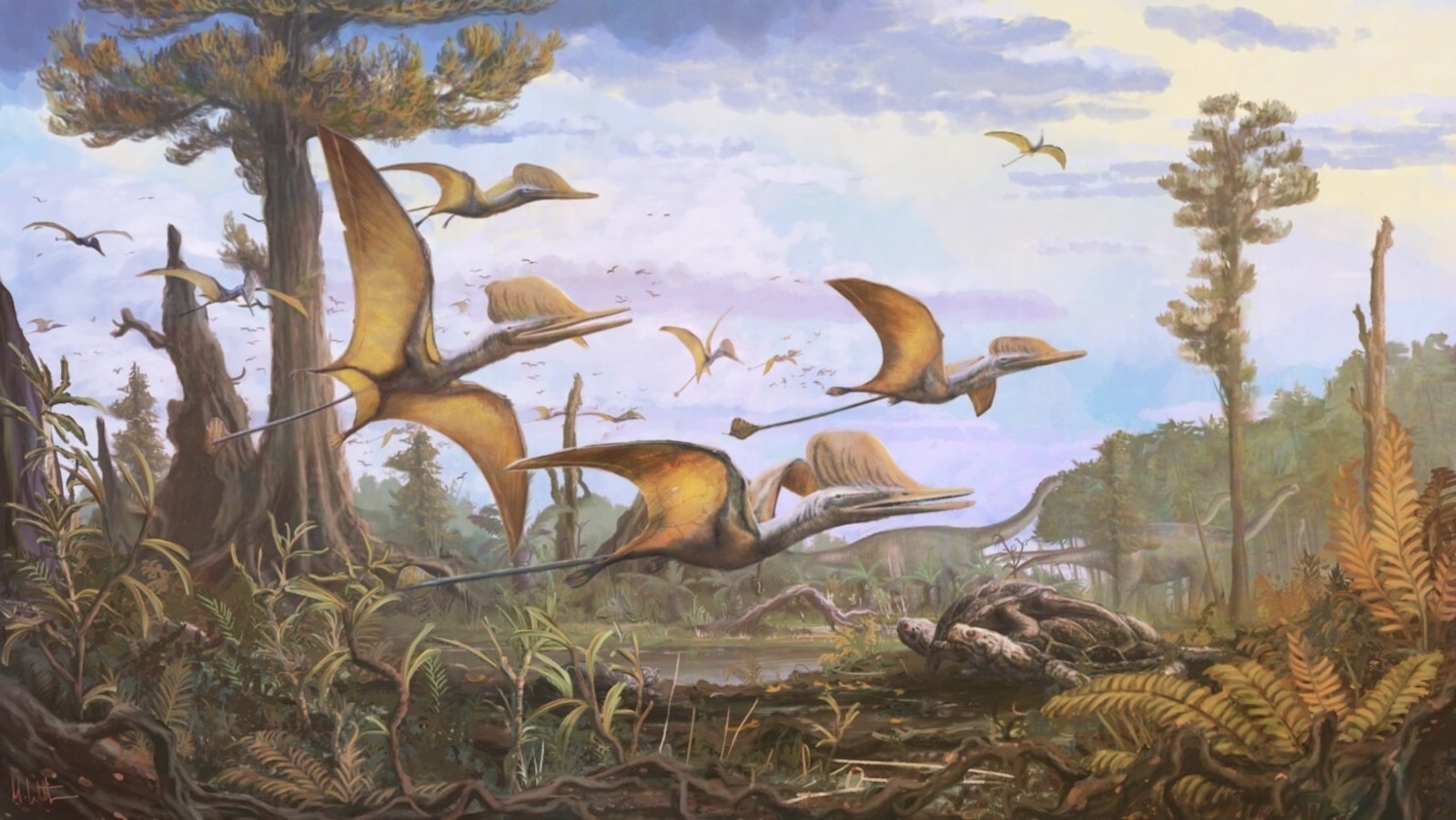
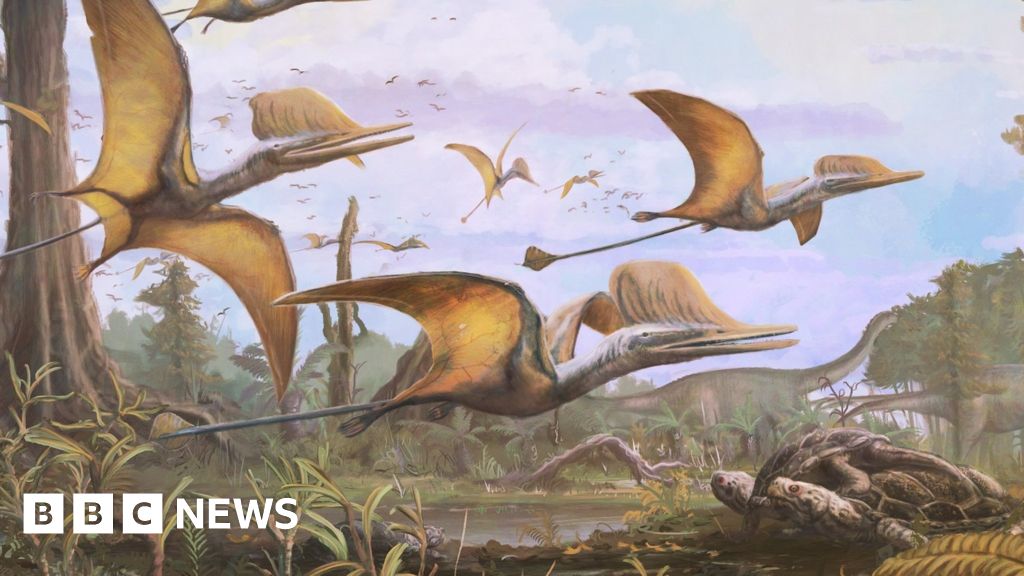
Scientists have discovered the remains of a winged dinosaur, Ceoptera evansae, on the Isle of Skye in Scotland, dating back 166 to 168 million years to the Middle Jurassic period. The incomplete fossil was first found in 2006 and has since been digitally prepared, shedding light on the evolution and diversity of pterosaurs. This discovery challenges previous understanding of the species' timeline and suggests that advanced flying reptiles appeared earlier and had a wider distribution than previously thought, providing valuable insights into the evolution of pterosaurs.
A unique species of flying reptile, or pterosaur, called Ceoptera, has been discovered on the Isle of Skye, dating back 168-166 million years. Its wings, shoulders, legs, and backbone were found, but the skull was missing. This finding is significant as fossils from this era, known as the Middle Jurassic, are extremely rare. The discovery suggests that pterosaurs were common animals in Scotland during this time, ruling the skies before the existence of birds. The research, published in the Journal of Vertebrate Paleontology, sheds light on the evolutionary history of these ancient flying reptiles.