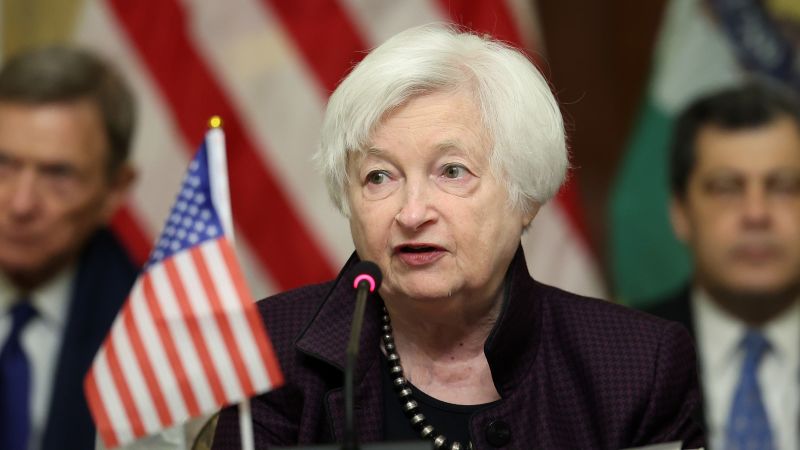
Treasury Secretary Janet Yellen defended the IRS against Republican threats to cut its funding, stating that such cuts would be damaging and irresponsible. The IRS received $80 billion in funding from the Democrats' Inflation Reduction Act to crack down on tax cheats and improve taxpayer service. House Republicans recently voted to rescind $14.3 billion from the IRS to fund an emergency aid package for Israel, but the bill is unlikely to pass in the Democrat-controlled Senate. Independent budget experts warn that cutting IRS funding would increase the deficit and reduce tax revenue. The Biden administration aims to show how the new funding is improving taxpayer services and enforcement efforts, with the IRS already making progress in reducing call wait times, digitizing tax returns, and providing more online tools and in-person support.
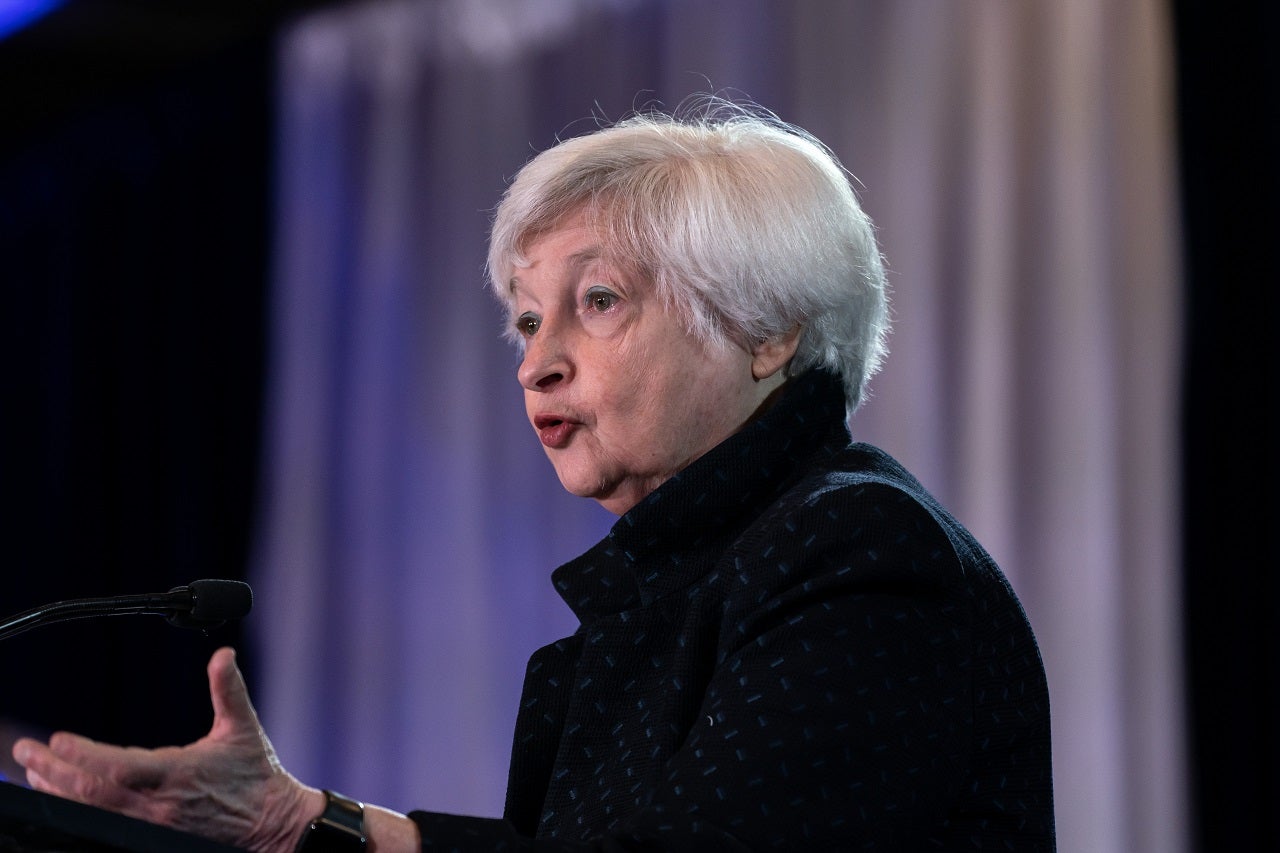
Treasury Secretary Janet Yellen defended the IRS against proposed funding cuts by Republican lawmakers, stating that it would be damaging and irresponsible. The funding cuts were suggested in exchange for aid to Israel in its conflict with Hamas. Yellen emphasized the importance of IRS funding and criticized playing politics with it. The IRS received $80 billion in funding from Democrats last year to improve taxpayer services and crack down on tax evasion. Republicans argue that a stronger IRS could harm lower-income Americans, but the Congressional Budget Office projected that reducing funding would increase the federal deficit. Yellen highlighted the modernization efforts at the IRS, including investments in customer service and technology. The agency has already collected $160 million in back taxes this year as part of its crackdown on tax evaders.
The House Republican bill to provide aid to Israel will add $26.8 billion to the U.S. budget deficit, according to the Congressional Budget Office. The bill pairs aid to Israel with cuts to IRS funding, but the CBO found that the IRS cuts coupled with the Israel aid would lead to a decline in revenue, contradicting the goal of offsetting the aid. The bill is facing criticism from Democrats, who argue that it prioritizes helping wealthy tax cheats over addressing the national debt. Senate Democrats have made it clear that the bill won't pass the upper chamber.
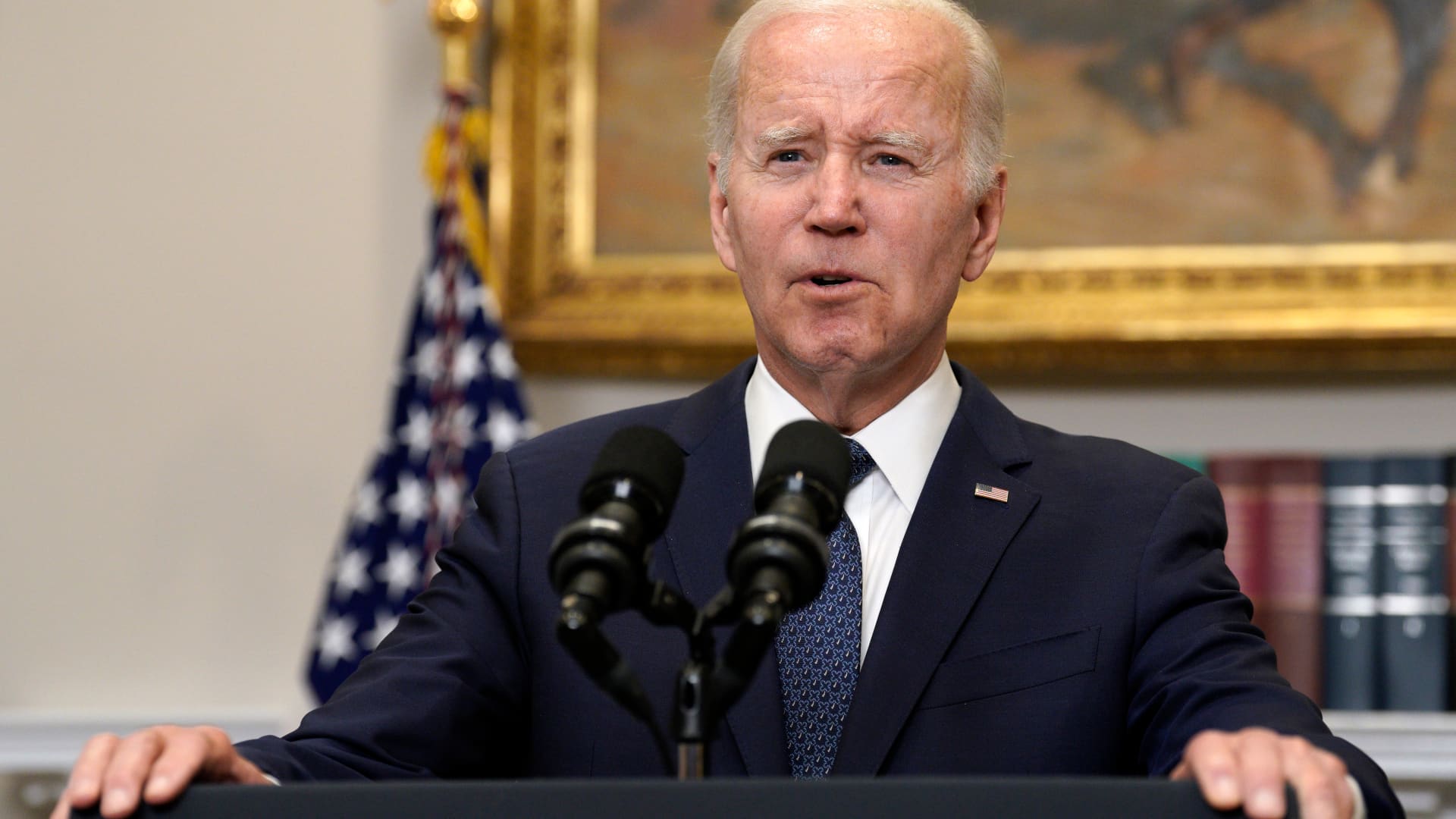
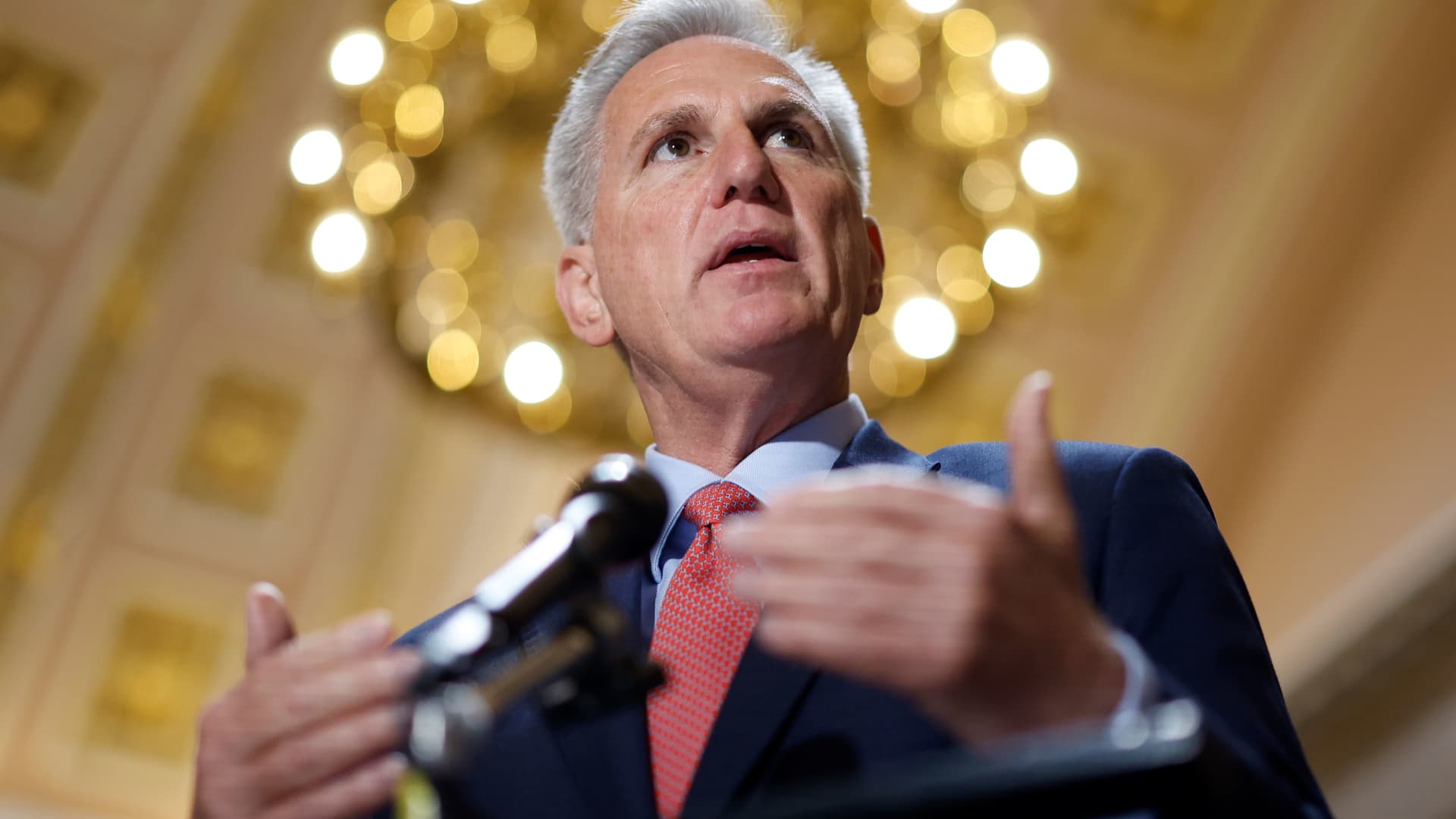
President Joe Biden and Republican House Speaker Kevin McCarthy have agreed on a deal to temporarily suspend the debt ceiling and cap some federal spending until Jan. 1, 2025. The deal would boost total defense spending to $886 billion, in line with Biden's 2024 budget spending proposal, and shift $10 billion in each of calendar years 2024 and 2025 in funding away from the Internal Revenue Service. The estimated amount of unused Covid relief funds is between $50 billion and $70 billion, and the new bill would require the Biden administration to follow through with a plan to end the current pause on student loan repayments by late August. The agreement would impose new work requirements on some low-income people who receive food assistance under the program known as SNAP up to age 54, instead of up to age 50.
The White House and congressional negotiators are close to reaching a compromise agreement to raise the debt ceiling for two years. House Republicans would achieve at least two of their highest priorities in exchange for voting to raise the debt ceiling: rolling back baseline federal spending in 2024 on most discretionary programs and rescinding some of the $80 billion allocated for the Internal Revenue Service as part of 2022's Inflation Reduction Act. The Pentagon and veterans health benefits would be spared from any cuts, and see their funding actually increase next year.