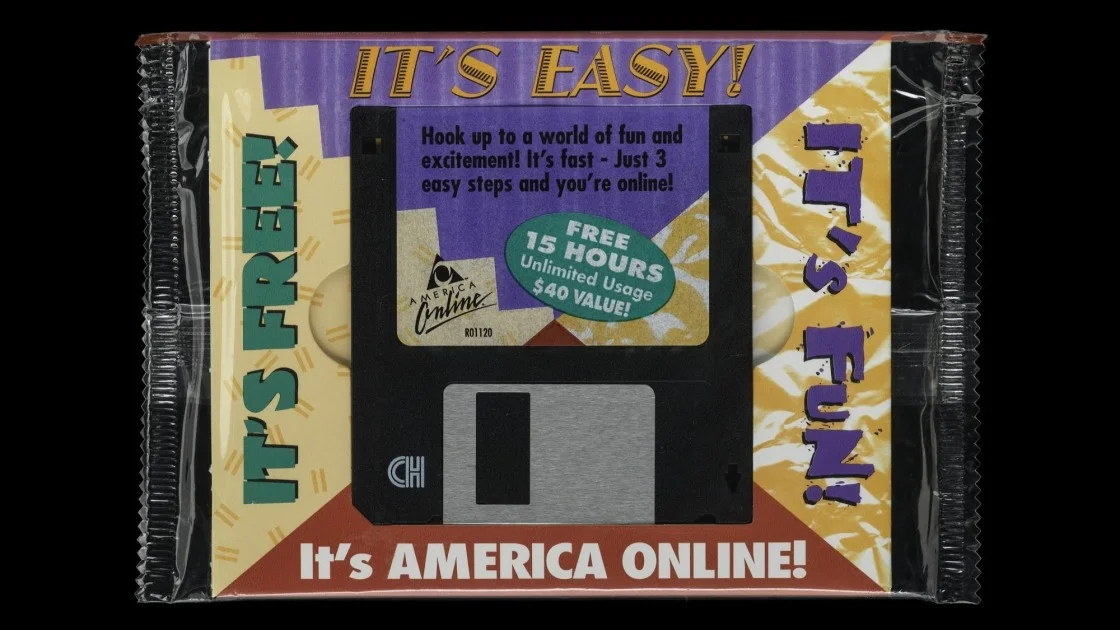
AOL has officially discontinued its dial-up internet service, marking the end of an era for the once-dominant internet provider known for its role in popularizing online access in the 90s and early 2000s. The decline reflects the broader shift to broadband and wireless technologies, with only a small fraction of households still relying on dial-up in 2023. AOL, now operating under Yahoo, continues to offer email and subscription services but has moved away from its dial-up roots.

AOL is discontinuing its dial-up internet service after over 30 years, reflecting the shift to faster broadband options, with the service ending in the US and Canada by September 30, 2023.
AOL is discontinuing its iconic dial-up internet service in September 2025 after over 30 years, marking the end of an era for early internet connectivity, with the service and dialer software to be phased out by the end of September.
AOL is discontinuing its dial-up internet service after 30 years, marking the end of an era for many Americans who experienced the early days of online connectivity, characterized by the iconic modem sounds. The service, once dominant with over 23 million US subscribers, declined with the rise of faster broadband options and modern web technologies, and will officially shut down in late September, leaving behind a nostalgic chapter in internet history.
AOL is discontinuing its dial-up internet service on September 30 after over 30 years, marking the end of an era for the pioneering company that once played a major role in bringing the internet to millions of Americans.
AOL is shutting down its dial-up internet service on September 30, 2025, marking the end of an era for a service that was once synonymous with the internet for many users, even though only a small number still used it as of 2019.
AOL is discontinuing its dial-up internet service, along with related software, by September 30, marking the end of an era for the classic '90s and early 2000s internet experience, as the company shifts towards modern broadband services.
AOL will cease its dial-up internet service on September 30, 2025, marking the end of an era for one of the earliest online access methods, with only a tiny fraction of users still relying on dial-up today, as broadband options have become dominant.
The article explores the fading remnants of the early internet, highlighting its unique, experimental, and personal nature, preserved through web archives like the Internet Archive, and reflects on how the modern web's polished, algorithm-driven environment contrasts with the internet's original spirit of individuality and creativity.
Elwood Edwards, the iconic voice behind AOL's "You've got mail" greeting, has passed away at 74 due to complications from a stroke. Edwards recorded the famous phrase in 1989, which became a cultural touchstone in the 1990s. Despite his widespread auditory recognition, Edwards remained largely anonymous, enjoying a career in radio and television behind the scenes. He is survived by his daughters, granddaughter, and brother, with a memorial service planned in New Bern, North Carolina.
Elwood Edwards, the voice behind AOL's iconic "You've Got Mail" alert, has passed away at 74. Edwards recorded the famous line in 1989 for $200, contributing to AOL's role as a pioneer in bringing people online in the '90s. AOL's peak came with its ill-fated merger with Time Warner in 2001, which failed as the dot-com bubble burst and broadband internet rose. Despite AOL's decline, Edwards' voice remains a nostalgic symbol for many.
ICQ, a once-popular messaging app from the 90s and early 2000s, will shut down on June 26. Users are encouraged to switch to VK Messenger for casual chats and VK WorkSpace for professional use. ICQ, known for its iconic "uh-oh!" notification sound, was developed by Mirabilis, later acquired by AOL, and then by Mail.Ru Group (now VK).
After 32 years, New Mexico State University announced the closure of its Hobbes OS/2 Archive, a significant resource for IBM OS/2 operating system users. The decision was made due to a reevaluation of priorities, marking the end of an era for one of the oldest software archives on the Internet.
After 32 years, New Mexico State University announced the closure of its Hobbes OS/2 Archive, a significant resource for IBM OS/2 users. The archive, set to shut down on April 15, 2024, contains a wealth of OS/2 software, games, and utilities dating back to 1987. Despite efforts to mirror the files elsewhere, the closure marks the end of an era in Internet history. OS/2, once a competitor to Windows, continues to have a legacy in specialized applications, and the loss of Hobbes underscores the importance of preserving digital heritage for future generations.
Taylor Lorenz, author of "Extremely Online: The Untold Story of Fame, Influence, and Power on the Internet," discusses the origins of the creator culture and the role of women in shaping social media platforms. She highlights the pioneering efforts of women in the early days of blogging, who faced relentless misogyny and hate while monetizing their personal brands. Lorenz also explores the challenges faced by content creators, the incorporation of creators by legacy media, and the rise and demise of platforms like Vine. She emphasizes the importance of creators in generating value for social platforms and predicts that TikTok will continue to dominate the space due to its innovative product team. Lorenz believes that while the internet has the potential for positive connection and empowerment, the current dominance of profit-driven platforms has created a warped online experience.