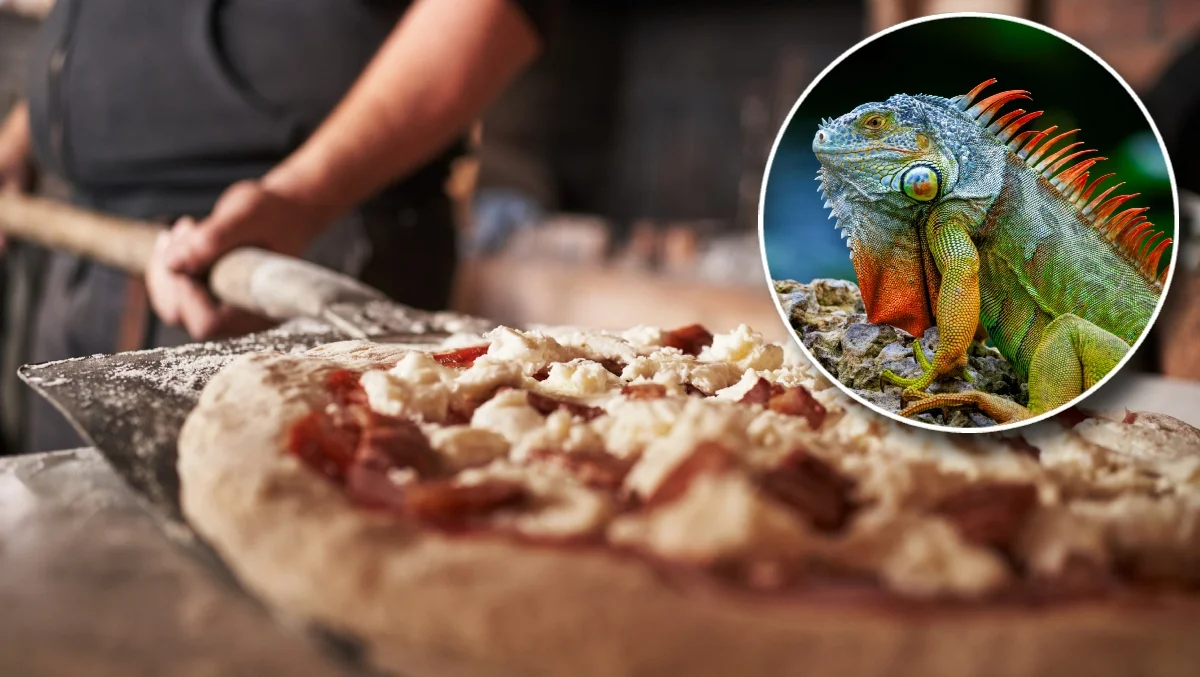
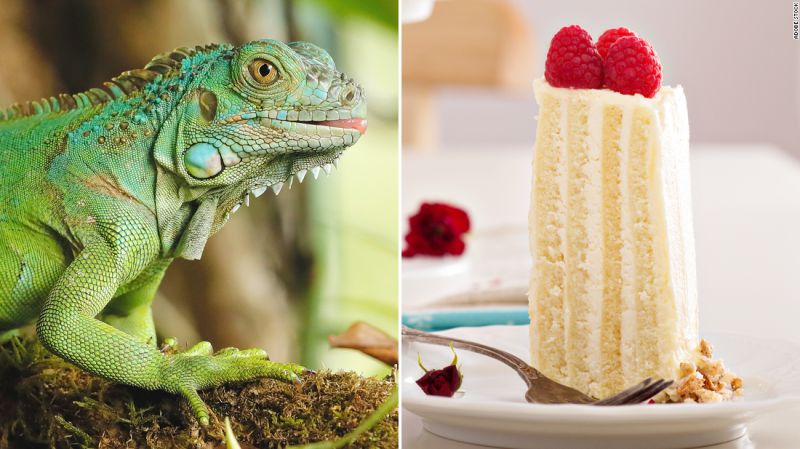
During a Florida cold snap, a North Palm Beach pizzeria used tail meat from a cold-stunned invasive iguana on a pizza called 'the Everglades,' a move that sparked debate over culinary novelty vs wildlife ethics after the state allowed capture of cold-stunned iguanas.
A man in Hollywood, Florida found a large iguana in his toilet while closing the bathroom door leading out to his pool. The man quickly grabbed a baby gate to keep the hissing iguana from running into his connecting bedroom. After shooing the reptile out with a strainer, it dove into his pool and eventually ran into the backyard.
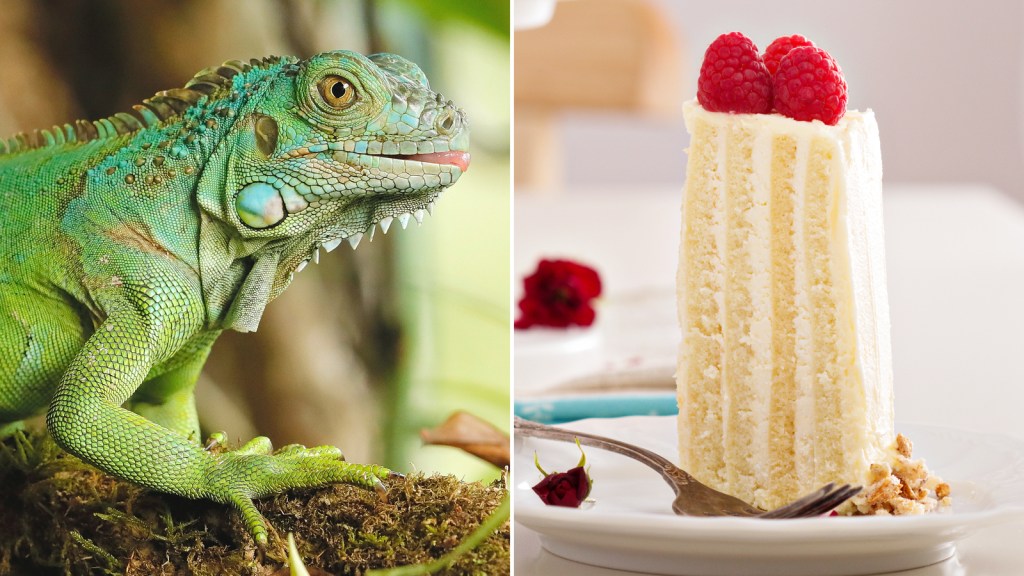
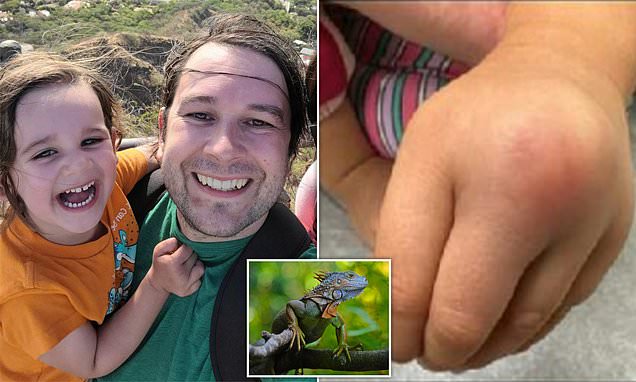
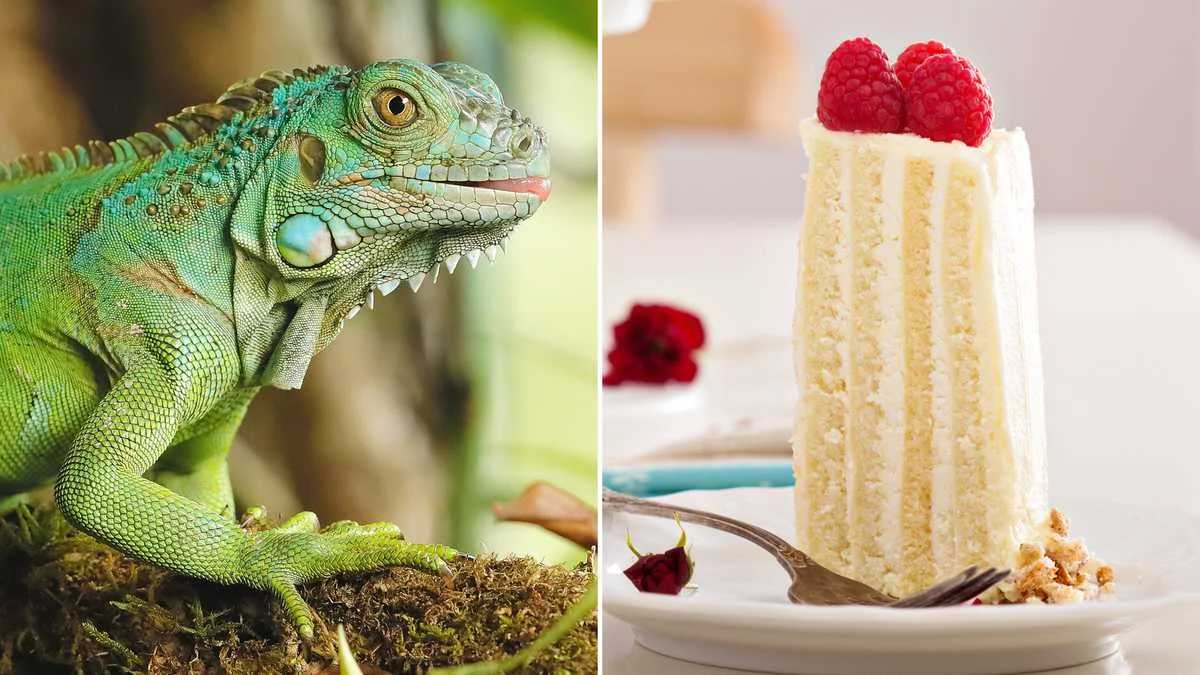
A 3-year-old girl on vacation in Costa Rica was bitten by an iguana while eating cake on the beach. Her hand was disinfected and she was given antibiotics to protect against Salmonella bacteria. However, five months later, a small bump appeared at the site of the bite, which grew larger and painful over the next three months. Doctors found and removed a nearly 1-inch mass from her hand and identified a rare bacterial infection caused by Mycobacterium marinum, likely caught from the iguana bite. The infection was successfully cleared with a combination of antibiotics.
A young girl from San Jose, California, was bitten by an iguana while on vacation in Costa Rica, resulting in a rare bacterial infection that may be the first documented case of its kind in humans. The girl's parents initially thought the bite was superficial and did not seek medical attention until a bump appeared on her hand months later. The bump turned out to be a rare infection caused by Mycobacterium marinum, which is commonly found in fish. The girl is recovering after treatment with antibiotics, and doctors are warning clinicians to be aware of the possibility of such infections from iguana bites.
A three-year-old girl, Lena Mars, was bitten by an iguana while on holiday in Costa Rica, causing a bacterial infection that resulted in a lump almost 1in (2.5cm) in diameter. The bite was initially treated with antibiotics, but five months later, Lena's parents noticed a small bump had developed at the site of the bite, and she underwent surgery to remove it. Laboratory tests revealed that the bacteria was Mycobacterium marinum, which is known to cause a tuberculosis-like illness in fish. This is the first case of such an infection caused by an iguana bite, suggesting that iguanas can carry and pass on the bacteria to humans.
A 3-year-old girl was bitten by an iguana in Costa Rica while eating cake, and five months later, a cyst began to grow on the site of the bite. The girl was infected with a rare bacteria, Mycobacterium marinum, which is typically found in fish and rarely infects humans. This may be the first time a human has contracted the infection from an iguana bite. The infection does not respond well to typical antibiotics, but the girl is improving with treatment.
A young girl on vacation in Costa Rica was bitten by an iguana while eating cake, resulting in a rare bacterial infection caused by Mycobacterium marinum. The girl's parents initially thought the bite was superficial and took her to a local clinic, where she was given antibiotics. However, five months later, a bump appeared on her hand, and a biopsy revealed the rare infection. The girl was treated with antibiotics and is recovering. This may be the first documented case of a human getting this kind of infection from an iguana bite, and doctors should be aware of the possibility.
A young girl on vacation in Costa Rica was bitten by an iguana while eating cake, resulting in a rare bacterial infection caused by Mycobacterium marinum. The girl's parents initially thought the bite was superficial and took her to a local clinic, where the wound was disinfected and treated with antibiotics. However, five months later, a bump appeared on her hand, which was later diagnosed as a rare infection. Doctors treated the infection with antimicrobial and antibiotic drugs, and the girl is recovering. Experts warn against feeding wildlife, as it can lead to habituation and dangerous encounters.
A toddler on holiday in Costa Rica was bitten by an iguana while eating cake on a beach. The wound was disinfected and treated with antibiotics, but five months later a lump appeared on the back of her hand. The lump was found to contain a thick white mass and pus, with further examination revealing dead tissue, clusters of white blood cells and the presence of bacteria later identified to be Mycobacterium marinum. The bacteria are resistant to amoxicillin, so the toddler was treated with the antibiotics rifampin and clarithromycin. This is thought to be the first case related to an iguana wound, and experts hope it will raise awareness that lizards such as iguanas can carry Mycobacterium marinum as well as pass it on to humans.
A 3-year-old girl developed a strange bacterial infection months after being bitten by an iguana that stole her cake on a beach. The wound was treated with antibiotics, but five months later, a small bump developed and got progressively more painful. An orthopaedic surgeon removed the lump and found that it was leaking pus, indicating an infection. Histological tests revealed the presence of Mycobacterium marinum, a bacteria rarely found in humans and more commonly found in fish. The bacteria is known to be resistant to common antibiotics, but a course of rifampin and clarithromycin did the job.
A young girl developed a rare bacterial infection after being bitten by an iguana with a sweet tooth while on vacation in Costa Rica. The girl's parents took her to a local clinic where the wound was disinfected and she was given antibiotics. The wound appeared to have healed, but five months later, a bump appeared on her hand. A biopsy revealed a rare infection with Mycobacterium marinum, likely from the iguana bite. The infection responded well to treatment with antibiotics. This may be the first documented case of a human getting this kind of infection from an iguana bite, and doctors are being warned to be aware of the possibility.