
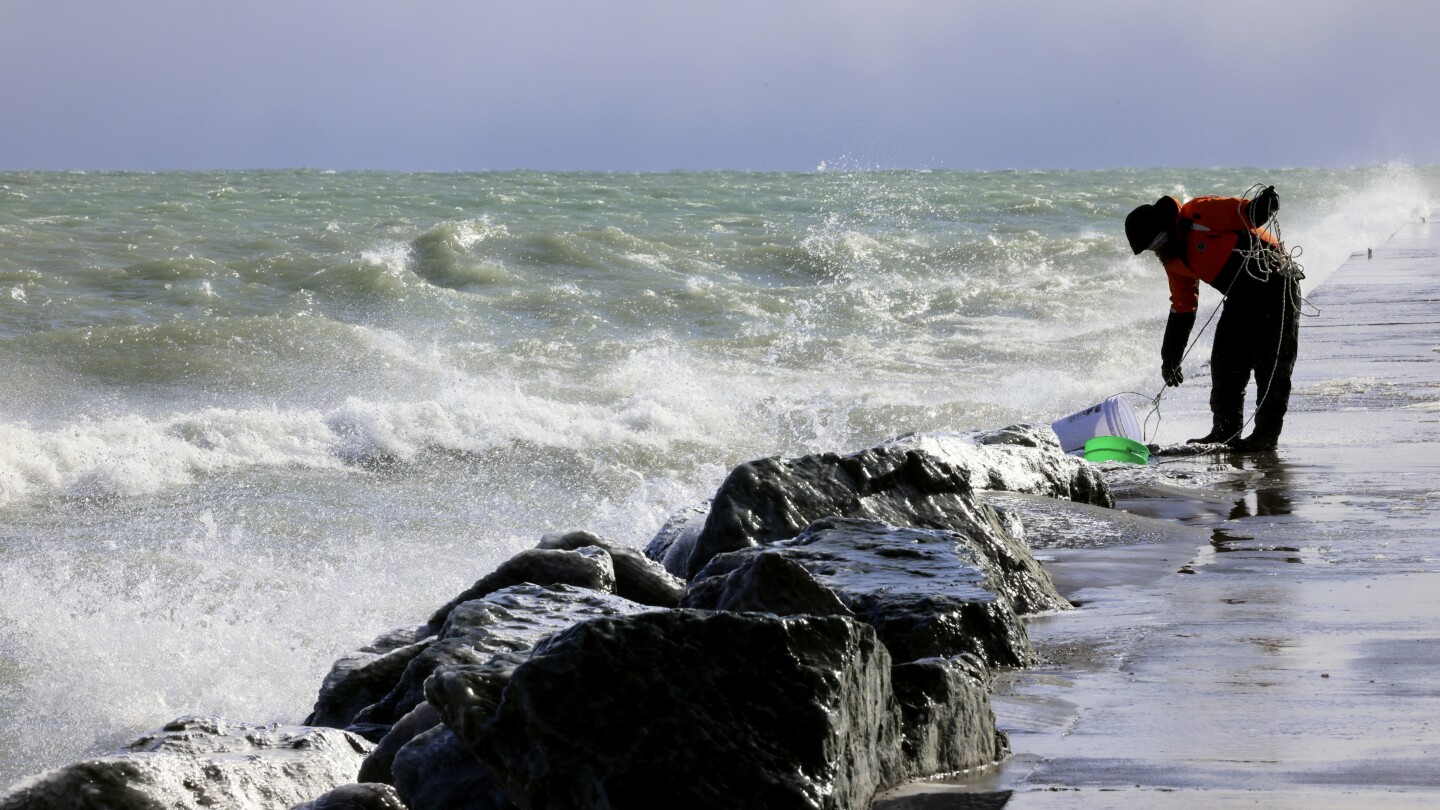
"Unraveling the Impact of Reduced Great Lakes Ice on Fish and Algae"
Scientists are studying the impacts of historic lack of ice on the Great Lakes due to climate change, with concerns about potential harm to fish species, algae blooms, erosion of beaches, and clogging of shipping channels. The absence of ice could lead to earlier and larger algae blooms, reduced oxygen levels in the water, and potential shrinkage of fish populations. While it may extend the fishing and shipping seasons, it could also cause lake levels to drop and erode shorelines, posing challenges for commercial fishing and shipping operations. Researchers are working to gather winter-specific data to better understand and manage the ecological changes in the Great Lakes.