

Tag

Hkdc1

All articles tagged with #hkdc1

science-and-health2 years ago

"Discovery of HKDC1 Protein: A Potential Key to Halting Aging and Cellular Senescence"

Japanese scientists have discovered a protein, hexokinase domain containing 1 (HKDC1), that helps maintain mitochondria and lysosomes, which are crucial for cell health and energy production. Damage to these organelles is associated with ageing and various diseases, including neurodegenerative disorders. HKDC1's role in protecting these structures and preventing cellular senescence could lead to new treatments for age-related diseases and potentially impact lung and liver cancers. The study, published in the Proceedings of the National Academy of Sciences, highlights HKDC1 as a potential target for developing senolytic drugs that combat cellular ageing.
science-and-health2 years ago

"Breakthrough HKDC1 Protein Discovery Offers Hope for Anti-Aging Treatments"

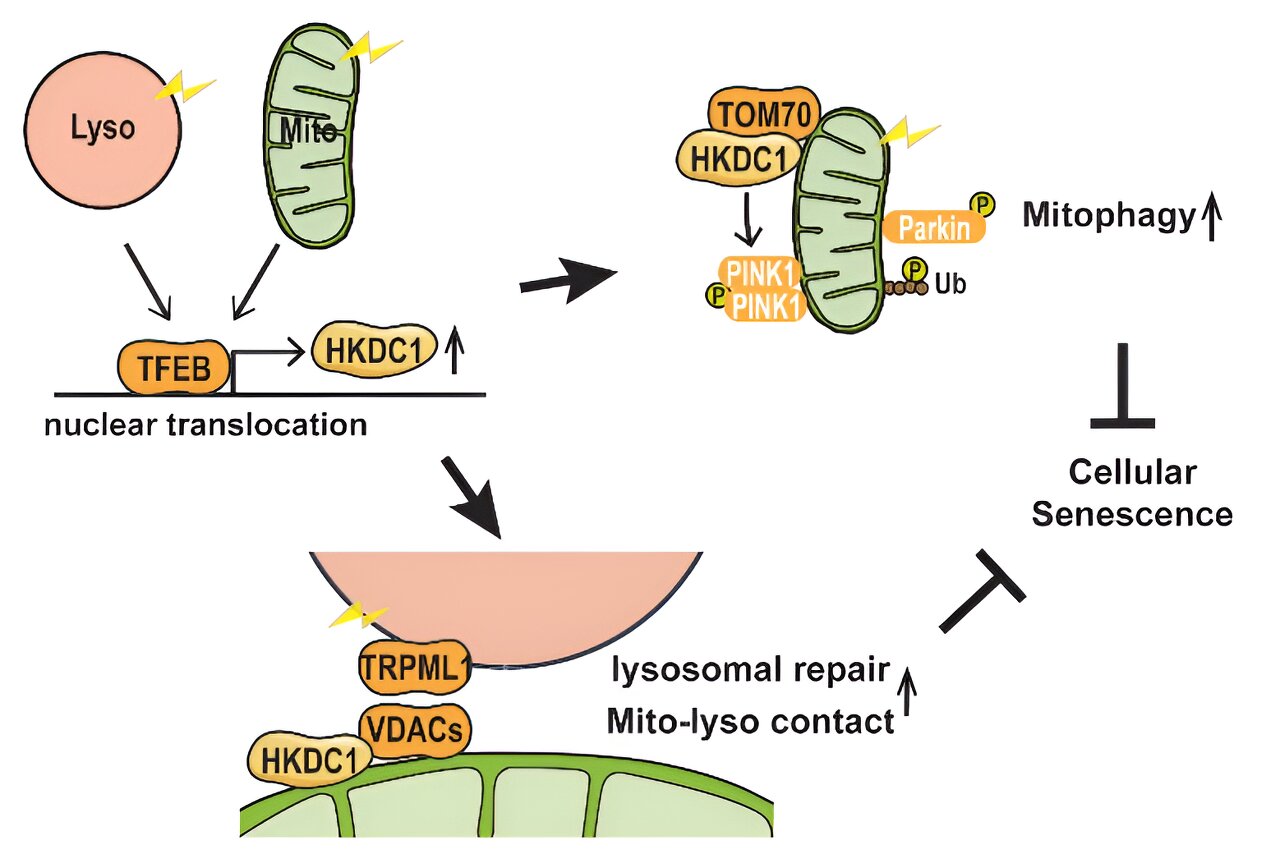
Researchers at Osaka University have discovered that the protein HKDC1 is essential in maintaining the health of mitochondria and lysosomes, which are crucial organelles within cells. HKDC1 helps to prevent cellular aging by stabilizing these organelles, thus protecting against cellular senescence and potentially offering new therapeutic targets for aging-related diseases. The protein works by promoting mitophagy, the removal of damaged mitochondria, and by aiding in the repair of lysosomes, ensuring the longevity of cellular function.

science-and-technology2 years ago

"Key Role of HKDC1 Protein in Sustaining Mitochondrial and Lysosomal Integrity Uncovered"

Researchers at Osaka University have discovered that the protein HKDC1, regulated by TFEB, is essential for maintaining the health of mitochondria and lysosomes within cells. HKDC1 supports mitophagy by stabilizing PINK1 in collaboration with TOM70 and is crucial for the repair of damaged lysosomes through its interaction with VDAC proteins. This protein's role in preserving mitochondrial and lysosomal function is key to preventing cellular senescence, offering potential new therapeutic targets for aging and related diseases. The findings were published in the journal PNAS.