Tag

High Energy X Rays

All articles tagged with #high energy x rays

science-and-technology2 years ago

"Breakthrough: Scientists Unveil Durable & Sensitive Material for High Energy X-ray Detection"

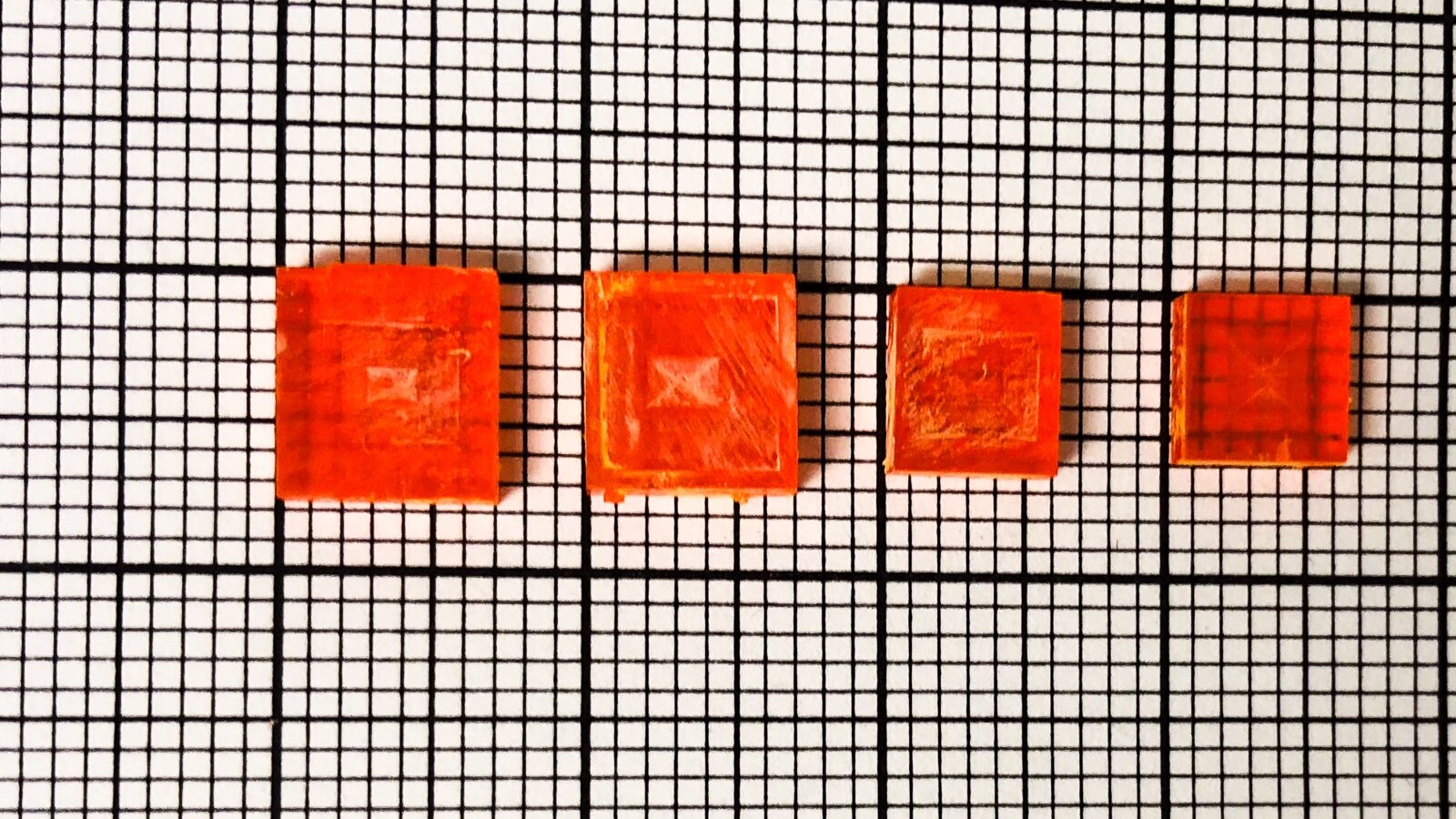
Scientists at Argonne National Laboratory have developed a new material for detecting high energy X-ray scattering patterns. The material, cesium bromide perovskite crystals, demonstrated exceptional performance and endurance under ultra-high X-ray flux. It offers a cost-effective solution for synchrotron-based X-ray research, allowing for the study of dynamic systems in real time and providing valuable insight into materials. The team aims to scale up production and optimize crystal quality for further applications, including detecting gamma rays at extremely high energies.
astronomy2 years ago

NASA discovers mysterious object 10 million times brighter than the sun.

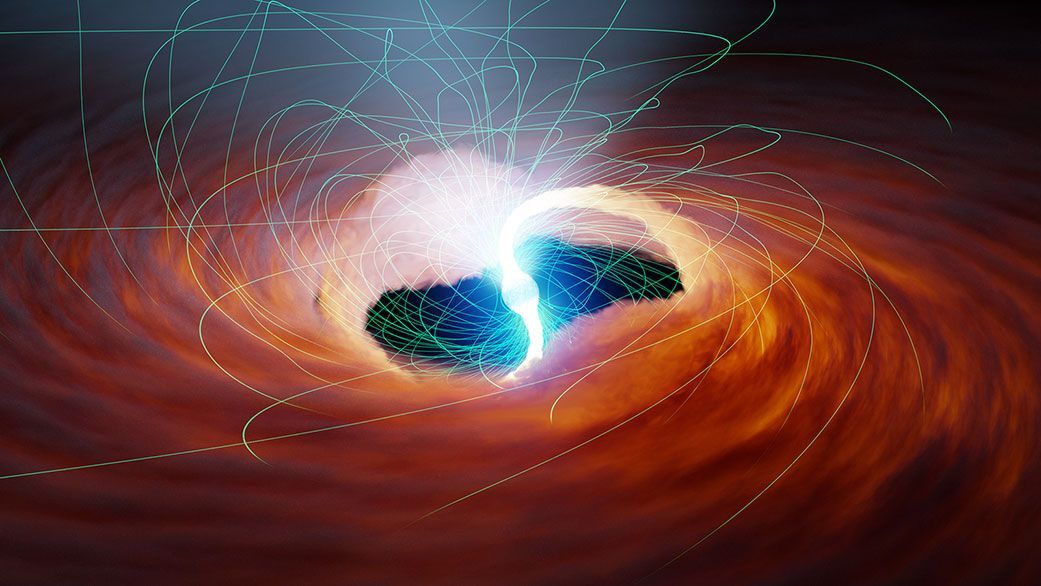
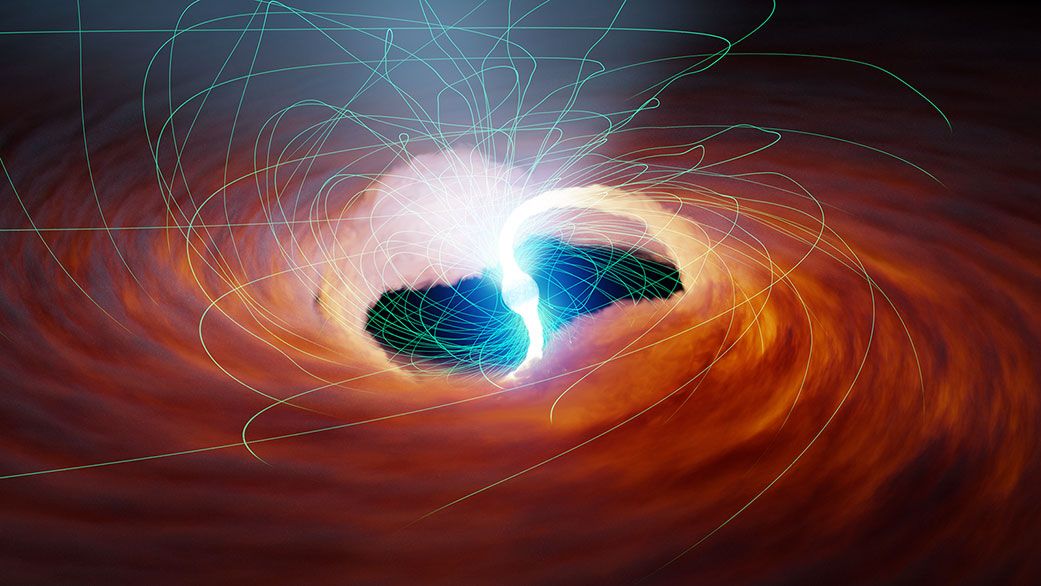
Ultraluminous X-ray sources (ULXs) are breaking the laws of physics by emitting about 10 million times more energy than the sun, which exceeds the Eddington limit. NASA's Nuclear Spectroscopic Telescope Array (NuSTAR) confirmed that one particular ULX, called M82 X-2, is definitely too bright. M82 X-2 is a neutron star that consumes around 1.5 Earths' worth of material each year, siphoning it off of a neighboring star. The research team thinks that the intense magnetic field of the neutron star changes the shape of its atoms, allowing the star to stick together even as it gets brighter and brighter.

astronomy2 years ago

NASA discovers mysterious object 10 million times brighter than the sun.

Ultraluminous X-ray sources (ULXs) are breaking the laws of physics by emitting about 10 million times more energy than the sun, which exceeds the Eddington limit. A new study from NASA's Nuclear Spectroscopic Telescope Array (NuSTAR) confirms that one particular ULX, called M82 X-2, is definitely too bright. The neutron star consumes around 1.5 Earths' worth of material each year, siphoning it off of a neighboring star, and the intense magnetic field of the neutron star changes the shape of its atoms, allowing the star to stick together even as it gets brighter and brighter.

astronomy2 years ago

NASA Discovers Ultra-Bright Cosmic Object Defying Physics

Ultraluminous X-ray sources (ULXs) are breaking the laws of physics by emitting 10 million times more energy than the sun, which exceeds the Eddington limit. NASA's Nuclear Spectroscopic Telescope Array (NuSTAR) confirmed that one particular ULX, called M82 X-2, is definitely too bright. M82 X-2 is a neutron star that consumes around 1.5 Earths' worth of material each year, siphoning it off of a neighboring star. The research team thinks that the intense magnetic field of the neutron star changes the shape of its atoms, allowing the star to stick together even as it gets brighter and brighter.

astronomy2 years ago

Unraveling the Mystery of the Brightest Gamma-Ray Burst in History.

Ultraluminous X-ray sources (ULXs) are breaking the Eddington limit, which determines how bright something of a given size can be. New observations from NASA's Nuclear Spectroscopic Telescope Array (NuSTAR) confirmed that one particular ULX, called M82 X-2, is definitely too bright. M82 X-2 is an object known as a neutron star, and the research team thinks that the intense magnetic field of the neutron star changes the shape of its atoms, allowing the star to stick together even as it gets brighter and brighter.