Bitcoin recovers above $100,000 amid geopolitical tensions from U.S. strikes on Iran, with markets showing resilience and traditional assets like gold and oil remaining stable; crypto exchanges like OKX consider U.S. IPOs, while market sentiment suggests a contained escalation rather than a broader conflict.
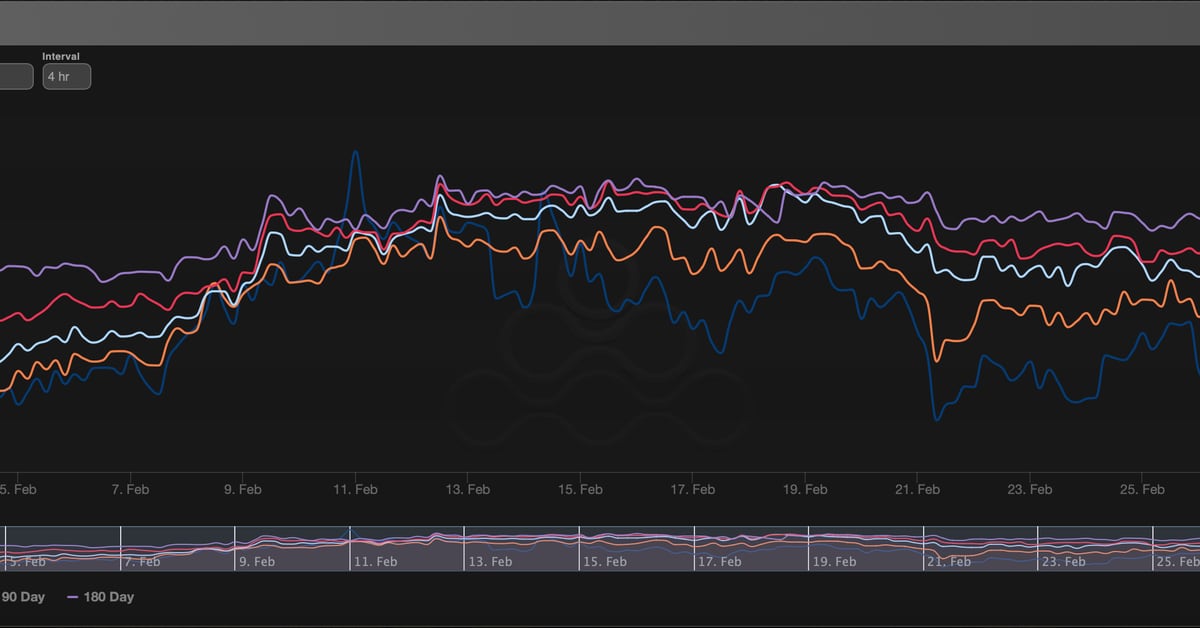
Bitcoin's implied volatility has surged to a three-month high as markets brace for the upcoming U.S. presidential election, reflecting increased risk premiums. Deribit's bitcoin volatility index rose to 63.24%, while BTC's seven-day implied volatility hit 74.4%, indicating heightened market uncertainty. This volatility spike is mirrored in traditional markets, with U.S. Treasury notes and EUR/USD also experiencing significant volatility increases. The election's outcome, particularly in swing states, is closely watched, impacting both political and financial landscapes.
Coinbase predicts that macroeconomic factors will drive the direction of digital asset markets following the bitcoin halving, citing increased geopolitical tensions, higher interest rates, and rising national debts as key influences. The report notes that previous halvings have historically kickstarted bull markets, but this cycle, the growth of investors using bitcoin as a macro hedge has reduced volatility. The correlation of altcoins to bitcoin underscores BTC's anchor role in the space, while the approval of spot exchange-traded funds has created a bifurcated pool of investors, with some viewing bitcoin as a speculative asset and others as a hedge against geopolitical risk.
Despite a recent correction in the crypto market, analysts remain bullish on digital assets, citing factors such as the upcoming Bitcoin halving, the potential impact of spot BTC ETFs, and the cleansing effect of a massive leverage wipeout. While stock market weakness may briefly weigh on crypto assets, historical patterns and consistent demand for BTC and ETH calls for longer-term expiries suggest that market participants still expect higher prices in the future.
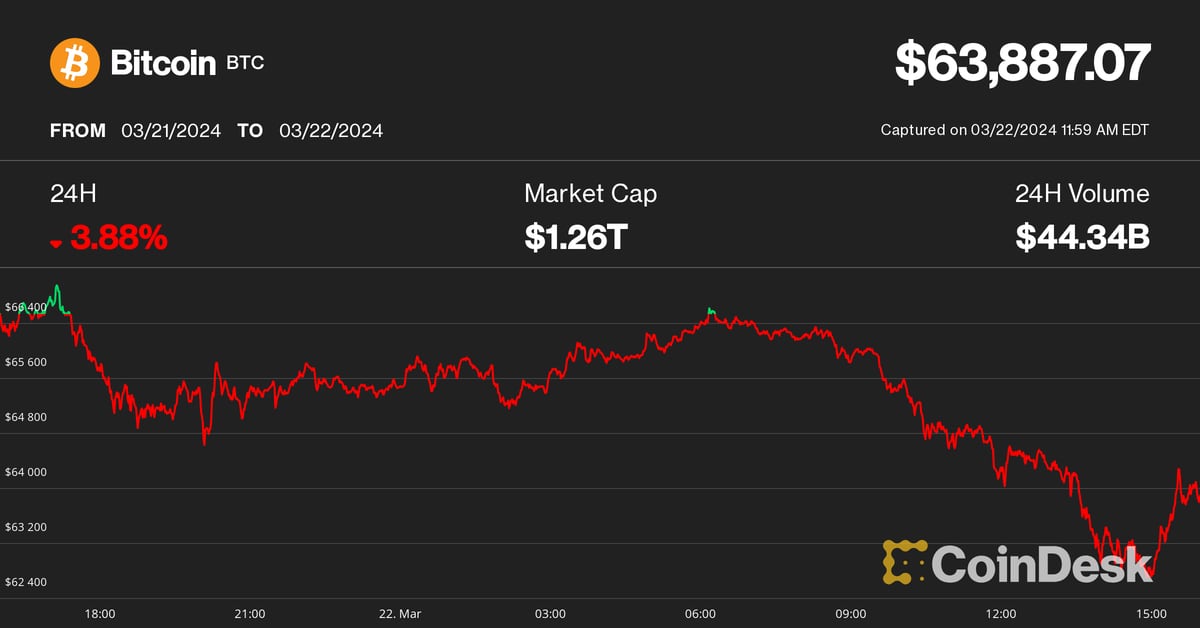
Bitcoin slipped to below $63,000 amid a broader crypto sell-off, with the price currently at $64,000, down 3.7% over the past 24 hours. Large outflows from the Grayscale Bitcoin Trust (GBTC) have contributed to the sell-off, with nearly all U.S.-listed spot bitcoin ETFs experiencing net negative flows for four consecutive days. Analysts believe that once the GBTC selling is completed, ETF inflows could pick up again due to favorable macro conditions and central bank policy.
Dogecoin surged 18% following news of Coinbase's plan to offer DOGE futures, while Bitcoin and Ethereum rebounded after a dip, with BTC and ETH rising as much as 11% in the past 24 hours. The market volatility was attributed to profit-taking and leveraged bets, but sentiment reversed after a dovish FOMC speech by U.S. Federal Reserve Chair Jerome Powell. The surge in major tokens was led by spot transactions, and the filing of DOGE futures by Coinbase was seen as a potential precursor to a spot DOGE exchange-traded fund.
Bitcoin and Ethereum experienced a 5%-6% drop before rebounding, while Solana outperformed and could potentially reach $250 after clearing a key resistance level. Bitcoin fell below $69,000 before buyers stepped in, leading to a rebound to $70,500. Other major altcoins like Ripple, Matic, and Avax also lost 5%-7% before retracing some losses. Solana's native token (SOL) showed relative strength amid the market slump, benefitting from capital rotation as Bitcoin's rally slowed. Analysts noted potential consolidation for Bitcoin and forecasted more gains for SOL, targeting its all-time record prices from 2021.
Bitcoin has surged over 40% in four weeks, nearing its record high, possibly due to the quadrennial mining reward halving. However, bitcoin call-put skews suggest investors' bullish expectations may have materialized too soon. Robinhood's wallet users will soon access swaps on Arbitrum, a layer-2 product processing transactions cheaper and faster than Ethereum. U.S. SEC Commissioner Hester Peirce expressed the need for clearer crypto rules, stating the SEC is currently in an "enforcement-only mode." Ethereum's Dencun upgrade, expected this month, will introduce blob-carrying transactions to enhance scalability and reduce transaction costs for layer-2 offerings.
Bitcoin and Ethereum experienced a 7% dip as the crypto markets cooled off after a two-month rally. Bitcoin is currently trading at $40,758, down 7% in the past day, while Ethereum is trading at $2,185, also down 7%. The global crypto market capitalization sits at $1.6 trillion, down 6% since yesterday. Altcoins such as ORDI and Pepecoin have seen significant losses, while Solana and Avalanche have attracted institutional investors. Binance USD (BUSD) temporarily lost its peg, dropping to $0.97, and most BUSD margin trading and futures contracts were closed.
Bitcoin and the overall crypto market experienced an upward tick as U.S. Federal Reserve Chair Jerome Powell expressed reserved optimism about the American economy. Powell acknowledged the impact of the pandemic on the economy and the uncertainty surrounding it. He stated that the Federal Open Market Committee is committed to bringing inflation down to 2% and will maintain a restrictive monetary policy until confident in achieving that objective. Bitcoin is currently trading at $38,728, up nearly 3% in the past 24 hours, while the total crypto market cap has increased by around 2%.
Bitcoin and Ethereum experienced a surge in value, with Bitcoin hitting an 18-month high of $38,000 per coin and Ethereum reaching an 18-month high before dipping. The rise in prices can be attributed to a surge of cash from big money investors into crypto investment products. Additionally, interest in traditional cryptocurrency stocks, such as Coinbase and MicroStrategy, also surged.
Bitcoin has risen above $37,000 despite the recent news of a $4.3 billion fine and guilty plea by Binance's CEO. The settlement may have cleared the way for the U.S. Securities and Exchange Commission (SEC) to approve a spot bitcoin ETF, as concerns about overseas manipulation of bitcoin prices may have eased. Crypto markets have been volatile but are now bouncing back, with bitcoin up 1.5% in the past 24 hours. Other cryptocurrencies like ether, Solana, and Chainlink have also seen gains.
Bitcoin slipped to just over $27,000 as worsening scenarios in the Hamas-Israel conflict dampened investor confidence in riskier assets. Crypto markets slumped over 1.6% in the past 24 hours, with Ether falling 2.2% and XRP leading a decline in alternative currencies with a 3% drop. Profit taking suggests investors are not keeping their money held up in risky bets just yet.
The ongoing Israeli-Hamas war in the Middle East has raised concerns among traders that it could impact the crypto markets, potentially leading to a short-term decline in riskier assets like bitcoin. The conflict has already caused a slump in crypto markets, with traders factoring in rising oil prices and a drop in traditional equities. However, crypto markets have shown early signs of resilience, which may instill confidence among investors. The impact of geopolitical struggles on the crypto market was previously demonstrated during tensions between Russia and Ukraine in early 2022. Traders suggest keeping an eye on oil and energy market changes to gauge the direction of bitcoin.
Sam Bankman-Fried, founder of Alameda Research and FTX exchange, reportedly lost millions of dollars in the early days of the trading firm. Bankman-Fried raised nearly $170 million from investors in the Effective Altruism community, intending to invest in the crypto markets. However, Alameda suffered significant losses, with over $500,000 lost daily for a month. Poor fund management and unsuccessful trading strategies contributed to the losses. The situation improved when Gary Wang and Nishad Singh joined the firm, implementing a successful quantitative trading system and managing the company, leading to the establishment of FTX.