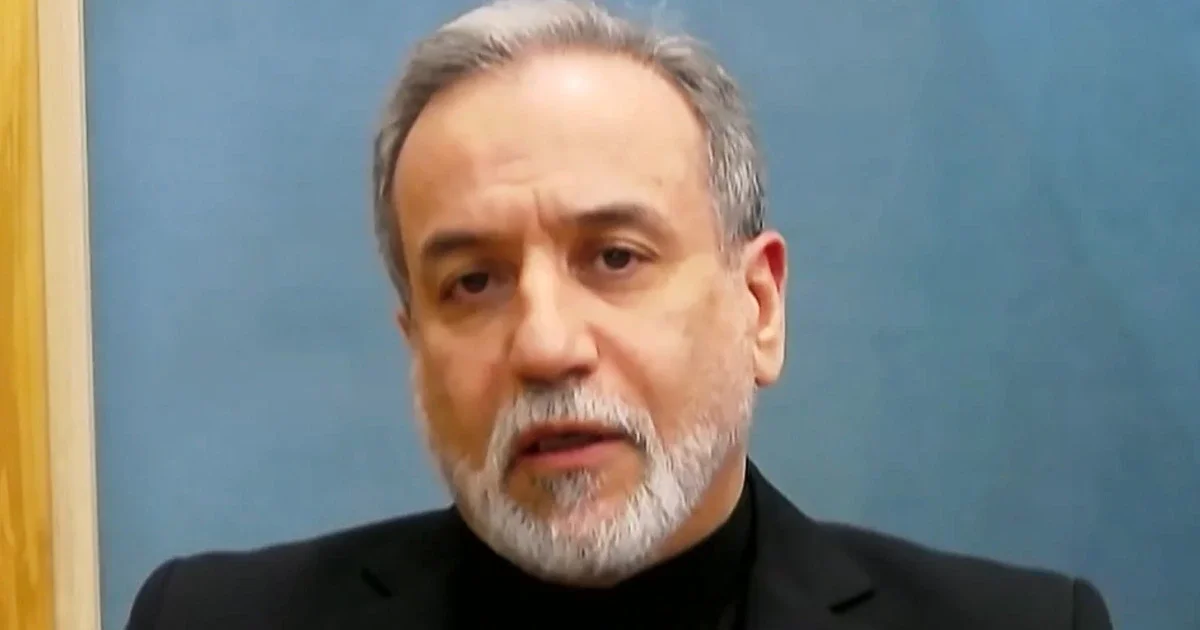
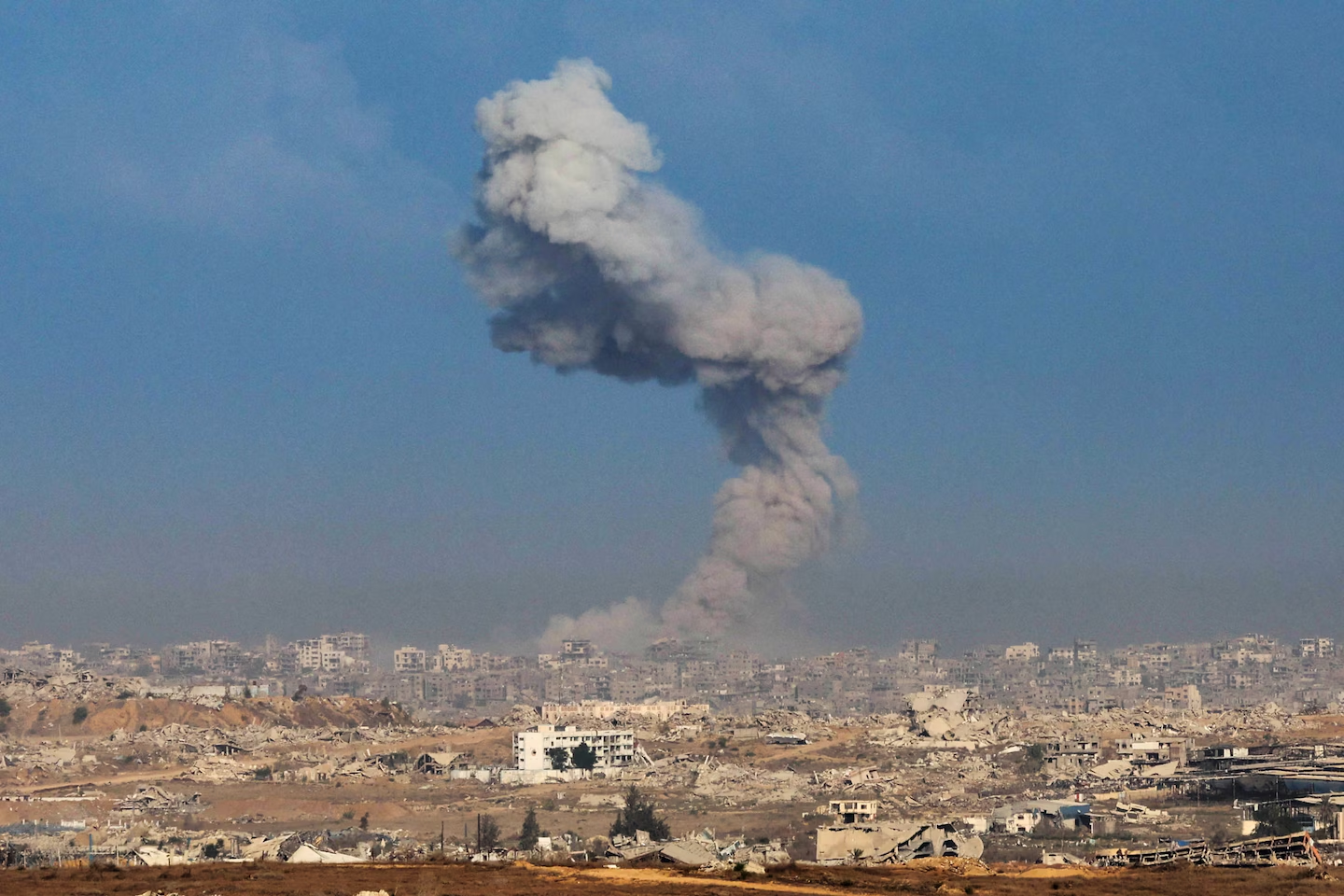
Iranian Foreign Minister Abbas Araghchi said Tehran is ready to counter a possible U.S. ground invasion, rejected a ceasefire and any renewed talks with Washington, as U.S.-Israeli strikes persist, with the piece also noting leadership succession rumors following Ayatollah Khamenei's death.
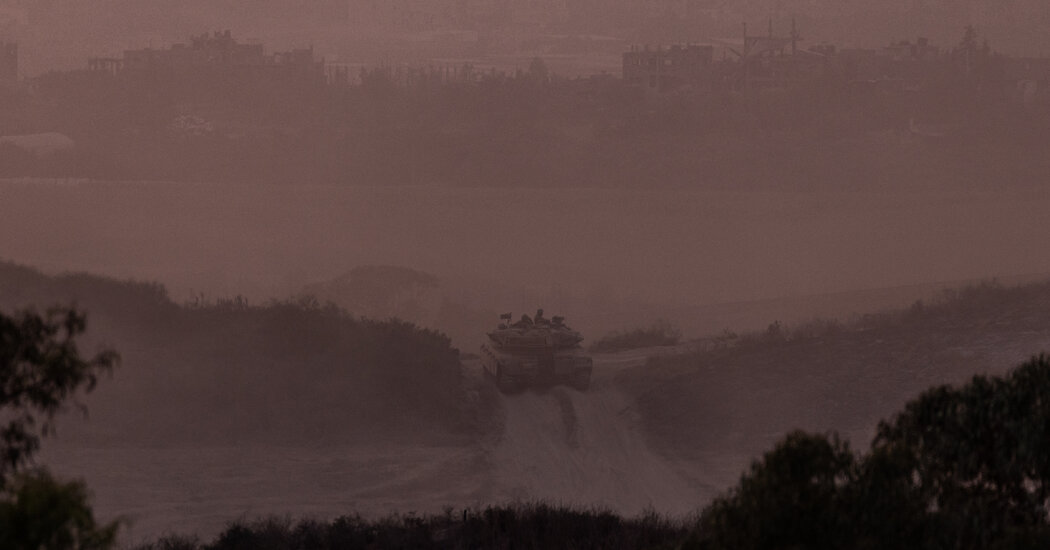
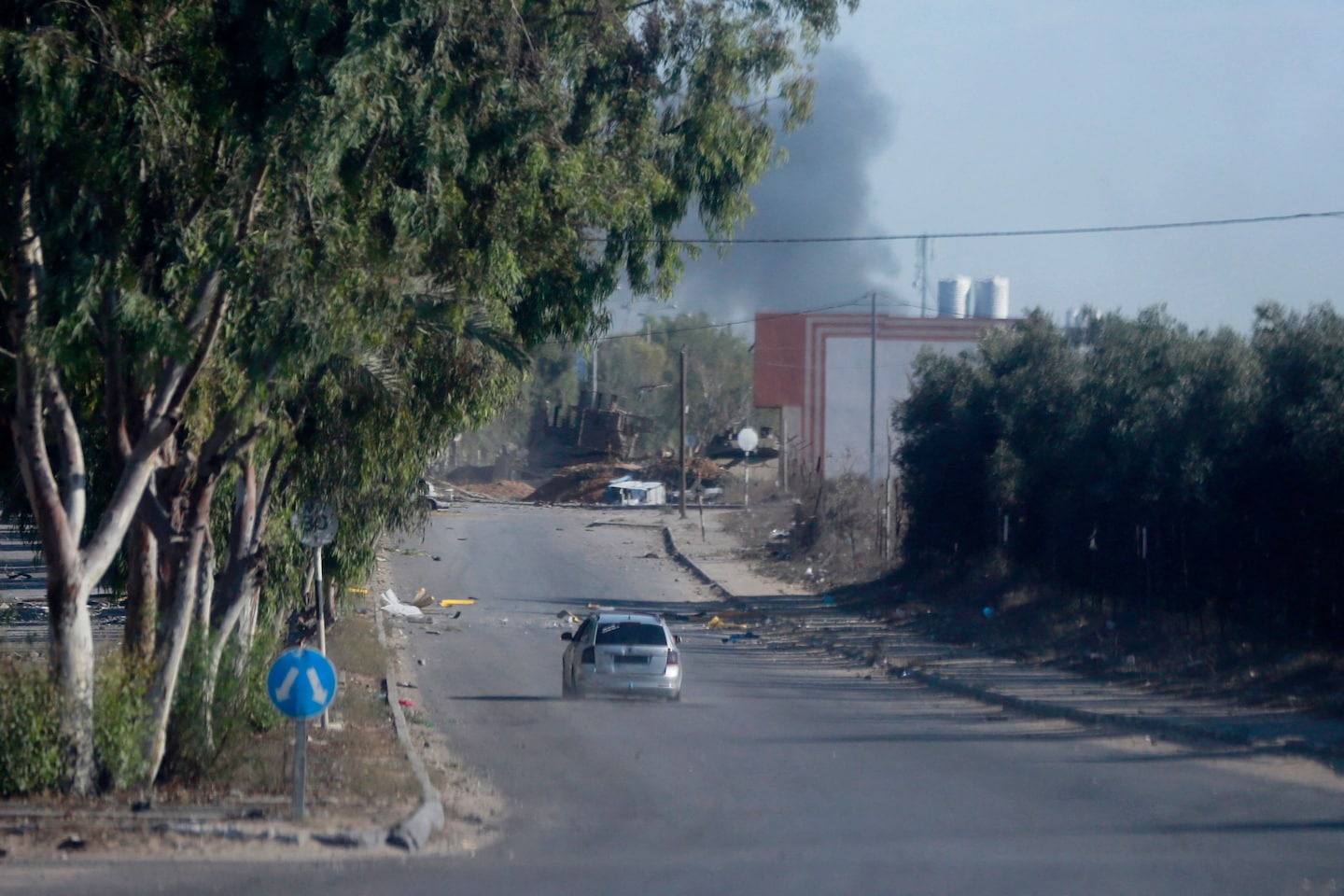
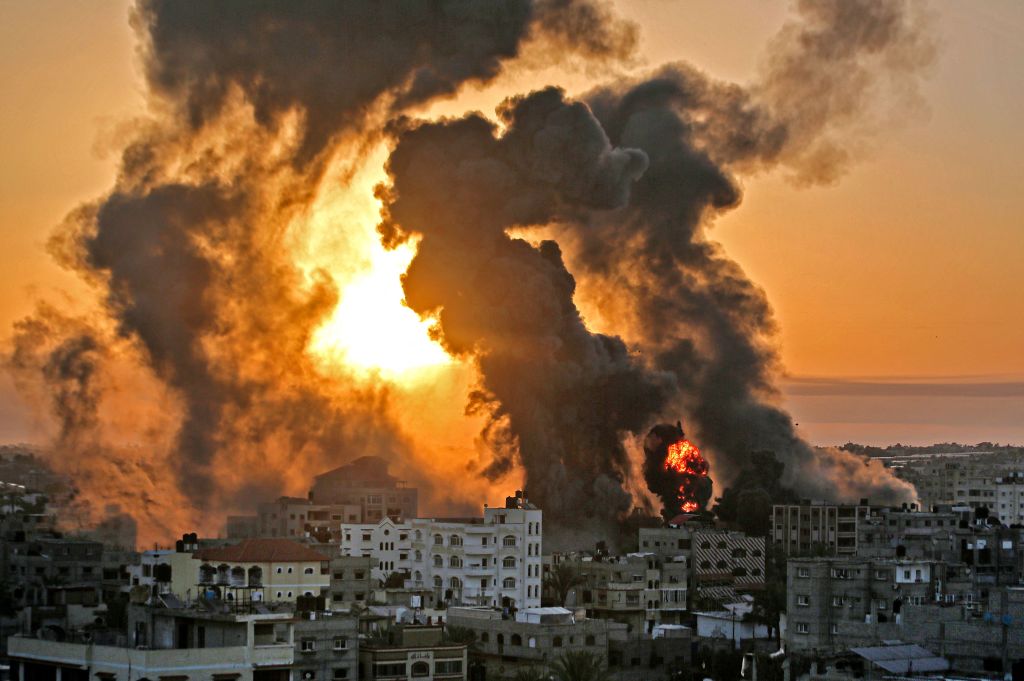
Israeli troops have entered the second day of their ground invasion of Gaza City, with many residents fleeing amid widespread network disruptions causing a communications blackout.
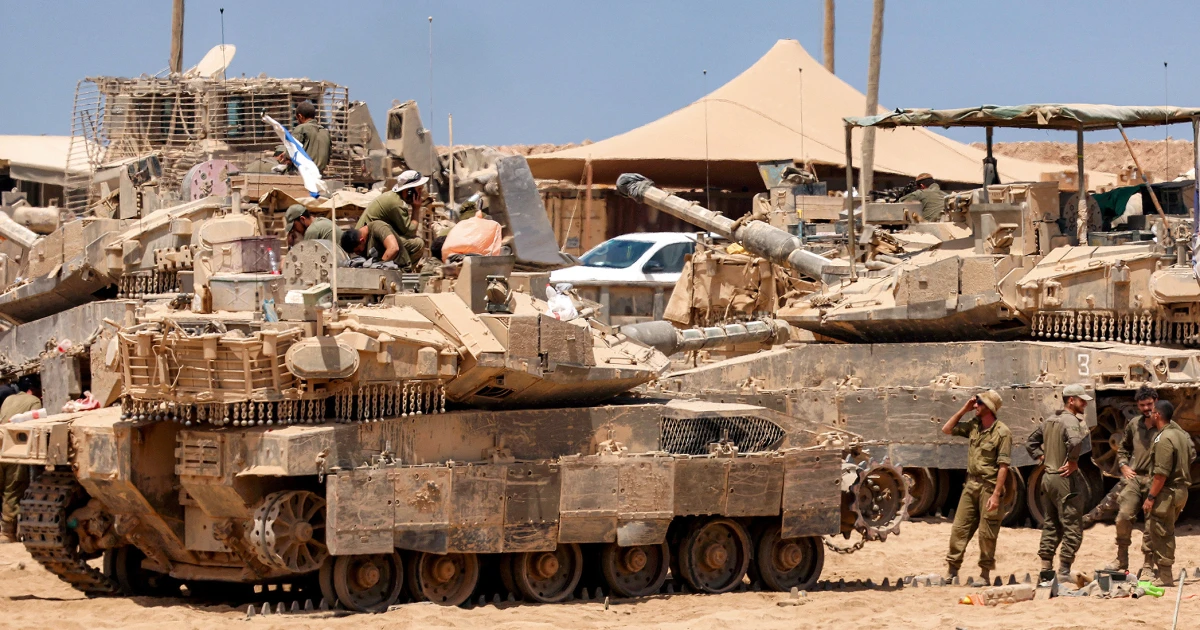
Commercial satellite images indicate Israel is preparing for a possible ground invasion of Gaza, with troop movements near the border, amid ongoing tensions and discussions about military and humanitarian strategies. Israeli Prime Minister Netanyahu has expressed intentions to take control of Gaza to remove Hamas, while recent US-Israel relations have been tense, involving debates over humanitarian aid and the potential for a broader military operation. The situation remains complex, with international pressure and the risk of escalation.
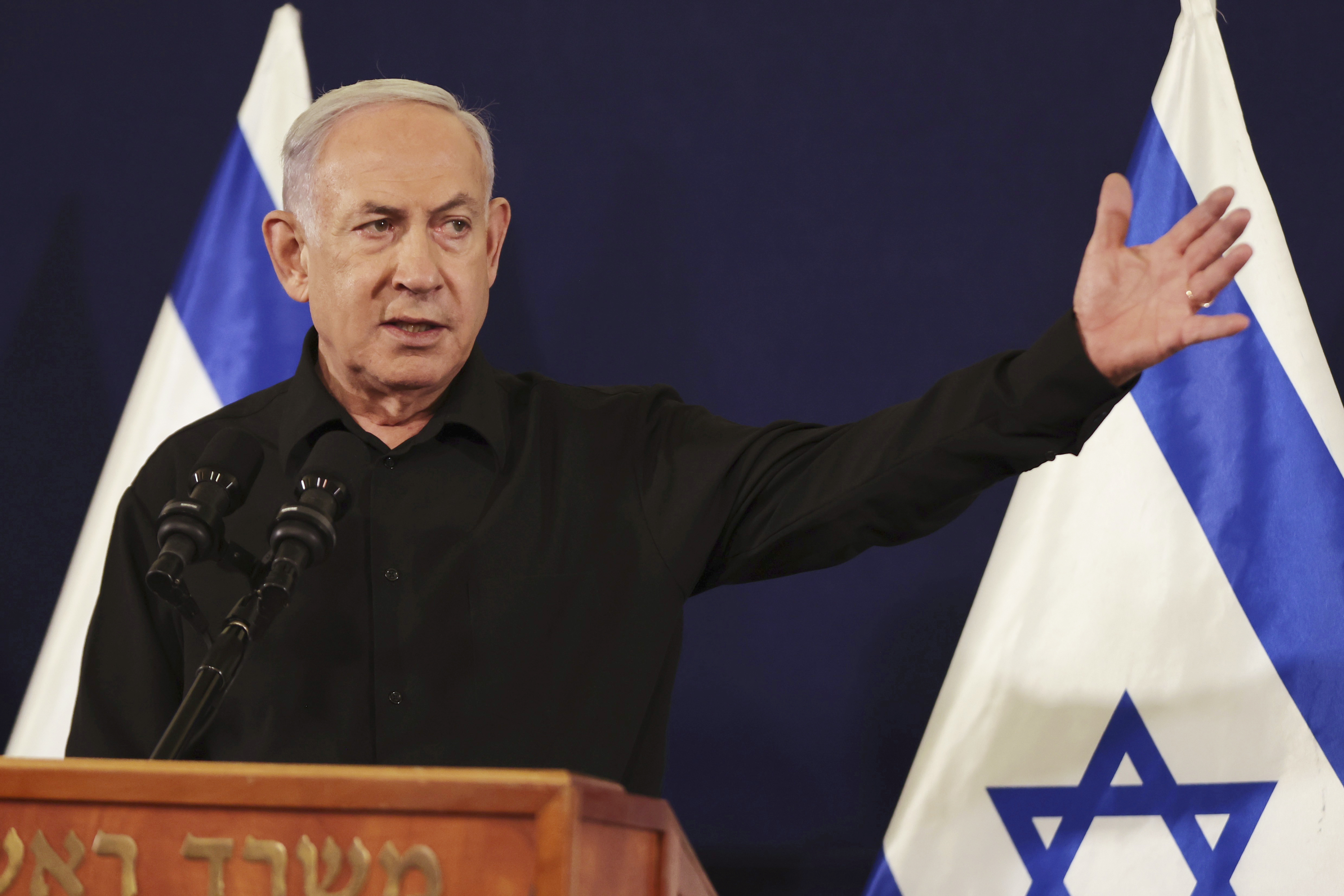
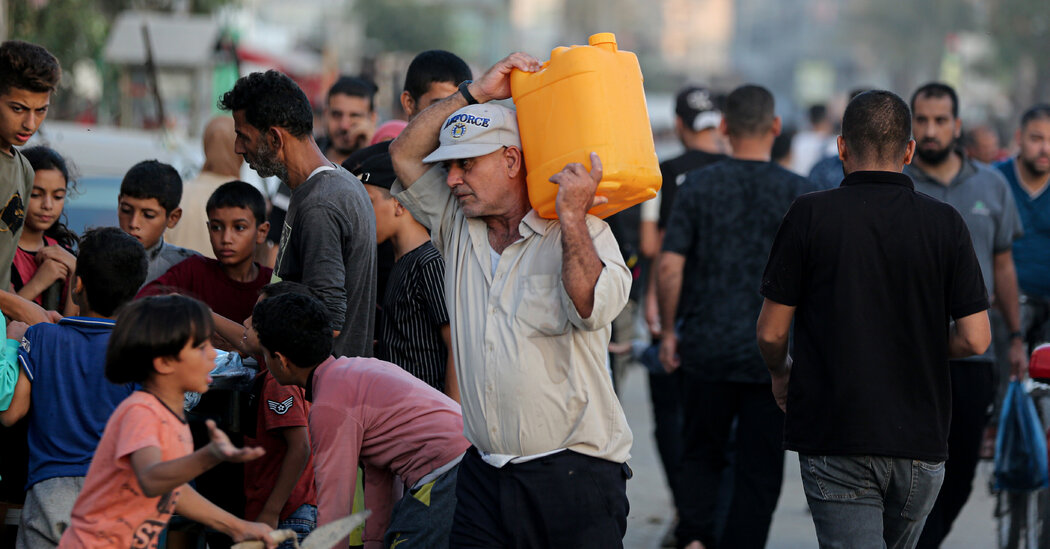
Israeli Prime Minister Benjamin Netanyahu stated that Israel will not yield to international pressure to cancel its plan for a ground invasion of Rafah, the southernmost city in Gaza, where over a million Palestinians seek refuge from the ongoing war. The city has been heavily bombarded, leaving many displaced and struggling to find food and water. Meanwhile, thousands of anti-government protesters in Tel Aviv called for an immediate election, expressing discontent with the government's handling of the situation.
Israel's Prime Minister Benjamin Netanyahu announced plans for a ground invasion of Rafah, where over 1.3 million Palestinians, mostly refugees, are sheltering, following recent deadly bombardments. The assault has raised concerns about the safety and well-being of the civilian population, prompting discussions on the history of Palestine and the future prospects for the region.
Hamas has turned the streets of Gaza into a "deadly maze" for Israeli troops due to its knowledge of the terrain and extensive tunnel network. The Israeli military's death toll is already almost double that of the 2014 ground offensive, with 110 soldiers killed since the start of the invasion in late October. Hamas fighters are taking advantage of their familiarity with the land and frequently ambushing Israeli forces. The expanded scope of the operation has resulted in higher troop casualties, and the Israeli military has yet to find a solution for the tunnels.
Israeli Prime Minister Benjamin Netanyahu hinted that a possible deal to free Israeli hostages trapped in Gaza could be facilitated by Israel's ground offensive in the region. While declining to confirm details, Netanyahu acknowledged that talks were taking place with the involvement of Qatar, Egypt, and the U.S. Israeli President Isaac Herzog also confirmed behind-the-scenes negotiations but stated that nothing substantial was currently on the table. Israel's ground invasion into Gaza followed a Hamas-led attack that resulted in Israeli casualties and hostages. The conflict has led to a significant number of civilian casualties, with Israel facing international scrutiny. Netanyahu emphasized that Israel intends to destroy Hamas' military and governance capabilities while minimizing civilian casualties. Calls for a ceasefire have been met with resistance, as Hamas is seen as unwilling to abide by one and is perceived as seeking the eradication of Israel.
The Israeli army has entered the "heart of Gaza" and trapped Yahya Sinwar, the senior-most leader of Hamas, in an underground bunker. Israeli Defense Forces (IDF) soldiers are determined to destroy the bunker and any infrastructure operated by the terrorists. Israeli Prime Minister Benjamin Netanyahu claimed that thousands of terrorists have been killed in the Gaza Strip, and the IDF is progressing with a force that Hamas has never known. Israel has vowed to wipe out Hamas, and the operation will continue until Hamas is gone.
U.S. Secretary of State Antony Blinken is set to urge Israel to implement "humanitarian pauses" in Gaza, while Israel's raids have escalated into a full-fledged ground invasion with troops engaging in "face-to-face" combat with Hamas militants. Hezbollah leader Hasan Nasrallah's upcoming speech may shed light on whether the group will escalate its attacks on Israel.
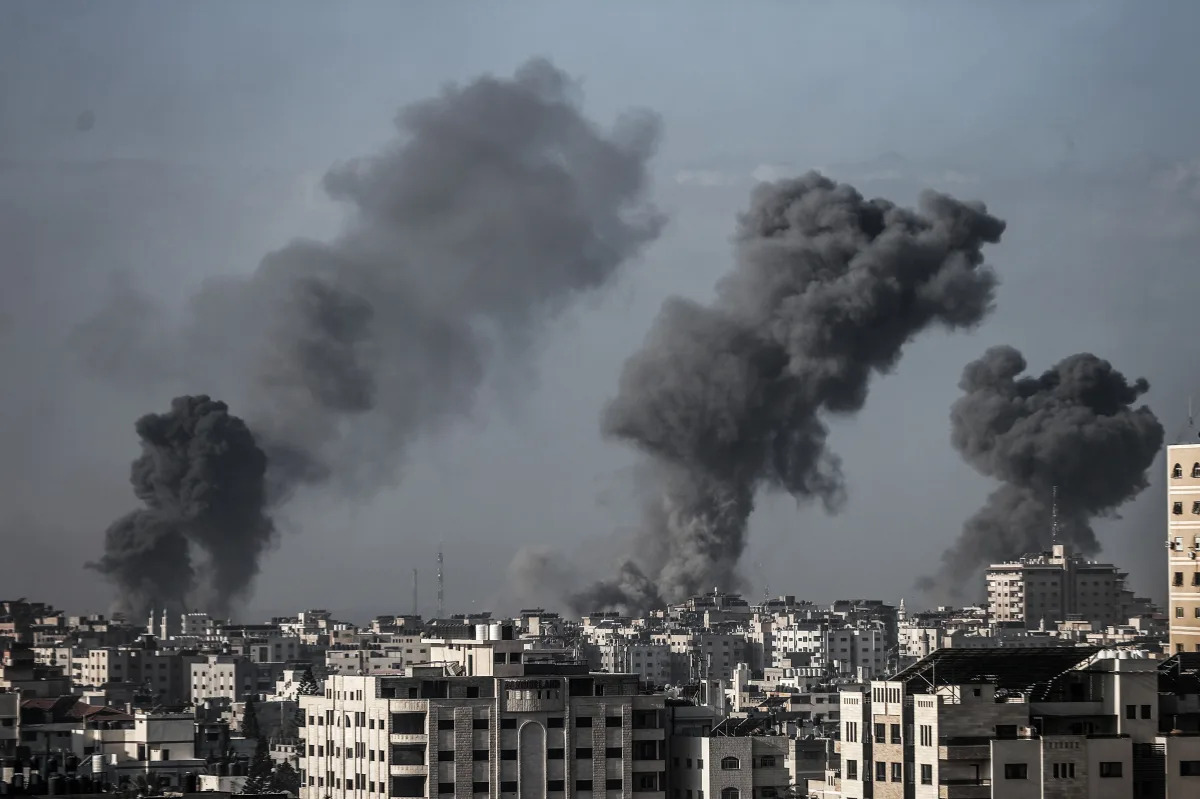
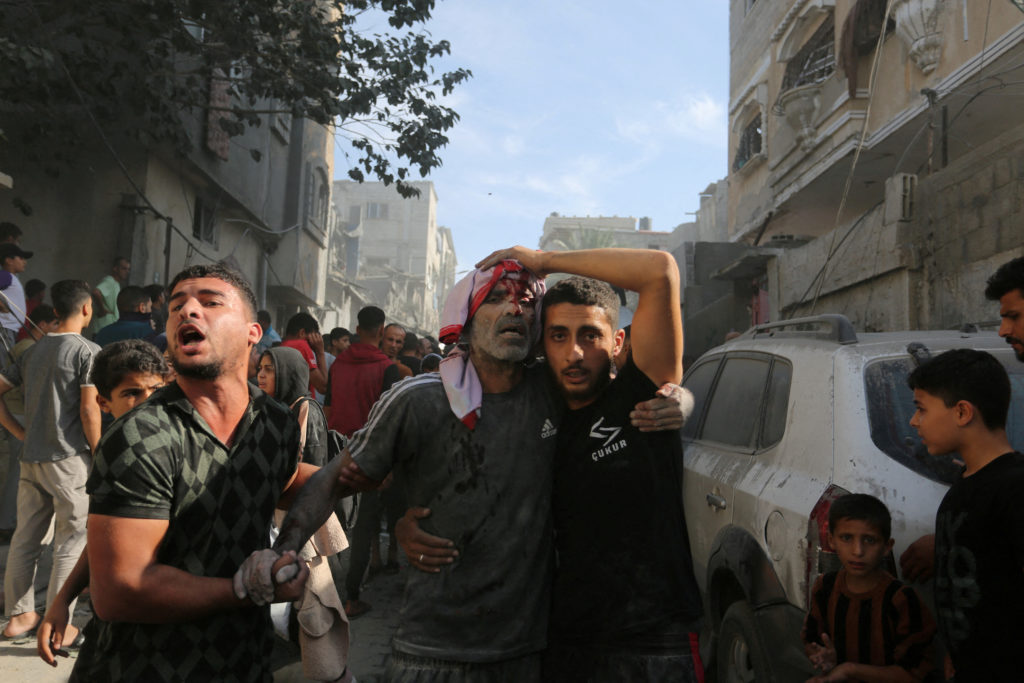
Israeli troops have entered Gaza City and are engaged in close-quarters combat with Hamas as part of a ground invasion. The Israeli military has encircled the city and is targeting Hamas outposts, command centers, and launching positions. Despite international pressure for a ceasefire, Israeli officials have rejected calls, stating their goal is to dismantle Hamas. The death toll in Gaza continues to rise, with over 9,000 people killed in Israeli airstrikes, and the humanitarian situation is dire, with limited supplies of fuel, food, and water. The Biden administration is pushing for a humanitarian pause in the fighting.
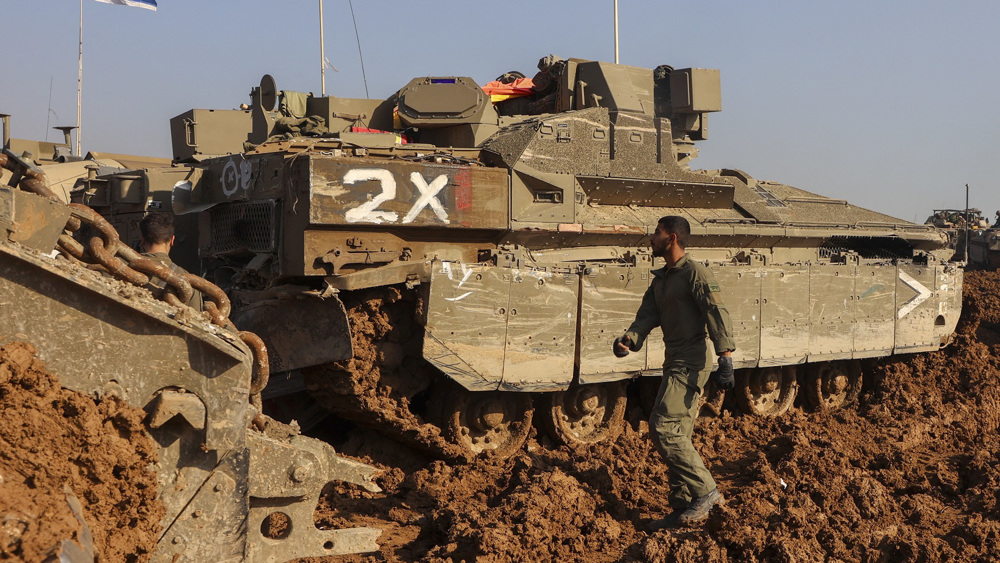
Israeli ground troops and tanks are advancing further into the Gaza Strip, nearing the main city, as humanitarian officials warn of a growing catastrophe for the two million Palestinian civilians in the area. The Israeli military has provided limited details about its ground invasion, stating only that fierce battles are taking place against Hamas. Prime Minister Benjamin Netanyahu has dismissed the possibility of a ceasefire, while the UN's chief official for humanitarian affairs describes the horror experienced by people in Gaza as increasingly desperate. The death toll in Gaza has risen to 8,525, including 3,542 children, with 21,543 people wounded and 2,000 still buried under rubble.
Israeli Prime Minister Benjamin Netanyahu rejects calls for a ceasefire as Israeli forces move deeper into Gaza ahead of a full-scale ground invasion. The death toll continues to rise, with over 8,000 reported dead in Gaza and over 1,400 killed in Hamas attacks on Israel. The United Nations warns of diminishing civil order in Gaza as people break into warehouses for survival essentials. Concerns grow over the potential for a widening war, and the US confirms that less than 10 American hostages are being held by Hamas. Fuel shortages in Gaza cripple hospitals and infrastructure, while a breakdown of civil order halts aid distribution centers. A German-Israeli festivalgoer, Shani Louk, is confirmed dead after being kidnapped by Hamas, and an IDF soldier, Ori Megidish, is released and reunited with her family.
Military experts discuss Israel's tactics in the ongoing conflict with Gaza. Israel's ground invasion plans have reportedly changed to use more methodical tactics, with a focus on minimizing casualties. The airstrikes have been devastating, but the ground operation is being conducted gradually to gather intelligence and avoid giving Hezbollah and Iran a pretext to escalate. Israel aims to destroy Hamas completely, but experts caution that eradicating the deeply entrenched movement and resolving the problems in Gaza will not be achieved solely through military means.
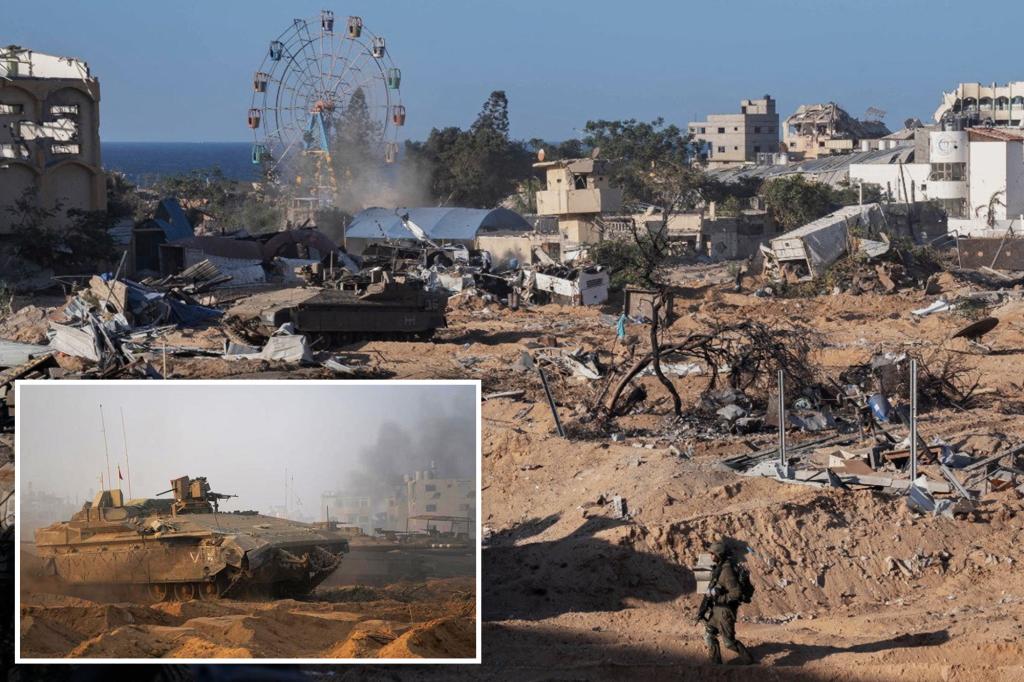
Israeli tanks and soldiers have made their deepest penetration into Gaza since the conflict began, reaching the outskirts of Gaza City and the main highway. Ground troops called in airstrikes on Hamas targets, while Hamas released a video of three hostages delivering a statement to Prime Minister Benjamin Netanyahu. The Israeli military confirmed the presence of infantry, armor, engineering, and artillery forces inside Gaza. The incursion marks a significant escalation in the conflict, with casualties reported and ongoing fighting between Israeli forces and Hamas fighters.
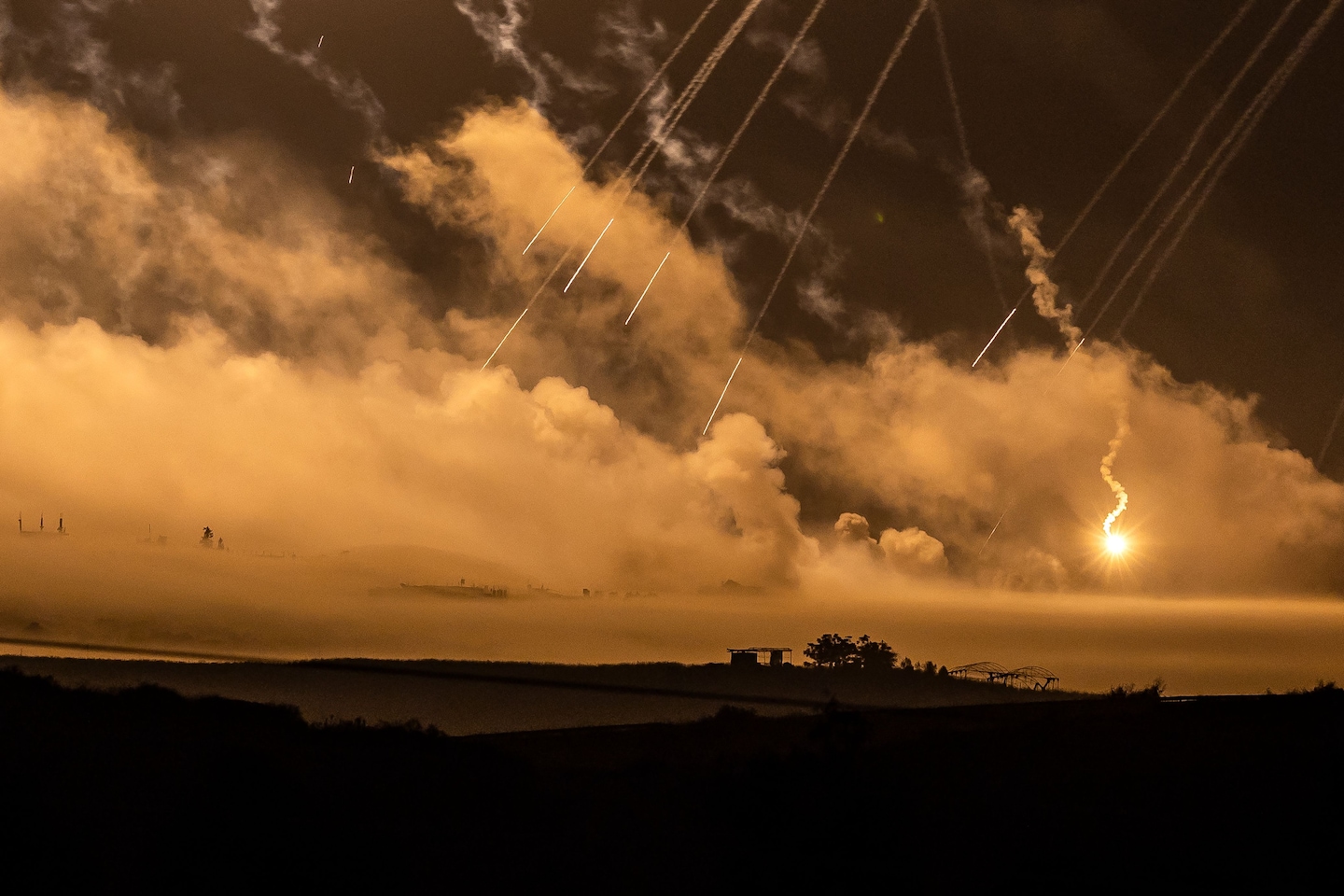
The Israeli military is expanding its ground invasion of northern Gaza, targeting Hamas rocket and anti-tank positions. Israeli forces have eliminated four senior Hamas commanders and continue to urge Palestinians in the area to flee south. The US Navy's Dwight D. Eisenhower Carrier Strike Group has entered the Mediterranean Sea to reinforce warnings against Middle East powers intervening in the conflict. The Biden administration is taking action to combat the rise of anti-Semitism on US college campuses. Protests supporting Hamas and condemning Israel have erupted worldwide, including on American college campuses. The White House condemns the recent anti-Semitic protests in Russia. The Israeli Defense Forces have expanded their ground attack in Gaza, targeting Hamas posts and terrorists.