Oracle's stock experienced volatility after clarifying its AI cloud server rental business's gross margin, which it states is 35% over a contract's life, contrasting with a recent report of 14%. The company raised its 2030 revenue forecast for Oracle Cloud Infrastructure from $144 billion to $166 billion, reflecting strong growth prospects, but its stock fell slightly after the announcement. Oracle also highlighted the financial impact of data-center expenses during rapid expansion and maintained optimistic long-term growth projections, driven by a large backlog including a significant contract with OpenAI.
Oracle shares rose after announcing that its AI cloud infrastructure projects could achieve a gross margin of 35%, alleviating concerns about profitability. The company expects to reach $225 billion in annual revenue by 2030, surpassing analyst estimates, with a projected $21 per share in profit, driven by large deals with major AI players like OpenAI and Meta.
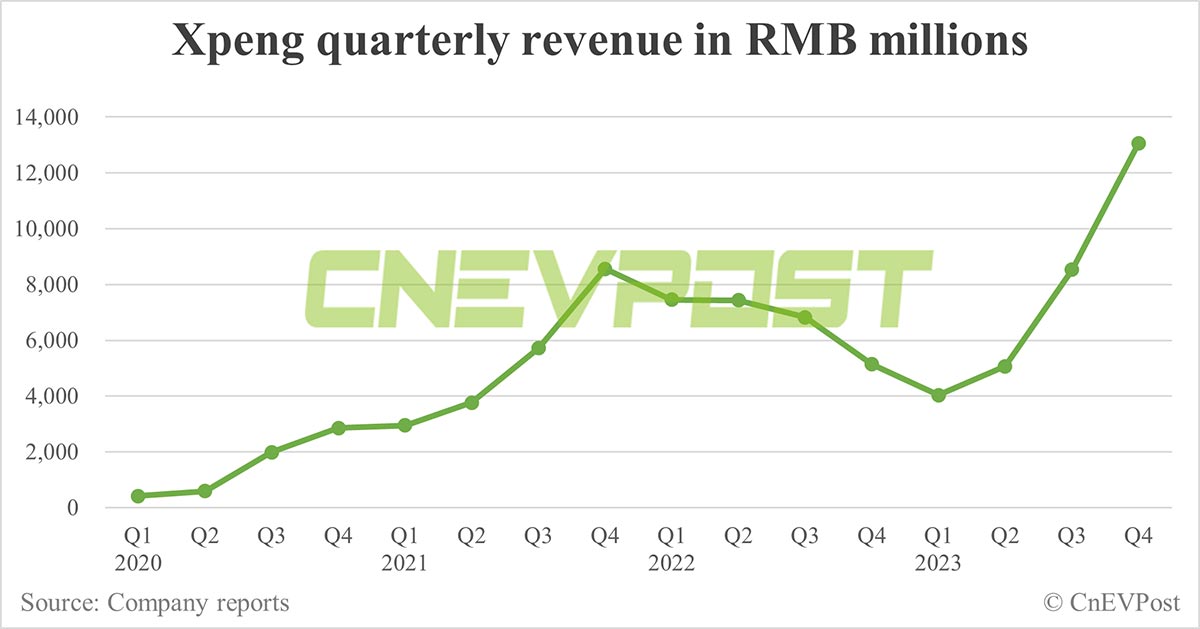
Xpeng reported record revenue in Q4 2023, with a 153.9% increase year-on-year, and a positive gross margin of 6.2%. The company delivered a record 60,158 vehicles in Q4 and saw a significant decrease in net loss. Xpeng's first-quarter delivery guidance is between 21,000 and 22,500 units, with an expected revenue range of RMB 5.8 billion to RMB 6.2 billion. Additionally, the company plans to launch a new brand targeting the lower-priced market within the next month.
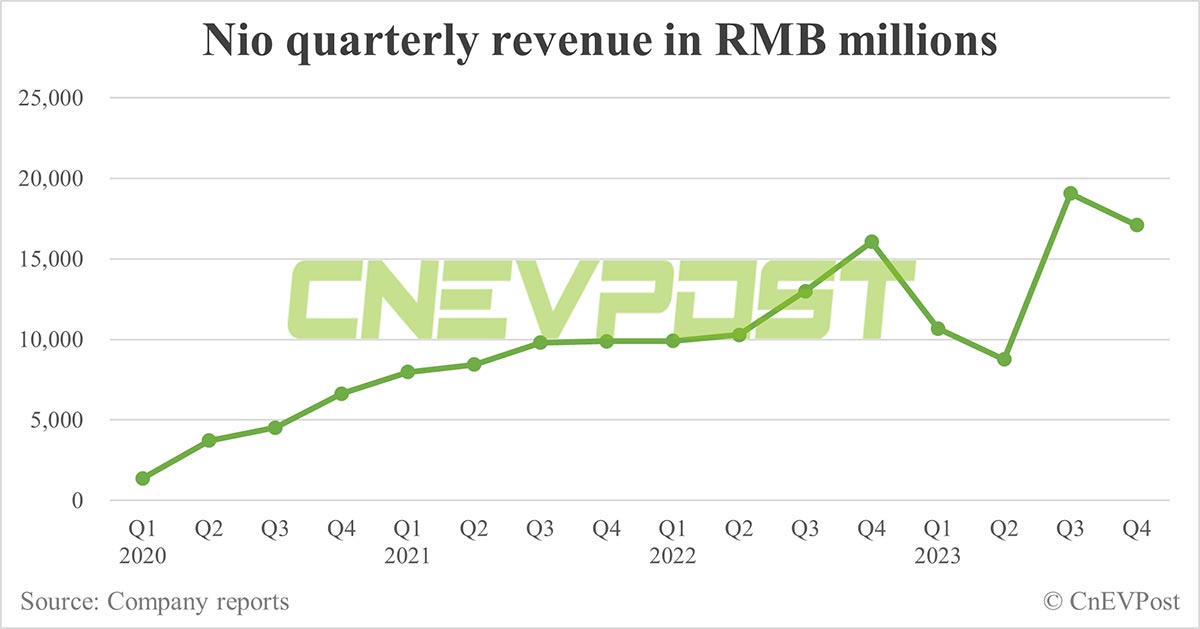
Nio's fourth-quarter revenue surpassed expectations despite a decline in vehicle deliveries, reaching RMB 17.1 billion. However, its gross margin fell short at 7.5 percent, missing analysts' 10.2 percent estimate. The company reported a net loss of RMB 5.37 billion, with a non-GAAP adjusted net loss of RMB 4.8 billion. Nio guided first-quarter vehicle deliveries to be in the range of 31,000 to 33,000 units and expects a revenue range of RMB 10.499 billion to RMB 11.087 billion. Additionally, new spy shots of the Nio Alps model have been revealed as the company aims to compete with the Tesla Model Y.
Tesla's shares have experienced a decline due to CEO Elon Musk's cautious tone on delivery expectations and manufacturing difficulties, as well as the company's Q3 financial report falling below analysts' expectations. Tesla's price cuts have also impacted its profit margins. A comparison of gross and operating margins with other automakers shows a decline for Tesla, which was previously known for its high profit margins. It remains to be seen if other manufacturers will show similar declines in their upcoming quarterly results.
Tesla's quarterly gross margin dropped to a more-than four-year low due to aggressive price cuts, missing analysts' expectations. However, the electric car maker remains committed to its annual production target, indicating strong demand. Tesla plans to continue cutting production costs to boost profits and has made upgrades to its factories in the third quarter to achieve this. Despite a reduction in raw material costs, margins fell due to underutilization of new factories and increased operating expenses. The company's shares were volatile in extended trading, and while it has begun pilot production of the Cybertruck, CEO Elon Musk cautioned that it will take time before it becomes a significant positive cash flow contributor.
YETI Holdings, Inc. reported its financial results for the second quarter of 2023, with net sales decreasing by 4% but adjusted net sales increasing by 2%. The company's gross margin continued to expand, and it raised the low end of its full-year adjusted net sales outlook range while increasing its full-year adjusted EPS outlook. YETI's performance was driven by strong demand for hydration solutions, including coolers and drinkware. The company is also focused on innovation and has a pipeline of new products in development. Despite the impact of product recalls, YETI remains optimistic about its growth prospects and has strengthened its balance sheet with a growing cash balance and expanded credit facility.
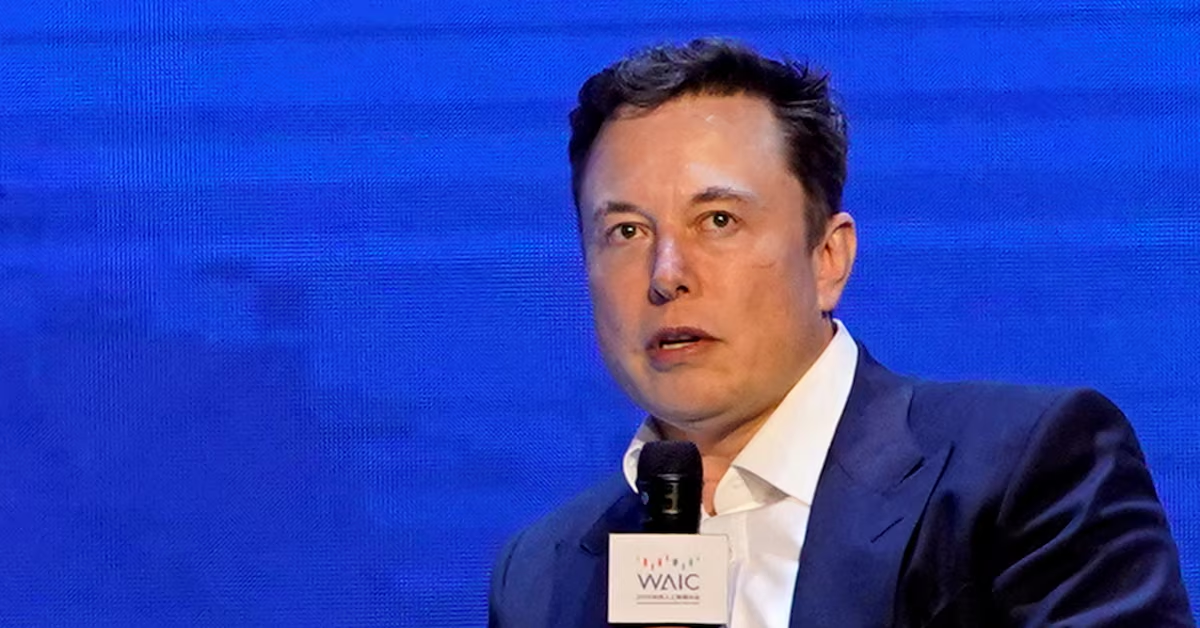
Tesla CEO Elon Musk indicated that the company may continue to cut prices on electric vehicles in response to "turbulent times," despite the impact on the company's margins. Tesla has been reducing prices and offering incentives to combat competition and economic uncertainty. Musk stated that it makes sense to sacrifice margins to increase vehicle production, and if macroeconomic conditions remain unstable, further price reductions may be necessary. The price cuts have affected Tesla's automotive gross margin, which fell to 18.1% in Q2 2021. However, Tesla remains focused on reducing costs, new product development, and achieving its delivery targets. Musk also mentioned that Tesla is in talks to license its "full self-driving" software to a major automaker.
Deutsche Bank analyst Emmanuel Rosner expects Tesla to deliver 448,000 vehicles in Q2, citing strong momentum in China, where the company has registered close to 130,000 units through mid-June. Rosner also noted solid North America Model Y deliveries, but expects a sequential volume decline for Model 3. He lifted his Q2 revenue projection to $24.0 billion and updated his gross margin growth expectations to negative 140 basis points. Tesla's stock is up 105% on the year, but fell 1% in Monday trading after a Goldman Sachs downgrade.
Tesla CEO Elon Musk has informed executives that he must personally approve all new hires, including contractors, cautioning them to "think carefully" before submitting requests. Last month, the company posted its lowest quarterly gross margin in two years, missing market estimates, as it slashed prices aggressively in markets including the United States and China to spur demand and fend off rising competition.
Enphase Energy reported Q1 revenue of $726.02M, beating estimates, and non-GAAP EPS of $1.37, beating estimates by $0.15. The company also provided Q2 outlook, with revenue expected to be within a range of $700.0 million to $750.0 million, and GAAP gross margin to be within a range of 41.0% to 44.0%. Enphase Energy's shares fell by 14.43%.