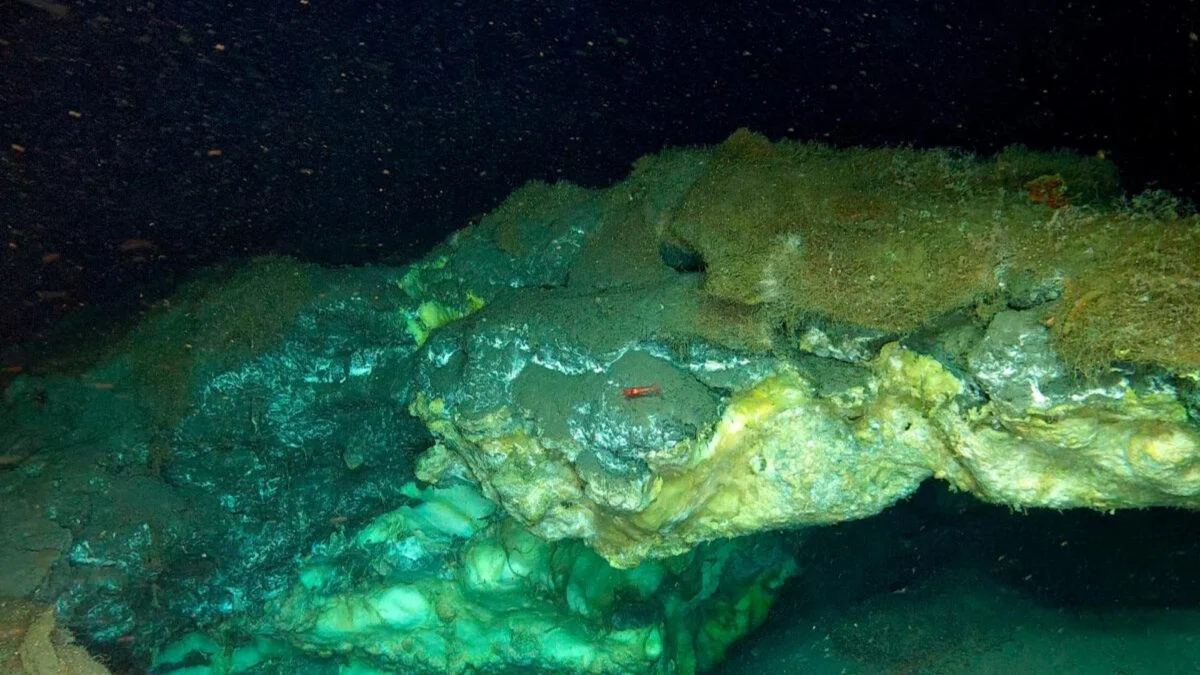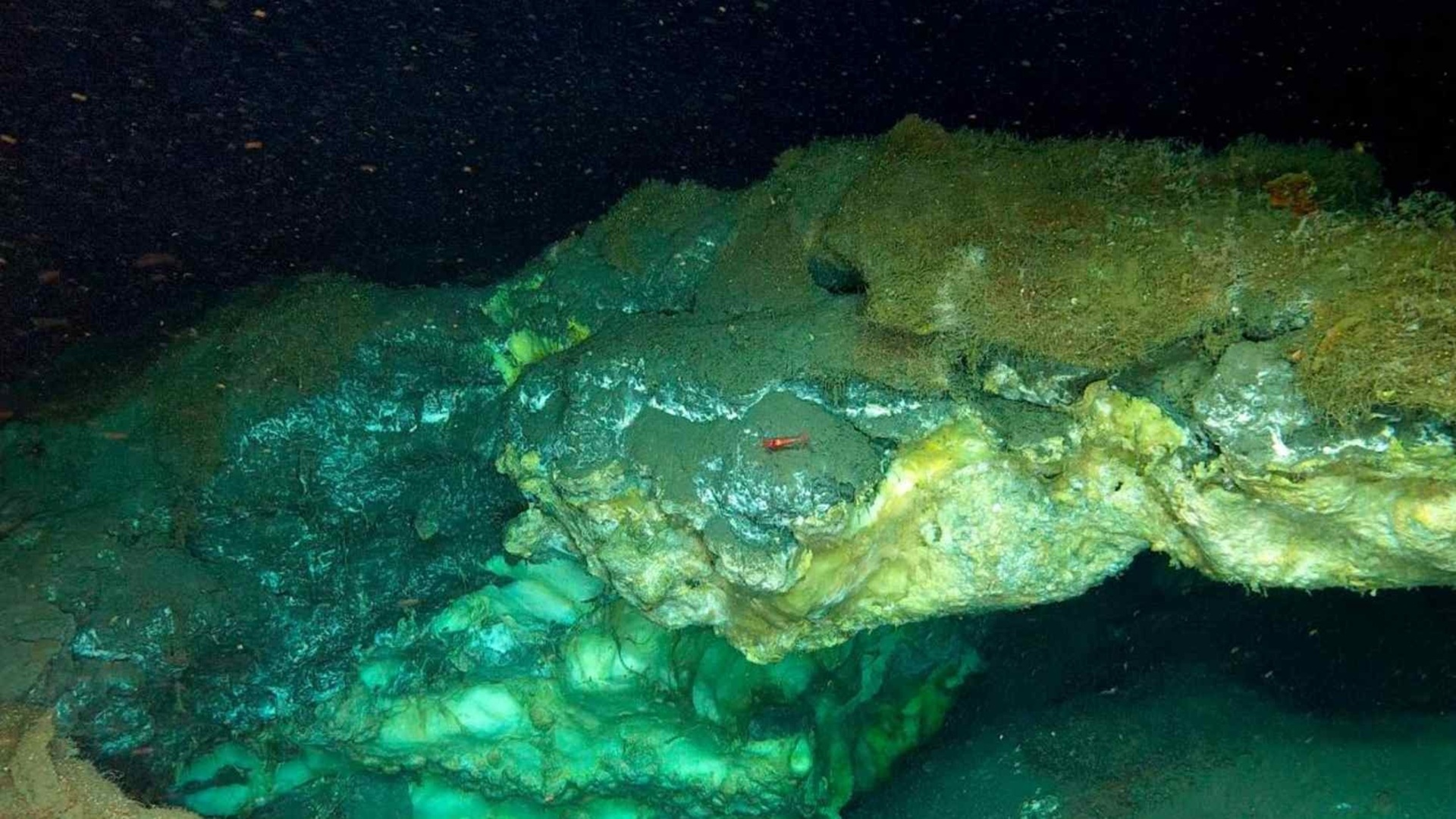
A remotely operated vehicle discovered the deepest known gas hydrate seepage at nearly 3,640 meters in the Arctic, revealing a vibrant ecosystem in an area previously thought to be nearly sterile, with significant implications for our understanding of oceanic carbon storage and deep-sea biodiversity.
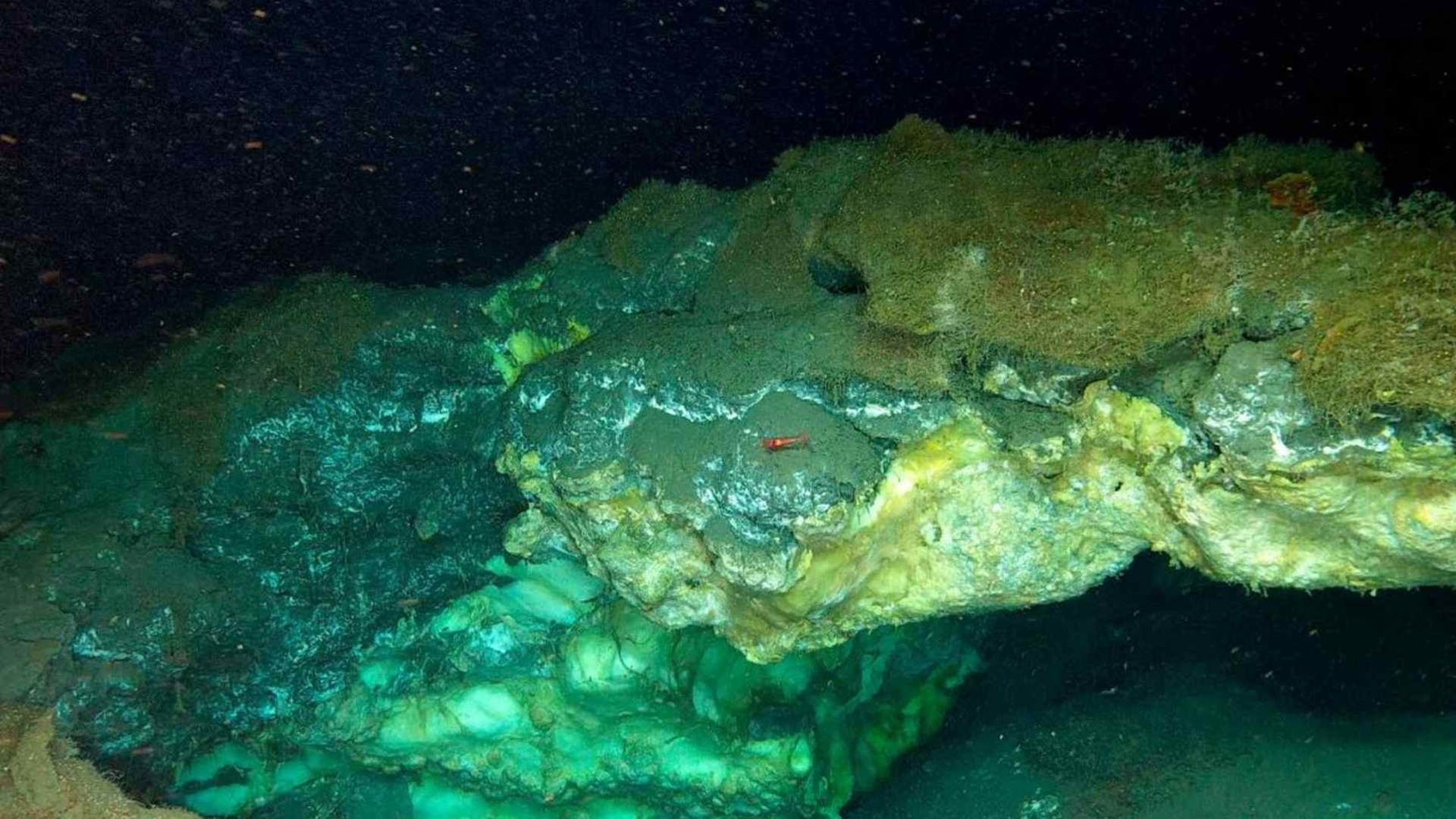
A remotely operated vehicle discovered the deepest cold seep of gas hydrate at nearly 4,000 meters in the Greenland Sea, revealing a thriving ecosystem in an environment previously thought barren, with significant implications for understanding the Arctic's carbon cycle and biodiversity.
Scientists discovered the deepest known Arctic gas hydrate vent at nearly 12,000 feet, hosting a diverse ecosystem of chemosynthetic creatures and providing new insights into Arctic geology and biology, challenging previous understanding of hydrate formation and highlighting the region as an ultra-deep natural laboratory.