
The Hubble Space Telescope has captured a rare edge-on view of the spiral galaxy UGC 10043, located 150 million light-years away in the constellation Serpens. This perspective reveals the galaxy's unique features, including a large central bulge and a warped disk, likely caused by gravitational interactions with a nearby dwarf galaxy. The image, a composite from data collected in 2000 and 2023, highlights Hubble's enduring capabilities and its contributions to understanding galactic evolution and the universe's complexities.
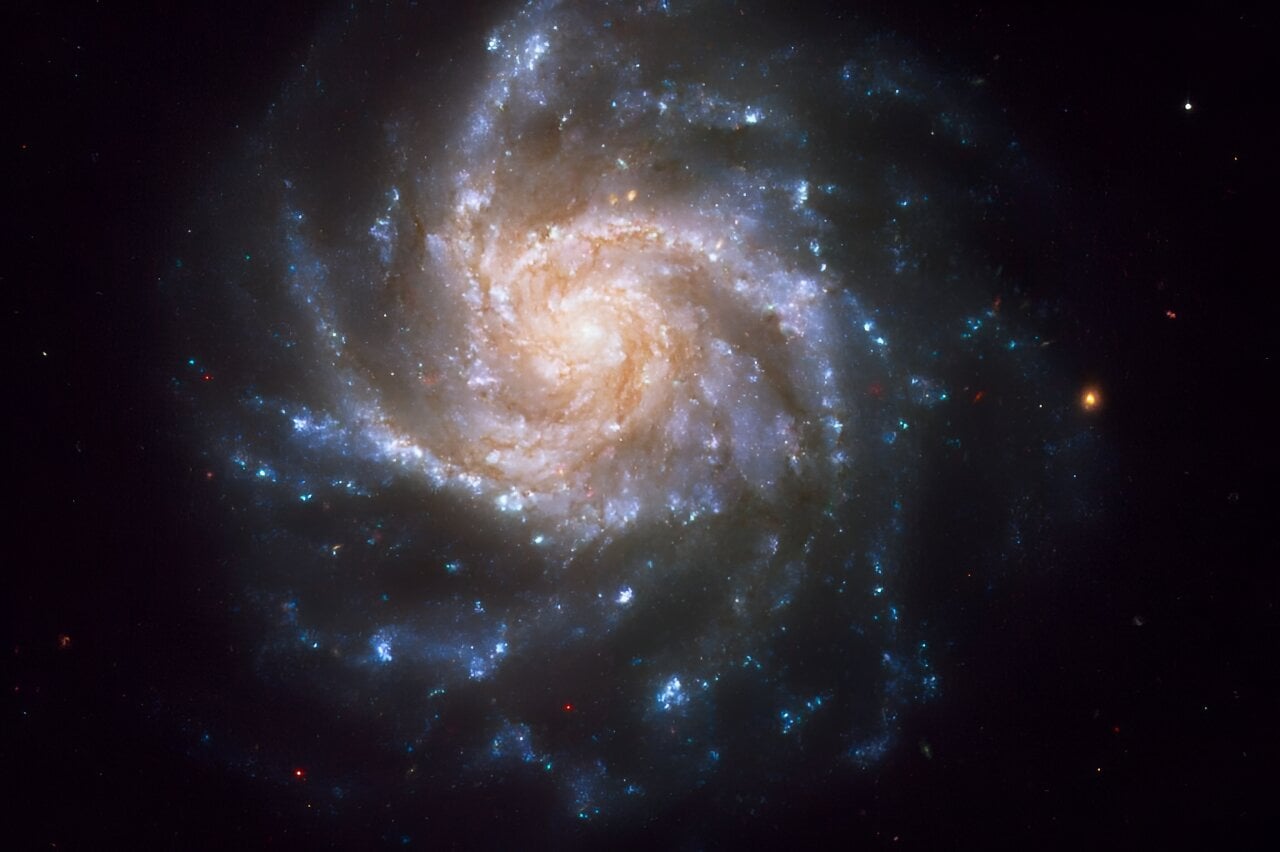
A new study using data from the James Webb Space Telescope has revealed that spiral galaxies were much more common in the early universe than previously thought. Researchers found that about a fifth of galaxies at redshift z=3, which corresponds to less than two billion years after the Big Bang, were spiral galaxies. This challenges the notion that spiral galaxies mainly form from mergers and collisions over time, suggesting that other factors contribute to their formation. The findings, which are based on observations from the Cosmic Evolution Early Release Science Survey (CEERS), indicate that many galaxies evolved into spirals much earlier than expected, and further research is needed to understand the underlying processes.