
Tag

Galactic Bubbles

All articles tagged with #galactic bubbles

The Intricate Nature of Galactic Bubbles in the Milky Way.
astronomy2 years ago

The Intricate Nature of Galactic Bubbles in the Milky Way.

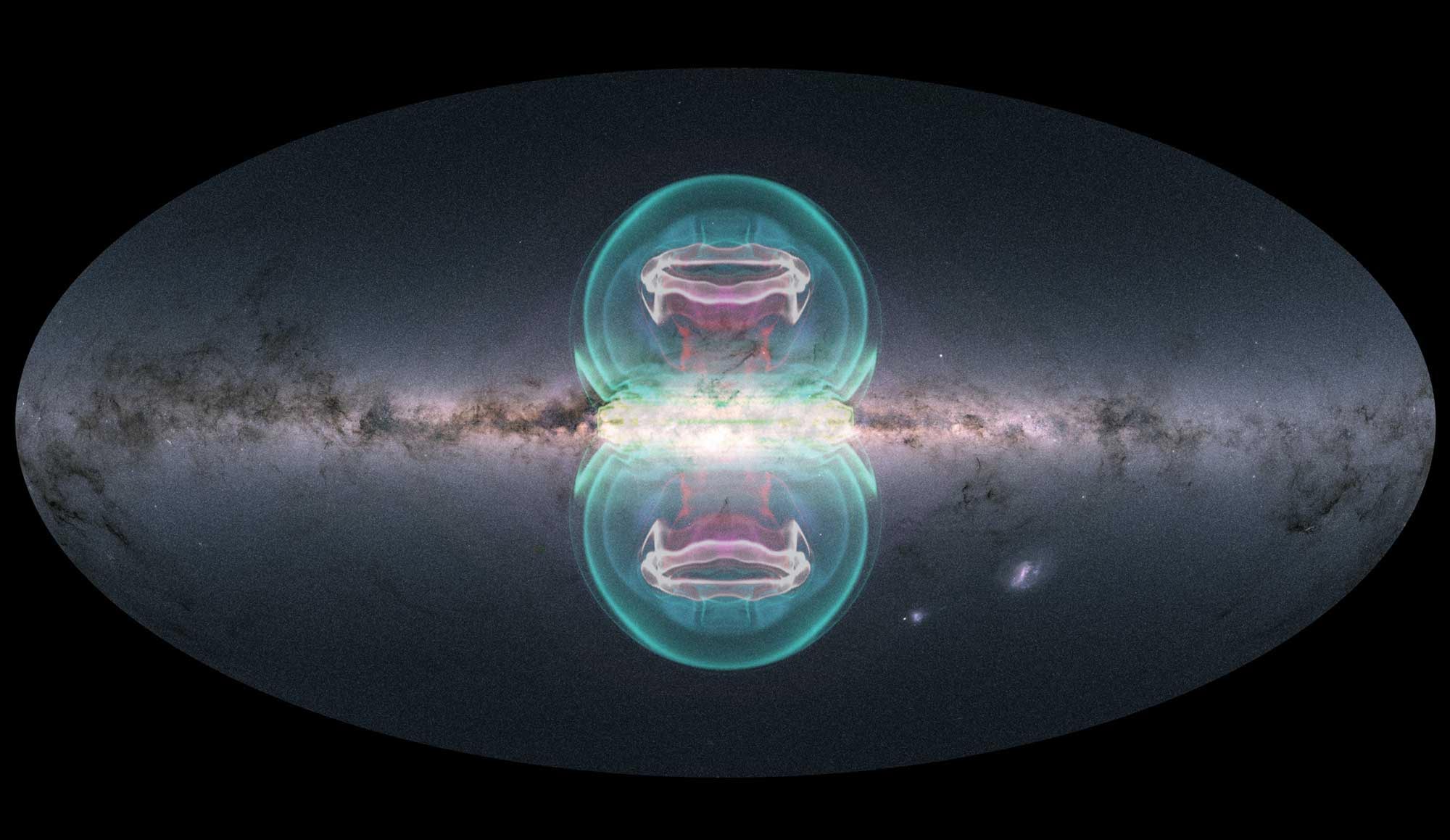
A new study published in Nature Astronomy has revealed that the eRosita bubbles, giant structures of high-energy gas extending above and below the Milky Way galaxy’s center, are more complex and not hotter than surrounding areas, contrary to previous assumptions. The study suggests that the bubbles originate from nuclear star-forming activity rather than a supermassive black hole. The researchers used observations made by the Suzaku satellite to analyze the properties of these bubbles and hope to use new data from other upcoming space missions to continue characterizing them.
The Complexity of the Milky Way's Cosmic Bubbles
science-and-astronomy2 years ago

The Complexity of the Milky Way's Cosmic Bubbles

The giant bubbles of hot gas blown out from the center of the Milky Way galaxy, known as eRosita bubbles, are far more complex than previously believed, according to a new study. The study examined the thermal and chemical properties of these features, revealing hitherto undiscovered properties in their shells. Scientists had previously assumed that galactic bubbles are heated by shocks of gas pushed out from the Milky Way, but the temperature of the gas within the bubbles is similar to the temperature of the gas outside them. The eRosita bubbles are bright not because of their temperature but instead because they are filled with extremely dense gas.

Uncovering the Complexity of Galactic Bubbles
astronomy2 years ago

Uncovering the Complexity of Galactic Bubbles

The eRosita X-ray telescope has revealed that the shells of the giant bubbles of high-energy gas that extend far above and below the Milky Way galaxy's center, known as "eRosita bubbles," are more complex than previously thought. These bubbles are larger and more energetic than their counterparts, the Fermi bubbles, and provide an exciting opportunity to study star formation history as well as reveal new clues about how the Milky Way came to be. The temperature of the gas within the bubbles isn't significantly different from the area outside of it, and the bubbles are so bright because they're filled with extremely dense gas, not because they are at hotter temperatures than the surrounding environment.