Elon Musk warns that AI could replace human jobs, urging society to focus on roles that leverage uniquely human skills and emphasizing responsible AI development to ensure ethical progress and societal benefit.
As automation becomes more prevalent in various industries, companies are seeking workers to help build and implement the technology. The World Economic Forum's Future of Jobs Report predicts that both humanoid and nonhumanoid robots will impact employment, with some sectors expecting job growth and others anticipating job displacement. Companies in electronics, energy tech, utilities, and consumer goods are most likely to adopt robotics. Startups like Zipline, which designs autonomous delivery drones, are actively hiring for positions ranging from engineering to coding. Automation offers benefits such as increased productivity and better-paying jobs, but businesses must strike a balance between automation and human labor. The adoption of robotics is seen as crucial for companies to stay competitive, as evidenced by China's widespread use of robots. Automation is also making its way into the food service industry, with companies like Chipotle and Vebu Labs developing robots to assist with food preparation. However, there is a shortage of workers with the necessary skills to operate and build robots, highlighting the need for more training in this field.
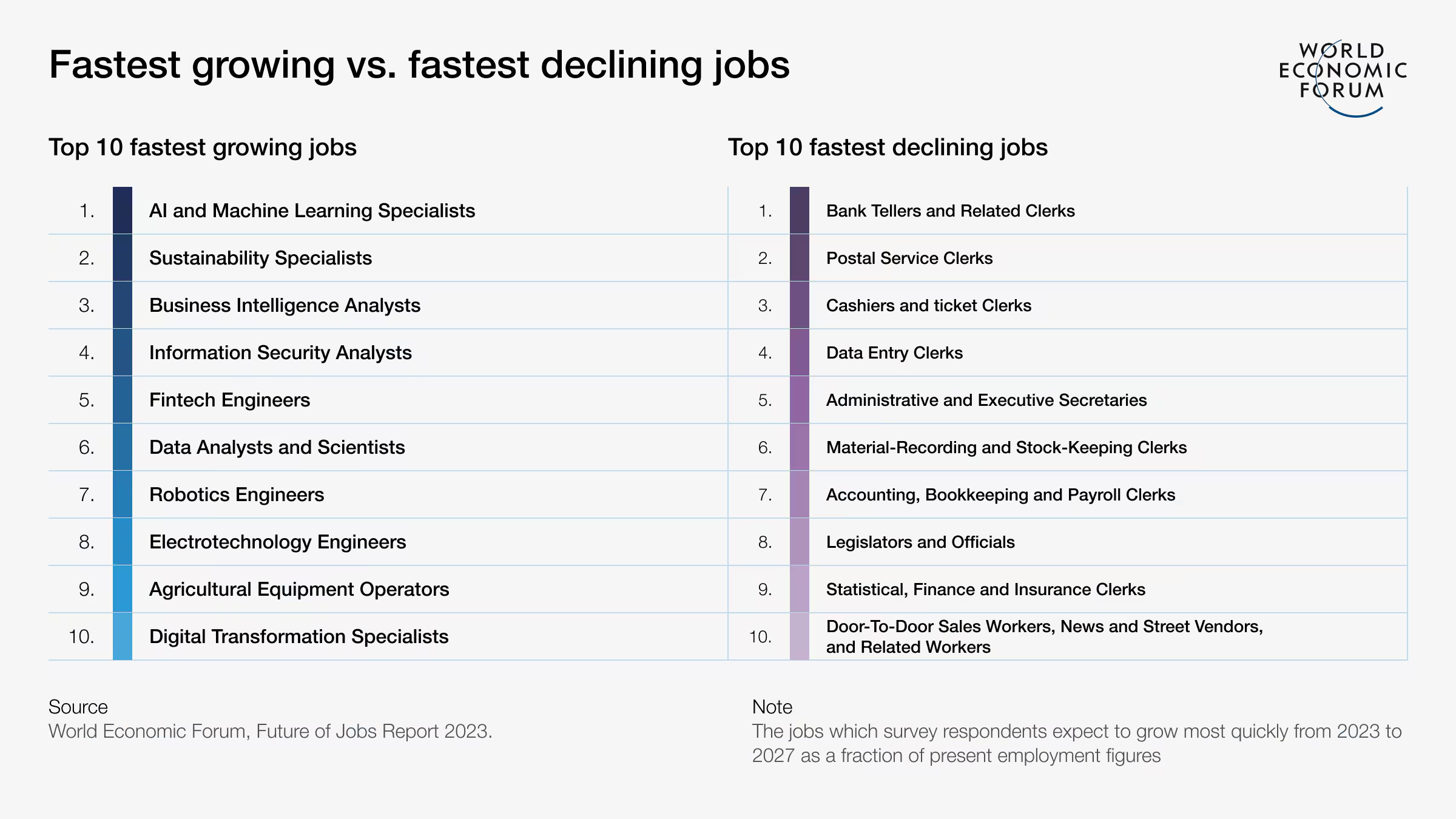
The World Economic Forum's 'Future of Jobs' report predicts that almost 25% of jobs will be disrupted in the next five years, with 14 million fewer jobs overall. The decline of administrative roles will be driven mainly by digitalization and automation, while technology is expected to be a net positive for job growth in sectors such as education, agriculture, and health. Artificial intelligence is a key driver of potential algorithmic displacement of roles, with almost 75% of companies surveyed expected to adopt the technology. Other factors contributing to job disruption include economic growth, sustainability, supply chain changes, and fallout from the Covid-19 pandemic.
The Future of Jobs Report 2023 highlights smart technologies as the key drivers of the fastest-growing jobs, while also identifying green jobs as a significant area of growth. On the other hand, roles in declining industries such as manufacturing and construction are expected to decrease in demand.